
'Consequences for pollination and food chains' Chesterfield beekeeper warns Asian hornet threat could be devastating
Following the first ever confirmed sighting of a yellow-legged hornet’s nest in Chesterfield, the region’s beekeepers are stepping up their surveillance operation to tackle a threat which could have devastating ecological consequences.
As previously reported, the National Bee Unit discovered an embryonic nest – the first stage of a queen’s new colony – in the Chesterfield area in late April and issued an alert to local residents to keep watch for the invasive species.
It was news that those on the frontline have been expecting since the predator – also known as Asian hornets – first appeared on the radar around a decade ago.
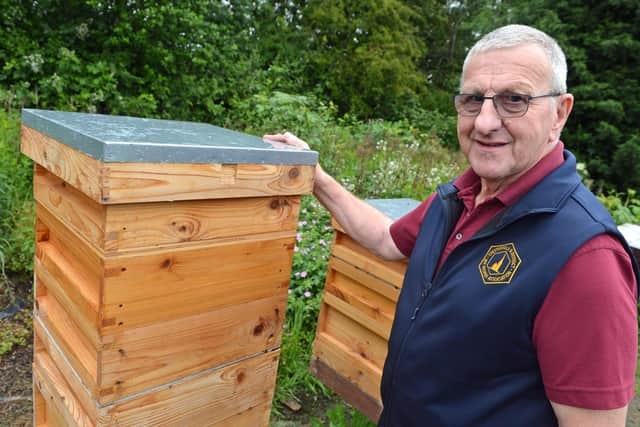
Pete Chambers, Asian hornet coordinator for Chesterfield & District Beekeepers Association (CDBA), said: “This first became an issue in France around 2014 but it wasn’t until about five years ago that there was any incursion into the UK.

“Then it was isolated incidents before we started seeing more and more reports in southern counties, slowly moving further inland. It used to be that new incursions would come across on a south-westerly wind but hornets are crafty little creatures that like to catch a lift where they can, so they come in around the ferry ports and then follow traffic movement.
“We suspect a lot of it is imports to garden centres. Plants are heavily scrutinised on arrival by Defra (Department for Environment, Food & Rural Affairs) but things like pottery and garden furniture don’t get the same kind of biosecurity checks. They could have come in on any container though, and then travelled with the M1 traffic through our area.”
The NBU’s map of hornet reports suggests the insects are now well established around Dover and Folkestone in Kent, and northerly nests have been recorded near Hull, Teesside, Wrexham and Widnes.
Already in 2026 there have been sightings logged in southern Derbyshire and Nottinghamshire, with Doncaster furthest north.
Territorial expansion may begin with lone outriders but a nest would mean a coordinated hunt for protein sources to feed the young, and the size and speed of the yellow-legged hornet gives them superiority to pick off individual bees one by one.
If a single intruder hornet gains entry to a hive bees can fight back by crowding and overheating them, but a small number of hornets can decimate a bee colony in a matter of days.
Their spread has been cited as a key factor in the rapid decline of France’s beekeeping industry, a fate now feared in apiaries across the UK.
Pete, who returned to a long family tradition of beekeeping after retiring from farming machinery sales, said: “In Jersey there used to be around 200 beekeepers and they’re now down to 70. Everybody has lost so many bees and lost hope, though the Government is now behind them and paying for an eradication programme.”
The threat runs deeper though, he added: “Everybody thinks this is only to do with bees but it isn’t. Hornets will feed on wasps, flies, whatever they can catch.
“Those won’t immediately affect anyone financially like a beekeeper losing their hive, but they will have consequences for pollination and food chains for birds and other species.
“Those effects might not be noticed at first, until one summer you’ll realise you’ve not seen any other insects at all.”
An unconfirmed hornet sighting in Birdholme in 2025 may or may not be linked to the 2026 nest. There is still much uncertainty about the local threat level.
Pete said: “Data protection laws mean that we can’t be told exactly where the nest was, which is a concern. It’s frustrating we can’t be given a precise location, though if we were told it was such-and-such house two dozen beekeepers might roll up, so there’s got to be a balance.
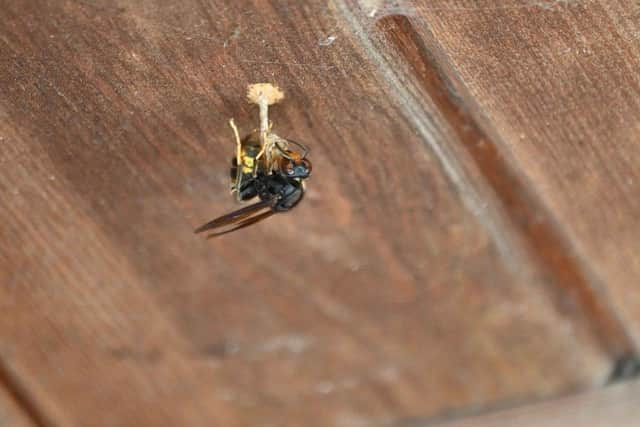
“We do think it was in the Walton area, and that the person who found it knocked it down and the queen flew away. We don’t know whether she was injured, or whether she would be able to start a new nest somewhere nearby. We’ve got to treat it as though she is still here until proven otherwise.
“A few isolated incursions we can deal with but if they get established locally there’s nothing more we can do, so this nest has made us a lot more serious about the situation.
“Really the only way to tackle hornets is with boots on the ground, people dedicated to monitoring stations where they can observe what is coming in to feed.”
CDBA’s 150 members have divided the entire Chesterfield area from Chesterfield to Worksop, Alfreton, Mansfield and southern Sheffield into three-kilometre squares around those monitoring stations, linked into a network of WhatsApp contacts casting the net right across the country.
Pete said: “Trying to find one insect in an area that size is impossible but, from the end of June through to August, if the queen survived she will have built another nest and there will be hundreds of worker hornets out there.
“Once they find food at one monitoring station, they will keep coming back, and then we can start to narrow it down and triangulate the location of their nest.
“We’ve been trying to target transport hubs, service areas and caravan sites for newcomers too. If a hornet has been in a container for three days, the first thing they’ll do when the doors open is look for food.”
A fully-fledged yellow-legged hornet’s nest can grow up to a metre in diameter, similar in appearance wasp’s, though with more of a spiral structure and cardboard colour.
After a typical embryo nest in a garden shed or outbuild, a queen will move on to create something bigger, often among low bushes or brambles, then potentially an even larger nest high up in a tree.
The workers’ behaviour will change through the season too. As their diet switches from protein to sugar something like a fizzy drink becomes more attractive and the hornets will become more noticeable.
Pete said: “They’re not generally aggressive if they’re left alone. They want to feed quickly and get back to the nest. They’ll only sting when they feel threatened.
“People should be careful if they’re cutting hedges later in the summer, and be aware of what’s around you. The hornets can be extra aggressive if you damage the nest.
“The main thing we’re asking the public to do is to download the ‘Asian Hornet Watch’ app to their phones. If you see one and get a good photograph, you can use the app to report it the NBU straight away with a location.
“It’s not as big as a European hornet. There’s more of those about now too, but the European hornet is like an overgrown wasp, quite a lot bigger and making a very distinctive noise that frightens people. They sound like a helicopter.
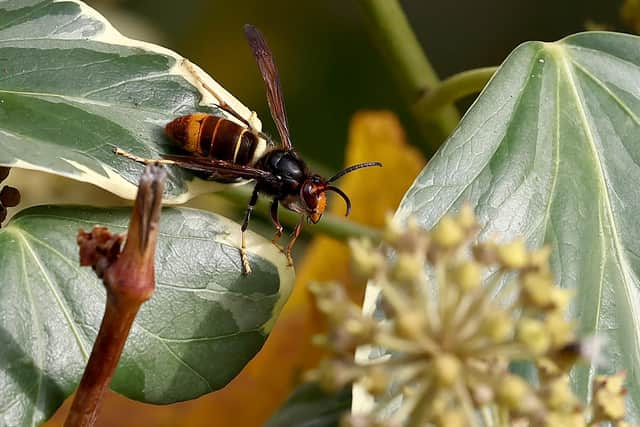
"What you’re looking for is a hornet with a very shielded face and yellow legs all the way down. Look at its thorax and it’ will have orange-yellow bars, darker in colour.
“If you have the app, there are pictures on there to help you identify what you’re looking it. You may or may not hear back once you’ve made a report, but it’s more likely something will get done. They’ll start a more formal method of detection, then there are strict limits on who can destroy a nest and how it’s done.”
He added: “If people are interested and have the time, there’s nothing to stop them from becoming a monitor for one of the grid squares. There are a lot to cover and we always need more volunteers, so long as you won’t get fed up if you don’t see anything for six months.
“We can provide lots more information and I’m always happy to come and talk at gardening clubs and other community events.”
For more information,
To connect with Pete and CDBA colleagues, go to facebook.com/chesterfieldbeekeepers.