
Treasury responds to parents' criticism over closure of Derbyshire private schools
After two Derbyshire private schools entered administration last week, upending pupils’ education and the summers of families and staff, some parents have been quick to lay blame at the steps of Downing Street – but the Treasury has defended the policy at the heart of the controversy.
As previously reported, on Friday, August 8, governors confirmed the closure of Mount St Mary’s College and Barlborough Hall School after a week of desperate efforts by families to try and keep the organisation afloat.
The company and charitable trust behind the schools has entered administration after apparently running at a loss for 15 years, amassing millions of pounds of debt and reaching a stage where it could no longer pay what was owed to staff or creditors.
For some of the more vocal parents and online observers though, the key tipping point was the change in national policy introduced by the new Labour Government from January 1, 2025.
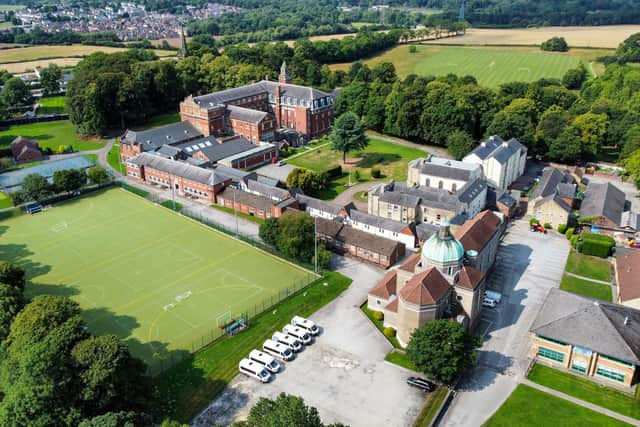

In announcing the closure, chair of governors Shaun Whyman had cited the change as one factor among the “increasing financial pressures [and] wider challenges affecting the independent education centre.”
Steven Winstone, who played a leading role in the parents’ attempted rescue bid, said: “A post-mortem isn’t really necessary, it’s just incredibly sad. There was a prospect for reconstructing the finances, which makes the whole episode even sadder.
“The governors were in a tough position and you feel for everyone involved. It’s in the hands of the administrators now. It’s not a time for finger-pointing, it’s a time for coming together.”
However, he went on to say: “I think the nail in the coffin has been the introduction of VAT on fees and the loss of business rates relief for private schools.
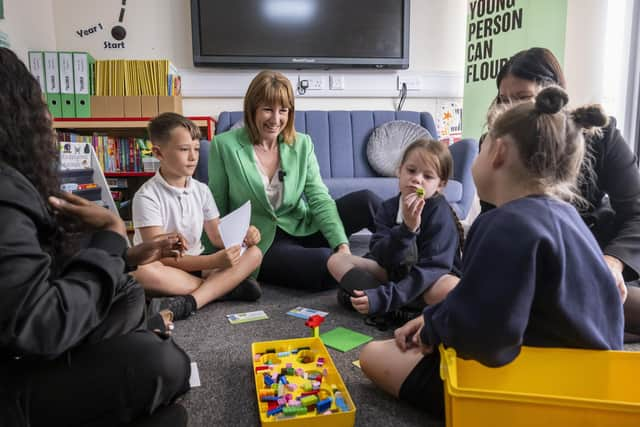
“The state schools are full and Keir Starmer and ‘Rachel [Reeves] from accounts’ should have seen this coming. They were utterly unprepared when it was blindingly obvious what was going to happen.
“They even predicted a number of private schools would close this year. They should have done the analysis to see which ones were most likely to fail and then have things in place to support the local area.
“Despite what Labour supporters might say, the Government has been acting like clowns and they haven’t even provided a circus. It was quite clear that nobody in government had thought this through. I predicted it six months ago and I’m very disappointed to be proved right.”
He added: “Lots of businesses go through hard times. These schools suffered through Covid with pupil numbers and other bumps in the road, but it could all have been dealt with.
“I think a lot of schools were braced for VAT but thought it would be phased in – introduced on new students first, or not for those already in their GCSE years – something sensible like that. Instead they put a 20-25 per cent increase in costs on the schools in one go.”
Among those feeling the biggest impact is Steven’s own son, now forced to find a new school midway through his GCSEs.
Steven said: “It’s heart-breaking, just awful. These kids’ education will be seriously affected, and their friendship groups too. They can’t just go somewhere else and carry on.
“I’ve been ringing around state schools and there’s no space and no budget for new students. There’s no one offering the same combination of courses, and there will be problems with coursework he’s already completed.”
He added: “It’s not the case that everybody who sends their schools to private schools is absolutely loaded. Many of us have just about enough.
“There were a lot of children here on scholarships and others with special educational needs who just wanted to feel part of a mainstream school. Now they’ve been put in this situation through no fault of their own, and it’s really upsetting.
“It’s totally irresponsible from the government, just trying to play the politics of envy to get a few votes.”
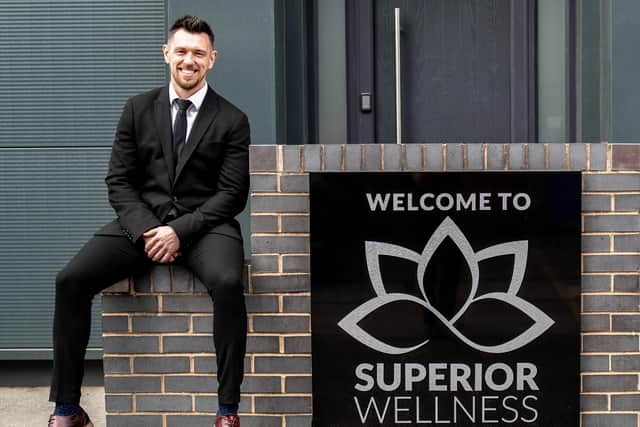
Another parent with criticism of the Government is Rob Carlin, owner of Chesterfield hot tub and swim spa distributor Superior Wellness.
Posting to the social network LinkedIn, he wrote: “My son’s school has gone into administration after 183 years. I’ve seen first-hand how short-sighted tax policy is driving families, businesses, and wealth out of Britain.
“At Superior Wellness, we’ve worked hard to create jobs, export globally, and put Derbyshire on the map, but I cannot blame the masses who are now leaving the country.
“If we want to keep ambition, innovation and growth in the UK, it starts with a government that actually understands entrepreneurs.”
The comments were republished in national media including The Times – which has named Mr Carlin as one of the country’s top 50 most ambitious business leaders – warning of a potential ‘wealth exodus’ from the UK due to policies such as tax on private schools.
Financial publication City AM noted other LinkedIn posts from Mr Carlin, which revealed he was “working on” his own plans to relocate abroad.
That despite Superior Wellness receiving a £2.3million loan from the government’s Export Finance service, announced on Wednesday, August 6, “to invest further in infrastructure, scale distribution, and support working capital all while maintaining cashflow security,” and accelerate the company’s growth in the USA, Canada, Europe and the Middle East.
The Derbyshire Times has approached Mr Carlin for comment, but he has already hailed the Government support as a “key milestone in our journey to become the world leader in wellness products … We’re incredibly proud of the growth we’ve achieved - and even more excited for what’s ahead.”
The Derbyshire Times put a series of questions to the Treasury based on the criticism from Mount St Mary’s parents regarding tax policy.
A government spokesperson said: “Ending tax breaks for private schools will raise £1.8billion a year by 2029/30 to help deliver 6,500 new teachers and raise school standards, supporting the 94 per cent of children in state schools to achieve and thrive.”
The Treasury also said it would be “a commercial decision for individual private schools as to how they manage their finances in the same way as any other private business” and that they were “confident in local state schools’ ability to accommodate new pupils.”
According to Treasury figures: “Fewer than 0.1% of pupils are expected to move schools this year as a result of ending tax breaks for private schools, set against over one million spare places in schools across the country.”
They also provided further context, asserting that the Government conducted thorough and detailed analysis of the impacts of the policy, and carried out a public consultation which received 17,000 responses from schools, school associations, and parents in the three months following the General Election.
The Treasury also published a Tax Impact and Information Note (TIIN), published on November 15, 2024, detailing the anticipated consequences.
It estimated that in the long-run there would be 35,000 pupils moving into the state sector as a result of this measure – equivalent to six per cent of the current private school population, or 0.5 per cent of those currently in state schools.
17,000 pupils are expected to move from private to state schools between 2024 and 2026, but most were expected to move at “natural transition points” such as moving from primary to secondary stages, or between GCSEs and A-levels.
The officials who authored the TIIN go on to state: “The government recognises that this measure could impact on the viability of certain private schools and, in some cases, contribute towards school closures. However, historically there has been significant turnover within the sector.
“Since 2000, average fees in the sector have increased by 75% in real terms while pupil numbers have remained stable, as have total school numbers. But this period has seen an average of 74 school closures and 83 new openings each year in England. This makes it difficult to assess the impact of this measure in terms of additional school closures.
“In recent years, around 3% of private schools have closed each year. In the long run, we expect the cost base of the private school sector to be around 12% lower as a result of the VAT measure. This comprises both an expected 5% reduction in costs by schools to moderate fee increases per pupil and a further reduction to accommodate reduced demand (projected to be around 7% in the long term).
“We expect most of this 12% reduction in costs to occur within schools rather than as a result of school closures, however it is likely that there may be some temporary increase in the schools closure rate over the normal rate during the few years after implementation. The government estimates that this may be broadly equivalent to 100 schools in total closing over the next three years in addition to the normal levels of turnover, after which closures would return to historic norms.”
They added: “This measure will impact on pupils attending private schools and their families, who may need to pay increased fees as a result of VAT passthrough. It will also have indirect beneficial impacts on the 94% pupils attending state schools, as revenue raised will help the government to fund its commitments on education and young people.
“Parents and carers may choose to increase working hours to cover fee increases, with impacts on work-life balance, or there may be disruption caused by children moving to new schools. Disruption will be greater if these moves occur within school years or key educational stages (for example, during GCSEs or A-levels).
“However, this disruption will only affect a small proportion of pupils and families. The government expects the vast majority (94%) of pupils currently in private schools to remain in private schools. There is not expected to be a significant impact on family formation, stability and breakdown as a result of this policy, given that all children of compulsory school age are entitled to a state-funded school place if they need one.”