
Derbyshire council gets worst 'red' rating in new Government pothole scores
Derbyshire County Council’s record of fixing potholes and maintaining roads has been called into question by a new assessment from the Department for Transport, which placed the authority among England’s worst performers.
On Sunday, January 11, the DfT published new red, amber, green ratings which let public see which of the nation’s 154 local highway authorities are fixing potholes effectively, the first time the data has been shared in such a format.
Derbyshire was one of 13 given an overall ‘red’ rating, while 16 received a ‘green’ and the vast majority ‘amber’ based on three ‘scorecards’ which combined seven key metrics.
Not only are the scores intended to help councils identify priority actions, the scheme means that local highway authorities will have to continue to publish transparency reports on their roads maintenance work in order to access their full share of £7.3billion in Government highways funding over the next four years.
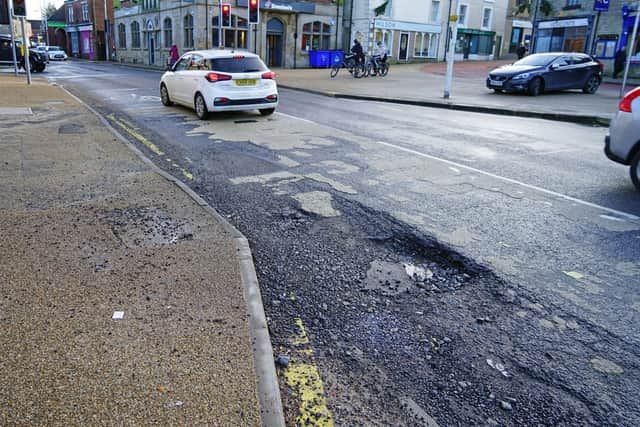

But the exercise has already been challenged by County Hall, where the Reform UK administration only recently boasted of having cleared their backlog of pothole repairs.
Councillor Charlotte Hill, cabinet member for potholes, highways and transport, said: “We have no idea how the DfT has judged us to be in their ‘red’ category. They have not told us why they judge us to be ‘red’ and seem to have told the media before they have told us how they come to this conclusion.
“We strongly refute the fact that we are not an improving highways service and have asked for a meeting with officials as soon as possible.”
She added: ““Since May 2025 the backlog of potholes has been cleared, and the highways service is now prepared to maintain this level through winter. We are a proactive highways service and we work to make repairs before they become an issue for residents.

“This year, the staff within highways have worked very hard to reduce potholes and deliver a better service for Derbyshire and this judgement from the DfT makes no sense at all.
“We’d like to invite the minister to come to Derbyshire and judge for themselves what our roads are like, we’ve made huge strides over the past four years and invested more in the roads this financial year than ever before. We’ve been underfunded by the Government for road maintenance for decades.”
Similar concerns have been raised by other authorities, with industry title Highways Magazine detailing potential inaccuracies in the Government’s information – an accusation quickly refuted by a DfT spokesperson.
Though DCC may dispute the scores, the state of local residents has been an notable concern for residents across the county in recent years.
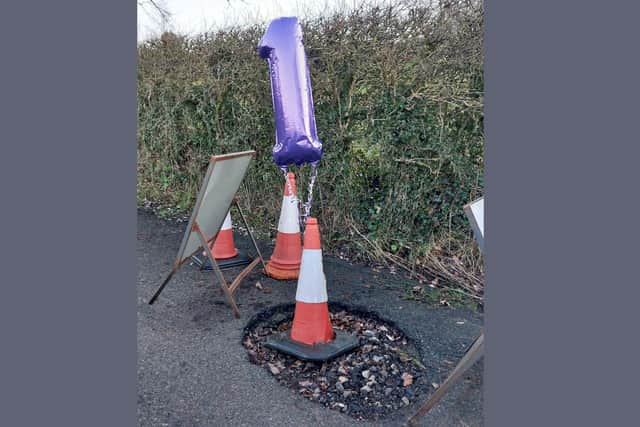
Separate figures released two weeks ago by the RAC show that Derbyshire saw the biggest surge in pothole compensation claims over the past three years, jumping from 224 in Covid-affected 2021 to 3,307 in 2024.
In other evidence, some rural routes have been subject to long-term closures while the authority struggled to address major stability issues.
If DCC is unclear how it received its rating the data presented gives some indication. Of the three scorecards, Derbyshire was rated red for one and amber for two.
That red relates to low scores on the condition of the county’s A roads, B/C roads and U roads, and the proportion that are ‘red-rated’ – where further investigation is required to ascertain if work is needed immediately. On all three road types, Derbyshire received the minimum score of 20.
The DfT methodology notes: “If a local highway authority was not able to provide road condition data for A, B and C and/or U roads for either of the two most recent years, then they were given a score of 20 for the relevant metrics.”
The scorecard for ‘best practice’ assesses a number of metrics including: the budget allocation for long-term preventative maintenance work as opposed to reactive repairs; the percentage of red-rated roads due for resurfacing in the current financial year; how an authority plans to minimise roadworks disruption; support for active travel footways and cycleways; and the adoption of new highways maintenance technology.
Derbyshire’s combined ‘amber’ score was seemingly pulled down by another minimum score of 20 on its plans for resurfacing ‘red-rated’ roads, while it was relatively mid-ranking in other areas.
The third scorecard measured how much capital a local highway authority plans to invest into highways maintenance in the financial year ending 2026, compared to their Highways Maintenance Block allocation from central government for the same year – showing how much an authority prioritises maintenance investment from its own funds.
On that criteria, Derbyshire was placed in the bottom 25 out of the 154 authorities, with spending plans seeming to show very little investment beyond the block allocation – perhaps unsurprising given DCC’s well-documented financial problems.
Of all the authorities assessed, just three received ‘green’ ratings on all three scorecards – West Berkshire, Portsmouth and Rotherham.
At the other end of the scale, no authority received three ‘red’ scores, though Greenwich, West Northamptonshire and Waltham Forest received two each.
Transport Secretary Heidi Alexander said: “For too long, drivers have paid the price because our roads were left to deteriorate. I have heard time and again their frustration on footing the bill because they hit a pothole – money they should never have to spend in the first place.
“We’ve put our money where our mouth is, increasing the funding for local highway authorities with £7.3bn to fix roads and given them the long-term certainty they have been asking for. Now it’s over to them to spend the money wisely, and for the first time, we are making sure the public can see how well councils are doing in delivering the improvements they want to see in their local area. “This government’s record investment will save drivers money on repairs, make roads safer and help restore pride in our communities.”
For the full breakdown of the rankings, go to tinyurl.com/DfTroadratings.