
The case for and against 'tourism tax': Derbyshire hotel owner warns of further strain on hospitality businesses while Mayor says it will grow economy
A Derbyshire hotel owner has warned the Government’s proposed ‘toursim tax’ risks placing further strain on independent hospitality businesses while the Mayor of the East Midlands argues it will grow the economy – as we take a look at the case for and against the Overnight Visitor Levy.
Steve Perez, owner of Casa Hotel and Peak Edge Hotel, has spoken out in response to the Government’s consultation on proposals that would give Mayoral authorities in England the power to introduce a levy on overnight stays.
If introduced by the Mayoral authority, accommodation providers within that authority’s boundary would be responsible for administering the levy, with the additional cost likely to be reflected in guest pricing.
Steve said: “This may be described as a levy, but in reality it is another potential tax on tourism.
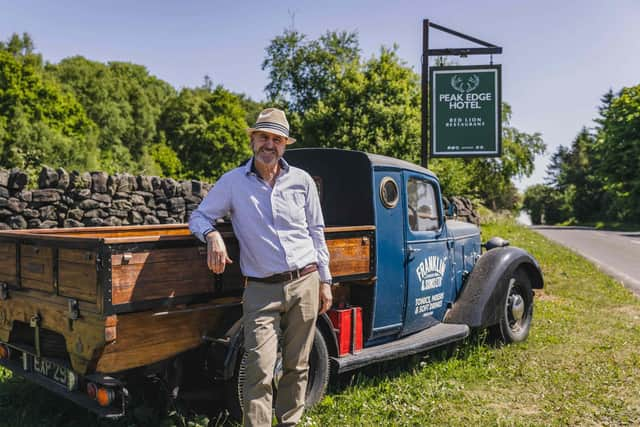

"Hospitality cannot sustain another cost that has to be passed on to customers, who are already feeling the impact of the cost of living.”
He added: “Our business rates alone have risen sharply.
“On top of that, we are absorbing higher payroll costs, utilities and food inflation. We already contribute through VAT, corporation tax, business rates and employment taxes. The sector is carrying a heavy load.”
He warned the impact could extend beyond leisure travel.

“Many of our room bookings at Casa are business stays. Companies, like families, are operating under tight budgets. Increasing overnight accommodation costs will inevitably lead some businesses to reduce hotel nights because it directly affects their bottom line.”
Steve also questioned the practical administration of the proposed levy.
“There has been little clarity on how these taxes would be processed in practice. Every card transaction attracts a fee from payment providers. Staff time is required to process payments, manage reconciliation and separate the levy from the final invoice.
“That is additional cost and complexity for businesses that are already operating on tight margins,” he said.
Steve said hospitality businesses form part of a wider rural economy.
He added: “Hospitality does not operate in isolation. We support farmers, producers, trades and local employment.
“If overnight stays become more expensive as a result of new local charges, even marginal changes in demand can filter through the wider supply chain.”
He challenged comparisons with European destinations where visitor levies already exist.
“Ministers often point to European cities that operate similar schemes. What is rarely acknowledged is that hospitality VAT in many European countries is significantly lower than in the UK. Overnight accommodation in parts of Europe is taxed at around 10%, whereas in the UK it is subject to 20% VAT.
“That already creates an uneven playing field. Layering an additional local levy on top risks making UK holidays and business stays more expensive and less competitive.”
He added: “If we keep increasing the cost of staying in the UK, we should not be surprised if some of our once-thriving seaside towns and visitor destinations begin to struggle.”
Steve also raised concerns about how any revenue generated by the levy would be used.
“We all want to see investment in improving the visitor experience. But hospitality businesses need confidence that any funds raised would be deployed efficiently and transparently, with a clear and measurable benefit to the local visitor economy.
“Without that assurance, there is a real risk that additional charges simply add frustration without delivering tangible improvements,” he added.
Steve has signed the national campaign led by UKHospitality opposing the proposals.
“We all want strong tourism infrastructure, but it must not come at the expense of the businesses delivering it,” he said.
But Claire Ward, Mayor of the East Midlands, said she made a clear commitment to grow the economy, create jobs and make the region an even better place to live, work and visit.
She added: “Tourism is central to that mission - which is why I support introducing an Overnight Visitor Levy.
“This is not a tax on business, it is a small charge, paid by overnight visitors, reinvested directly into making the East Midlands a better place to visit, work and live.”
She said the region had a lot to offer including the stunning Peak District, stately homes and castles and tourism already supports 52,000 jobs.
She added: “As Mayor, I want to see us do even more. I want to grow the visitor economy by £1 billion and create about 7,000 new jobs. This will only happen if we invest, consistently, in things that nurture our culture, heritage, and allow businesses to grow around those things. The levy is a practical investment tool to help us achieve - and surpass - that ambition.
“I recognise that hospitality businesses are facing real cost pressures - from payroll to energy - which is precisely why we need tools that bring down costs, grow demand, and bring them new investment, not allow stagnation to take hold. The biggest threat to the sector is not a modest visitor contribution, it is empty rooms, shorter stays, and people choosing other regions over ours.
“I also understand that success brings pressures. Overnight visitors increase demand on transport, public spaces and destination management. The levy would create a dedicated fund to manage that growth properly - protecting residents and improving the visitor experience.”
Claire pointed to recent challenges locally to show why the levy matters.
She said: “In Castleton and along Rushup Edge, unsafe parking linked to visitor volumes has caused significant problems, including temporary road closures. I have already allocated funding to respond, but a levy would provide the consistent, long-term investment needed to tackle issues like this proactively across the region.”
The levy could fund marketing to attract visitors; seasonal shuttle services, small-scale infrastructure improvements to make visiting easier and investment in festivals and events.
The East Midlands Combined County Authority will decide where the investment will go.
Claire added: “The levy brings new money into the system. It is paid by visitors, clearly explained at booking, and reinvested locally to drive demand, increase footfall and strengthen competitiveness. Internationally, visitor levies are standard practice. They operate across Europe and are being introduced in Scotland and Wales. Evidence shows modest overnight contributions do not deter visitors when destinations offer quality, value and experience.
“I am confident that we can compete on quality, value, and experience – and I know people like me, who have chosen to make the East Midlands their home, share my confidence. This investment will help us to grow what works, share the benefits with residents and visitors alike, and show everything we have to offer to the world.”