
Derbyshire leader welcomes possible council changes that could mean new mayors and mergers
Derbyshire County Council Leader Barry Lewis has welcomed the prospect of Local Government reforms if they deliver savings after the Government has announced devolution plans for England that could see new mayors, council mergers and the postponement of May elections.
Deputy Prime Minister and Local Government Secretary, Angela Rayner, unveiled on December 16 the Labour Government’s devolution plans including a major redevelopment of local councils by potentially setting up unitary councils with elected mayors with plans to potentially merge councils in two-tier local authority areas like Derbyshire that operate county and then district and borough councils.
Cllr Lewis, of Conservative-controlled Derbyshire County Council, said: “We welcome reform of local government where it could deliver real savings, enhance local democracy, and simplify access to council services.
“It’s early days, there are still some conversations to be had within the council, and we need to look at the detail of the Government’s proposals.
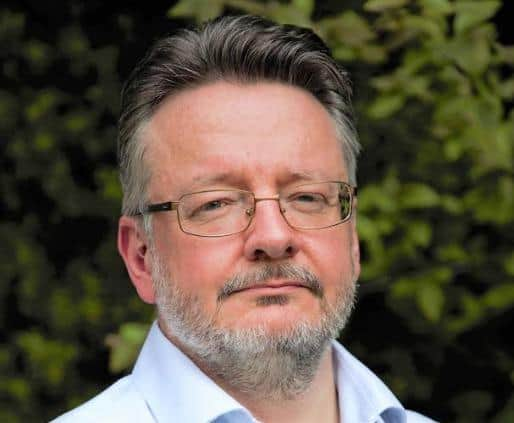

“But if the principle of combining tiers of councils with a minimum half-million population is upheld and the approach is sensible then merging two-tier authorities like ours into a single county unitary council could potentially provide wider benefits for our local communities.
“We’re ready to work with Derby City Council and district and borough colleagues to shape the proposals if the Government’s plans are sufficiently directive and they align with what is best for Derbyshire.
“As a county council within a Mayoral Combined County Authority, we’ve already successfully pursued and embraced reform and have the vision and drive to deliver meaningful change for our residents.”
The Government has announced the prospect of postponing the May local elections for up to a year which perhaps may include Derbyshire County Council.
Plans include targeting areas prioritised for devolution to potentially have mayoral elections as soon as 2026 and the first changed councils could be running by 2027.
The Government has argued the plans will mean elected mayors will have more powers on planning and transport, and that the changes will create savings, create greater efficiency, improve public services, and support economic growth.
But critics have said the plans could mean: the loss of district and borough councils; a risk of greater Government control over local area decision-making and the removal of local decision-making; feared tax rises; powers being taken away from communities with reduced local representation; and that there is little evidence such plans can create savings.
Chesterfield Borough Council Leader, Cllr Tricia Gilby, said: “Our vision as a council is to put our communities first, which means that we will always act in the best interests of the residents and businesses of the town and borough.
“Local government reorganisation is a complex issue, and it is right that we take time to fully and carefully understand the proposals that Government has set out in its English Devolution white paper. We will engage with the process and ensure that the voices of Chesterfield’s communities are properly represented and heard.
“In all likelihood, there will be changes to local government structures as we know them. Whilst we consider our options, I can assure the people of Chesterfield that the council will continue to prioritise delivery of its ambitious growth programme and the daily provision of high-quality facilities and services.”
The White Paper on the Devolution Drive, which was unveiled during Ms Rayner’s visit to Leeds, stipulates that any changes would be introduced by a ‘ministerial directive’ to allow the Government to create ‘Strategic Authorities’ if councils have not been able to introduce any reforms.
Ms Rayner has argued the plans are needed and she claims Whitehall will not interfere in local decision-making and the changes will transfer more powers to regional mayors around planning and transport.
But the Conservative Party has argued the plans will impose reorganisation from Westminster and strip councils of their powers and local consent and it fears homes will not be built in the right places with more house building in the countryside.
The District Councils Network has warned against the risk of removing localised decision-making and that there is little evidence of potential savings while some are concerned plans could lead to ‘mega councils’ taking away local power and representation with greater Government control.
But the Government says the plans will drive growth and help to deliver services more efficiently with accountability and control.
High Peak Borough Council Leader, Cllr Anthony McKeown, of the Labour-controlled local authority, said: “Whilst we knew the White Paper was coming we didn’t have any detailed idea of its contents around local government reorganisation.
“We therefore need time to study the proposals and consider what is best for the residents and businesses in the High Peak before making any further comment.
“As a Council we have fully engaged with devolution so far and we are still in the early days of working with, and being represented on, the East Midlands County Combined Authority.
“We also have our successful strategic alliance with our neighbours at Staffordshire Moorlands District Council already delivering efficiently and effectively for our respective areas.”
The County Councils Network has welcomed the Government proposals and the Local Government Association has said devolution can promote and support economic growth, jobs and public services.
But the Liberal Democrat Party has highlighted how council budgets are struggling and vital services could disappear without proper investment in social care.
A NE Derbyshire District Council spokesperson said: “The council understands that changes like these being proposed can bring uncertainty, especially with the unsettling media reports and the timing just before Christmas. There are many checks and balances in place, and any significant changes will take time to implement.
“We are closely monitoring the situation and will keep you updated on any developments that may affect the council and its service delivery to our residents and businesses. Our focus remains on serving our community and ensuring that we continue to deliver high-quality services for North East Derbyshire.”
Bolsover District Council Leader, Cllr Steve Fritchley said: “I first told people this was coming in October, 2020, so it should come as no surprise to anyone.
"I have never been, and will never be, a fan of removing local authorities as they are the epitome of what Local Government is and does and moving to larger unitary authorities will only go to undermine how local decisions are made.
"But let’s face it, we are over-governed at present with three tiers of local government - parish, district and county - and when the decision was made to have an East Midlands Mayor, reorganisation was inevitable - it’s no good tilting at windmills. Something clearly needs to be done and it is a debate we all need to take very seriously as it will affect every single resident in Bolsover District.
“We have received the initial information and White Paper, but we are still awaiting the detail and potential timescales around the proposals and what this means for the future of Bolsover District Council. As you can imagine we are discussing this internally and what our response to Government will be.”
The Government is planning for a statutory consultation to be carried out before any authorities are potentially changed.