
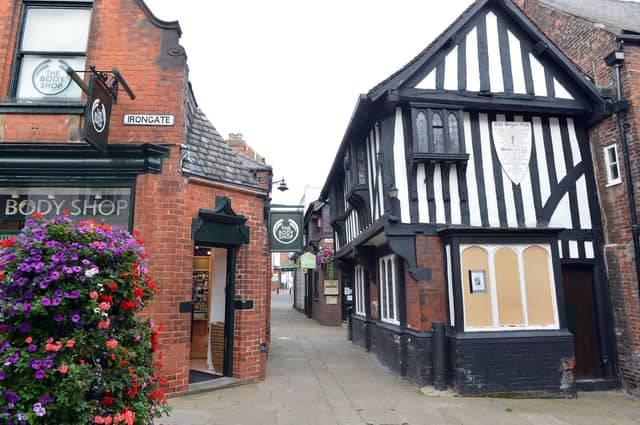

Chesterfield and District Civic Society has produced this list of some of the best-known thoroughfares and back alleys in our town, and the often long-forgotten background to their names.
Philip Riden, the society’s former chairman, previously told the Derbyshire Times: “The names of streets, whether they have existed since the Middle Ages or whether they have been devised in modern times, can throw a great deal of light on the history of a community, in Chesterfield as in any town.
"Also in Chesterfield, as elsewhere, some old names have disappeared, but remain clues to the past.”
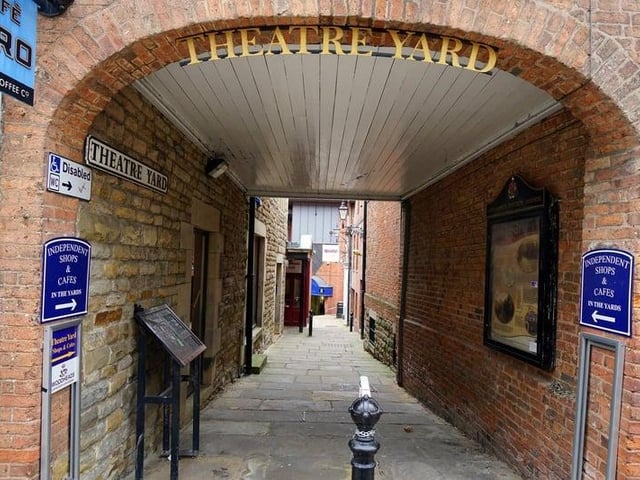
9. Theatre Yard
Numerous ‘yards’ situated behind both Low Pavement and High Street each had their own name, often that of the family which owned the property. One survivor is Theatre Yard, recalling that it was the home of Chesterfield’s first permanent theatre, dating from the late 18th Century. Photo: Brian Eyre
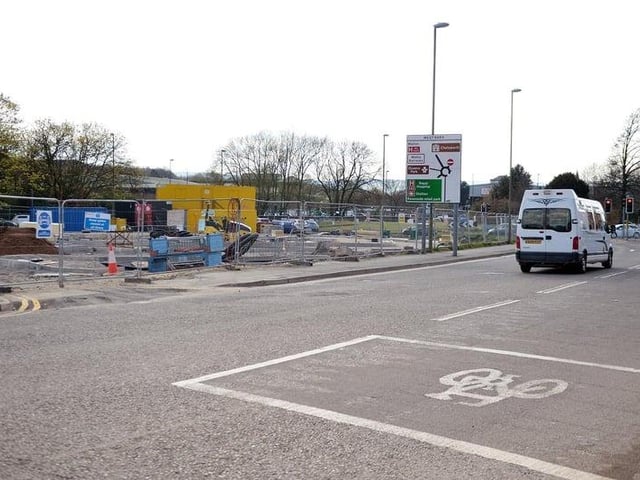
10. West Bars
Now the street running into the Market Place from the west, but the name originally referred to a barrier at which traders from outside Chesterfield had to pay a toll to have a stall in the market. Mr Riden said: "There are a couple of medieval references to South Bars and North Bars which must have been at the end of South Street and Knifesmithgate respectively." Photo: Brian Eyre
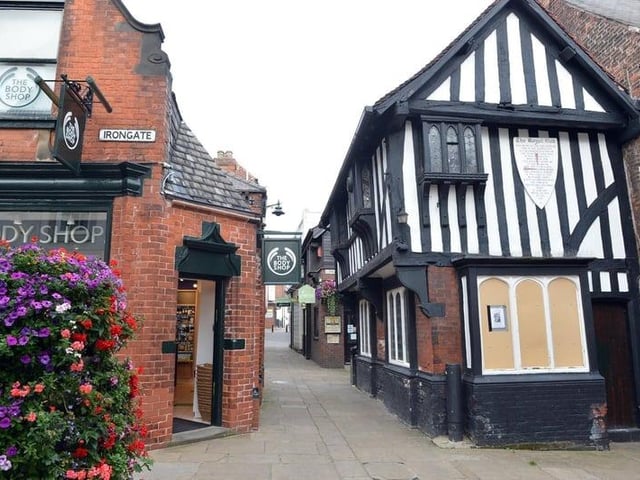
11. The Shambles
The Shambles at the eastern end of the Market Place were in origin a grid of alleyways lined by shops occupied by butchers and fishmongers who stood in the market every day, not just on Saturdays. Mr Riden said: "The alleyways each had their own name in the Middle Ages, which show that other traders also had premises there. Names mentioned in deeds include Souter Row (shoemakers), Draper Row, Mercer Row (both referring to the sale of cloth), Potter Row (probably dealers in brass ware, not earthenware) and Iron Row (ironmongers). None of these can be matched up with the alleys themselves, and the names used today for some of them are modern." Photo: Brian Eyre
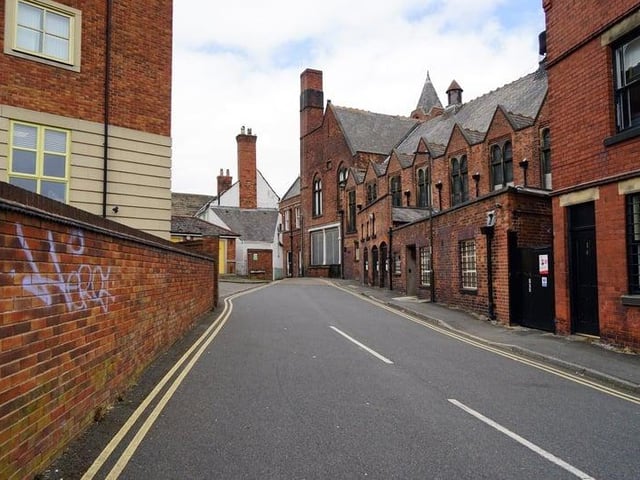
12. Station Back Lane
Most of Bishop’s Mill Lane disappeared when Corporation Street was built but a short section survives as Station Back Lane. Mr Riden said: "This is an example of where the historic name is much more interesting than the modern one and might be reinstated." Photo: Brian Eyre