
Drought reveals remains of Derbyshire villages lost beneath dam flood waters

The low water levels at the Ladybower Reservoir have revealed parts of the villages of Derwent and Ashopton
Drought conditions have revealed two lost Derbyshire villages that were flooded to create a new reservoir.
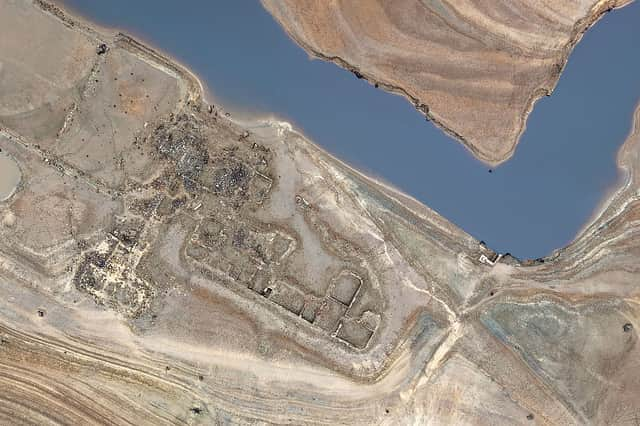

The low water levels at the Ladybower Reservoir have revealed parts of the villages of Derwent and Ashopton, which were flooded in the 1940s to create the dam to provide drinking water for the East Midlands and Sheffield.
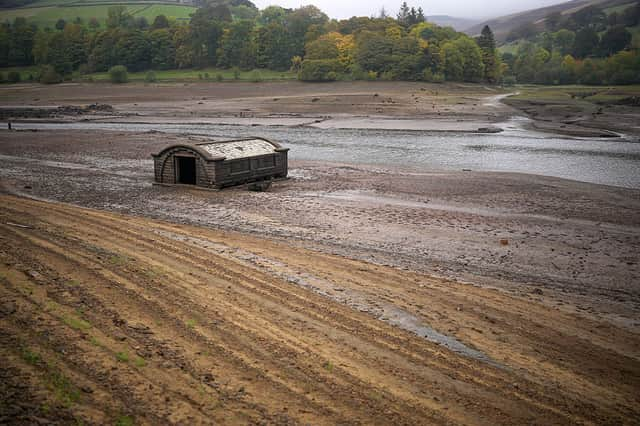
Derwent had a small community with a school. The most famous building in the village was the Church of St John & St James which was built in 1867 with a tower added in 1873.
After the church was demolished in 1943 the church spire was left intact to form a memorial to Derwent and could be seen spookily emerging from the water. However, it was dynamited a few years later due safety concerns as people would swim out and climb the spire.
The village also boasted a country manor house, Derwent Hall. Built in 1672, Derwent Hall was an impressive building in magnificent gardens with ornamental trees and a large fishpond.
Ashopton was a larger village on the main road between Sheffield and Glossop.
It had a large, busy coaching inn, The Ashopton Inn.
Despite the rain that has hit the county over the weekend from Storm Boelo, England is experiencing widespread drought conditions following a record-hot summer and the driest April-to-September period in over a century.
Overall, roughly 82% of England remains in drought, 18 reservoir groups are less than half full, and temporary use restrictions remain active across large regions, requiring significant autumn and winter rainfall to replenish severely depleted groundwater and reservoir storage.