
Facial recognition technology could be deployed in every town across Derbyshire under new proposals from Labour
Facial recognition technology could be rolled out in every town across Derbyshire under new proposals from Labour – who are considering giving police forces access to passport databases and immigration records.
The Telegraph has reported that Labour is proposing to give police forces access to facial images on Government databases - including 45 million passports and immigration records - to compare with photos of crime suspects.
A Home Office consultation was launched on Thursday, which aims to establish a legal framework for every police force across the country to deploy facial recognition technology as part of their efforts to apprehend criminals and suspects.
This may not just be limited to police forces, as private companies and retailers could also receive powers to use facial recognition technology.
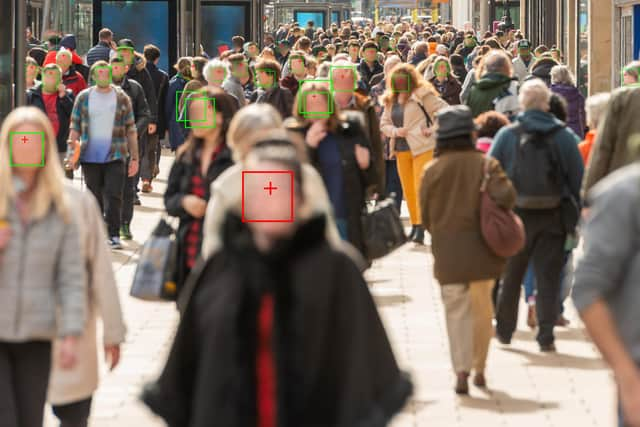

Policing Minister Sarah Jones revealed in an interview with The Telegraph that she wanted to see a significant increase in the use of facial recognition tools by police forces - who currently only have very limited access to the passport database.
She said: “I certainly want to see this significantly increased. It’s very effective for policing. I want it as one of the tools that are available to the police. That’s why we want to have some proper parameters so it’s really clear where it can be useful, so that it can be used more widely.”
“We need to be really clear what we are using this technology for as we go forward, because the police are not like other organisations, they have very significant powers and we need to make sure those powers are used in the right way.”
Ms Jones added that facial recognition technology could be deployed to identify and ban shoplifters - or to help track registered sex offenders.
The Home Office consultation will set out the circumstances that would allow police forces to access images contained on immigration and passport databases.
There are nine police forces across the country that currently have access to facial recognition software, which is utilised in three different ways. This technology runs through the police national database - which only holds details connected to individuals who have been arrested.
The first involves the use of live cameras, either inside vans or mounted in fixed positions. These cameras identify image matches on databases that contain the details of as many as 1,500 wanted or suspected criminals.
Images from crime scenes, captured by CCTV for example, can also be used to search through the police database to identify a suspect in a criminal investigation. Officers can also use a mobile phone app to confirm the identity of an individual in the street.
Silkie Carlo, director of Big Brother Watch, expressed her concerns over the proposals. She said: “Every search through this harvest of our personal photos puts millions of innocent citizens through a police line-up without our knowledge or consent.
“Sir Keir Starmer’s Government is committing to historic breaches of Britons’ privacy that you might expect to see in China but not in a democracy.”