
"The pressure has felt overwhelming at times": Derbyshire residents greet move to rule out housing plan after decade-long fight
Residents of a Matlock neighbourhood breathed a fresh sigh of relief and celebration last week after their council confirmed it would spare a tract of countryside from housing development following a decade-long dispute.
As previously reported, plans to build almost 500 homes on the hillside north of the town centre known as the Wolds were defeated when a government planning inquiry overruled an appeal by developer William Davis Homes due to concerns over flooding and public safety.
However, that left an open question as to whether an alternative scheme could be drawn up for the site, given it remained in the council’s Local Plan of land allocated to potential development.
On Wednesday, May 13, that question appeared settled for the foreseeable future when the authority published an updated list of land allocations as part of their ongoing periodic review of the Local Plan, and the Wolds was not there.
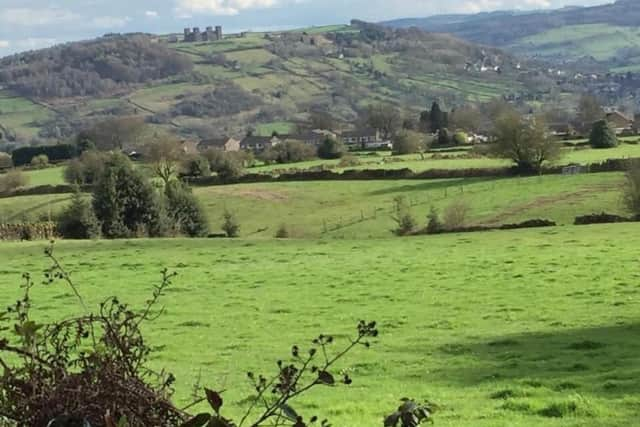

Speaking on behalf of the grassroots Wolds Action Group, who fought both the council and developer all the way to the inquiry, resident Julie Atkin said: “We’re all obviously very pleased that, after all this time, the site doesn’t appear in the proposed allocations list. This is huge for Matlock and a significant moment for our community. It’s taken more than ten years of hard slog to make the authorities see sense.
“This is the culmination of a huge amount of work by local people; evidence gathering, hundreds of miles walked delivering leaflets to spread the word, thousands of pages of documentation scrutinised and careful use of Freedom of Information requests.
“The pressure has felt overwhelming at times. The Inquiry went on from March and July last year, so it was a very stressful time for everyone. Now, there’s a real sense of relief after years of uncertainty and the planning blight which had been affecting the whole area.”
DDDC is soon expected to publish the findings of its own inquiry, overseen by an independent planning barrister, examining the council’s decision-making up to and including the choice not to defend its original rejection of the planning application before the government inspector.

That choice was made behind closed doors, based on legal guidance which was initially described as “cast-iron” then later as “garbage.”
Julie said: “People were overjoyed by the inspector’s decision and we couldn’t quite believe it at first. It’s a very unusual outcome for a community-led ‘Rule 6 Party’ to succeed at a major public inquiry, particularly without the council’s support. After all, we were certainly up against an opponent with very deep pockets.
“Our achievement shows the importance of local knowledge and that people understand the places where they live. For many years our evidence was dismissed as ‘anecdotal’ because we were not ‘qualified.’
“It’s all been an emotional rollercoaster and we’ve had to be resilient and support one another over the past ten years or so, resulting in lasting friendships.
That’s one of the good bits.”
The updated list of sites allocated for possible housing and employment development up to 2042 will be put to a public consultation in August, part of a process scheduled to run through to 2028.
The current draft includes previously identified areas where planning permission is yet to be granted, such as Cawdor quarry in Matlock, Stancliffe quarry in Darley Dale and Middle Peak quarry in Wirksworth, as well as sites in Asbourne, Doveridge and Middleton.
The new additions include land off Snitterton Road in Matlock, the wood mills and Jackhill Farm in Tansley, five more sites in Ashbourne, four in Darley Dale, three in Doveridge, two in Brailsford, two in Hulland Ward and one each in Ednaston, Middleton and Northwood.
There is also an unspecified ‘new settlement’ of between 2,000 and 4,000 homes, likely to entail the creation of a whole village somewhere in the south of the district.
Councillor Peter O’Brien, chair of the Local Plan committee, said: “Central Government has said that we must identify more sites for new housing. The Local Plan helps ensure that those new homes are provided in the right place.
“Balancing this need for new homes with our determination to protect our incredibly diverse landscapes and respect the characteristics of our towns and villages has been a real challenge.
“As we develop the Plan, we have worked with communities to understand their views. We also continue to hold our meetings in public, so they can see and hear how decisions are made.”
DDDC was approached for comment.
For more details and all the latest Local Plan documents, go to tinyurl.com/DDDCLocalPlanMay13.