
Coal Authority continues supporting Derbyshire’s former mining landscape under new name
An organisation which continues to support the clean-up and redevelopment of Derbyshire’s once proud colliery land has marked 30 years of nationwide work by heralding in a new era with a new name.
The Coal Authority has now become the Mining Remediation Authority after three decades of keeping drinking-water, the environment and people safe from the contamination and pollution left by England, Scotland and Wales’s mining heritage.
Its work has included overseeing many new housing developments in Derbyshire on and near former coal works often helping others to clean, reclaim and remediate sites for housing and industrial estates that would otherwise have remained polluted, unstable and unusable.
Chief Executive Lisa Pinney, of the Mining Remediation Authority, said: “Becoming the Mining Remediation Authority better reflects the important work we do to make a better future for people and the environment in mining areas across Great Britain.


“We will continue to deliver the same frontline work to support mining communities, keep people safe from coal hazards, protect drinking water, rivers and the sea from pollution, inform development and conveyancing decisions and enable opportunities from the assets we manage, working closely with partners and the emergency services.”
The Mining Remediation Authority, which also continues to license coal mining, manages the effects of past coal mining including subsidence damage claims which are not the responsibility of licensed coal mine operators and it also deals with mine water pollution and other mining legacy issues.
Its oversight while working with developers and councils on proposed redevelopments, industrial parks and housing schemes has helped to reap numerous schemes in Derbyshire.
Notable regeneration in the county has been marked by projects including the Ireland Colliery redevelopment that became Poolsbrook Country Park, Markham Vale Colliery which became a business park, and the Arkwright scheme which saw the village relocated due to methane leaks.
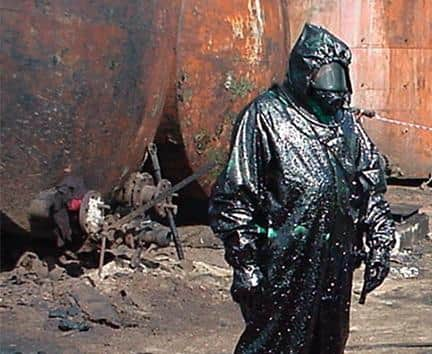
One of the region’s stand-out land reclamations involved a major clean-up of the heavily-polluted land at the former Avenue coking site, near Chesterfield, which is now The Avenue housing estate boasting hundreds of new homes.
The scheme, which involved the Coal Authority through the National Coalfields Programme, was one of the most ambitious remediation projects in the UK and potentially Europe.
The 98-hectare site closed in 1992 after it had already polluted the River Rother and demolition work began after Homes England took over the ownership and the work was completed by 2018.
In addition, the Markham Vale estate, which is based around what was the derelict Markham Colliery site, is now an 85 hectare business park after work started in 2006 and much of the site has now been developed with over 70 businesses and by April, 2020, it had created 2,702 jobs.
With an investment of £88m, the Markham Vale project is continuing to transform the area, creating new jobs and offering over three million square feet of commercial floor space after the land was acquired by Derbyshire County Council.
The scheme was approved by Chesterfield, North East Derbyshire and Bolsover District councils and it was funded by English Partnerships, the European Union’s Regional Development Fund, and British Coal with substantial contributions from Henry Boot Developments Ltd.
Derbyshire County Council says the regeneration of Markham Vale will eventually bring about 4,100 new jobs to the area and £130m of private investment with environmental landscaping, new planting and trails, and the creation of habitats for plants and wildlife.
Markham Vale Colliery had ceased operations by the late 1990s and the new site underwent a 365 hectare reclamation and regeneration scheme which started in 2014 with the earthworks completed by July, 2016, and with landscaping being rolled out over the next two years.
Derbyshire County Council also boasts a specialist team that has been responsible for the reclamation of over 2,000 hectares since 1968.
Poolsbrook Country Park on 165 acres of land was also created in the Chesterfield borough, near Staveley, during the early 1990s after opencast coal extraction at the site and it has since grown into a popular venue with leisure facilities and activities.
The old spoil tips of the former Ireland Colliery were landscaped to create Poolsbrook County Park with a natural landform, a lake and a river valley with trees and wildflowers and the park which opened in 1999 is now a popular outdoor leisure venue.
Derbyshire County Council reclaimed the old spoil heaps of the colliery during the early 1990s with European development funding and the ownership and management was transferred to Chesterfield Borough Council in 1997 who have invested in infrastructure in and around the park such as the pavilion and roads.
Another major scheme, in 1995, saw more than 300-people moved from Arkwright, near Chesterfield, where they had lived near the former Arkwright Colliery, to set up a new village about half a mile away after the danger of methane gas from a disused coal mine was discovered.
The move came about after a multi-million pound deal was struck between NE Derbyshire District Council and the RJB mining company which received the opencast mining rights to the remaining coal reserves.
And following 30 years of work, the Coal Authority now says its new name – the Mining Remediation Authority – will better reflect the organisation’s role managing the effects of historical mining as well as its on-going work seeking out low carbon opportunities such as mine water heating from mining heritage.
Chairperson Jeff Halliwell, of the Mining Remediation Authority, said he was delighted to announce the Coal Authority’s new name after the organisation celebrated 30 years of frontline delivery as the Coal Authority on October 31, 2024.
He said: “The Coal Authority has undertaken vital work for 30 years to keep people, drinking water and the environment safe from the legacy impacts of our mining heritage.
“As we look to the future and their work increasingly focuses on remediation and exciting low carbon opportunities, such as mine water heating, it is appropriate to change our name to reflect the important work ahead.”
The newly-named Mining Remediation Authority aims to lay the ground for cleaner, productive and greener redevelopment.
Its responsibilities will not change as it continues managing coal assets and legacy as defined in the Coal Industries Act 1994 including public safety and subsidence and informing upon safe development and growth across Great Britain.
The authority says its new name reflects wider work already delivered on metal mine pollution prevention and tip safety with an increasing focus on environmental remediation and mine water treatment and on work to find low carbon opportunities for communities such as natural mine water heat.
Using its Mining Information Centre Archives, in Mansfield, the Mining Remediation Authority will also continue supporting the housing market and helping developers and infrastructure providers to make informed decisions.
The Mining Remediation Authority is a non-departmental body sponsored by the Government’s Department for Energy, Security and Net Zero.