
Chesterfield woman who went from council house to Cambridge says flags make her feel unwelcome in hometown


A Cambridge student who says she faced racial prejudice growing up in Chesterfield is calling on residents and Derbyshire County Council to think again about the spread of nationalist flags in public spaces, explaining that for some people they are symbols of hostility rather than pride.
Isa del Solar, 20, returned home last month for a break following the second year of her degree in modern and medieval languages at the world-famous university.
After some time away, she was immediately struck by changes to Chesterfield’s streetscape and the flags of England and the United Kingdom which have been hung from lampposts and graffitied in various spots across town over the summer as part of a nationwide political movement.
Isa said: “Today, a trip to Ashgate Hospice and Aldi meant I was confronted with an overwhelming feeling that my family and I are unwelcome in Chesterfield. “Seeing the Tesco roundabout lined with flags called into question where it is I am allowed to call home.”

She added: “These symbols of ‘patriotism’ are indeed meant to assert English identity but, as someone who has experienced racial discrimination as a child on the very streets where Saint George’s flag are now flown, I can say that this nationalist messaging is founded on exclusion. “These flags have been hung up across Chesterfield with the intent to intimidate those who are products of immigration and are, no doubt, the result of the growing anti-immigrant sentiment fuelled by the far-right.”
A descendent of Chileans who escaped the country’s fascist coup in 1973, Isa’s mother was born and raised in Worksop and grew up to marry another Chilean before settling to raise their family in social housing on Devon Drive in Brimington, then later Woodthorpe.
Their bilingual household and Hispanic complexion did not go unnoticed by Isa’s peers as she navigated typically tumultuous school years.
Isa said: “I didn’t quite understand what made me different but it was clear by the way I was treated that I was seen that way, particularly in Brimington which was a very white British area.
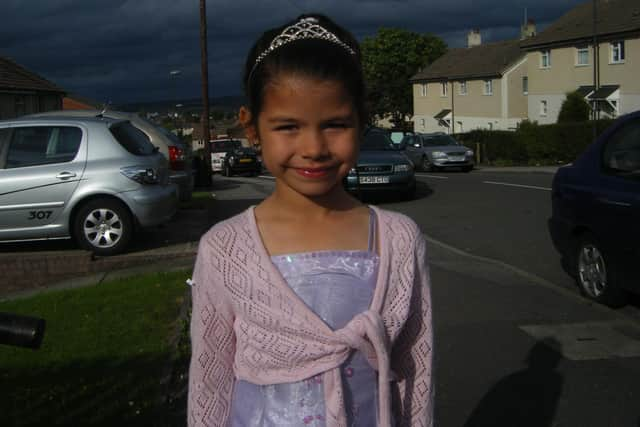
“There were very few ethnically different people around, and I’d get called an illegal immigrant, even though I was born at Chesterfield Royal.
“In school, other pupils would speak about my small eyes and other features, call me racial slurs and tell me to go back to whatever country in Africa I came from.
“It’s hard to know how representative those incidents were, but you imagine the children as a product of their parents. They were the tip of the iceberg of a much broader issue of xenophobia in the community.”
She added: “It wasn’t all like that. I was very at home playing out in the street with other children like anyone else in the community but, at the same time, it felt like a very contested space. “As soon as I fell out with someone there would be a sudden change – as though they had these things in the back of their mind the whole time – and it was normalised to hear slurs directed at other ethnic minorities, like the way everyone referred to the owners of the corner shop.
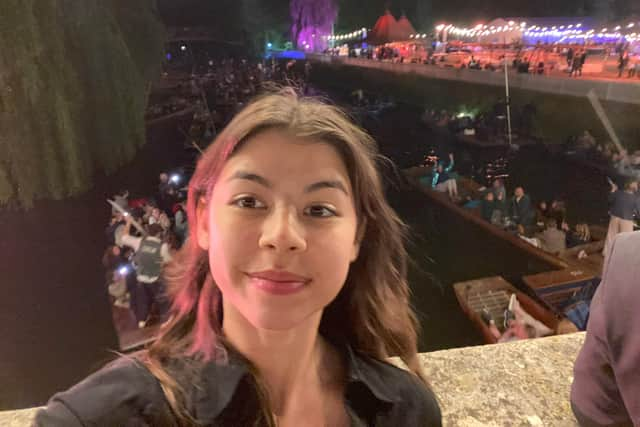
“It made me nervous and on-edge growing up, and that affected things like my self-esteem, but it also became something that got me politically engaged.”
She added: “I found it quite shocking to see the flags in those same streets where I have so many hurtful memories of xenophobia – memories I have tried to forget.
“It’s like not much has changed. Maybe it has changed for the worse, or maybe it’s just more open now.”
In part, Isa’s political development coincided with the rise of movements like Black Lives Matter, which pushed against racial discrimination and towards social equality. Isa said: “Seeing these flags everywhere is intimidating. They are meant to intimidate. A certain group of people with a certain mindset want to go about making themselves seem bigger than they are, filling every public space with their ideology. “They’ve had a lot of news coverage because of the flags, and so maybe it feels like they’re winning."
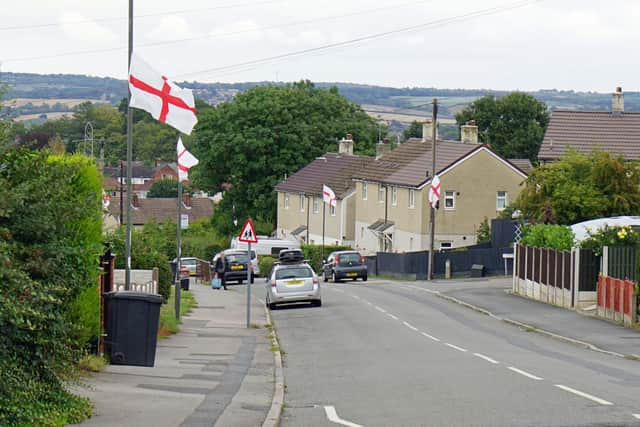
Supporters of the flag campaign say the Union Jack or Saint George Cross are innocent markers of pride in the nation, its people, heritage and culture.
Peter Ireson and Glen Hardy who helped start the recent emergence of St George and Union Jack flags in Brimington and Old Whittington said it was to pay tribute to armed forces veterans - and condemned any racist comments that have been made in connection with the campaign.
But Isa said: “It’s a bit scary and eerie going about your day and seeing so many of them everywhere.
"The flag is a symbol that means different things to different people. However, in this case, amid the current wave of the far-right, and ‘stop the boats’ rhetoric, the flag evokes a nationalism synonymous with the scapegoating of immigrants.
“Rather than serving to ‘unite the kingdom,’ it fuels an ‘us’ and ‘them’ mentality on our streets — a path which will lead us only to division.”
She added: “To me, it just seems exclusionary, and tied to a certain idea of Englishness which ignores and dishonours all of the influences from everywhere else in the world that have made England what it is.
“I’ve looked at all the ‘Raise the Flag’ propaganda and tried talking to some of its supporters online. It’s hard for me to grasp at what point they define Britain as Britain, when it’s historically been a colonial empire and always been made up of people from all around the world.”
Such points were put to Derbyshire County Council when Isa submitted an anti-social behaviour complaint to the authority, asking councillors and officers to reconsider their stated policy of not addressing the flags unless they were deemed a road safety hazard.
She said: “I urge the council to remove these flags so that Chesterfield's public spaces may stop championing racist sentiment that attacks the multiculturalism which is, ironically, the cornerstone of England. “Road safety is one thing, but they have responsibility to keep people safe in other ways too – like safety from hate crimes. This is exactly the kind of thing it’s their responsibility to fix, and I know councils in places like York have already started taking the flags down for that reason. Derbyshire’s response was really disheartening. It was the most dismissive, unfeeling email I’ve ever read.”
In recent days, Derby City Council has said it is monitoring flags as a potential form of intimidation, hate crime or harrassment.
But in their reply to Isa, a county council officer wrote: “Our highways policy sets out a risk-based approach to managing issues such as flags being attached to streetlights, or painted on roundabouts.
“We will assess to see if they pose a danger to the public. We will only remove them if they do pose a danger. It’s highly unlikely that we will remove most of the flags.”
Isa added: “If it’s no crime to put them up, it’s even less of an action to take them down. I could go and start doing it myself but I’m five-foot-five with no ladder, so might not get very far. It’s really about calling on authorities with the resources to fix it. I’d encourage people to start taking them down too but I know there have been cases of people getting harassed for it.
“It becomes risky if Derbyshire County Council aren’t going to do anything about it. That’s why it needs a solution from those in authority.”