
Putting your questions to Peak Cluster chair on 121-mile C02 pipeline which will pass through High Peak
From safety concerns to the route the 121-mile C02 pipeline would take, to how the High Peak will benefit - we put residents’ concerns and questions to the top boss at Peak Cluster.
Peak Cluster is a project which if approved would see the harmful carbon dioxide from three cement and lime plants in Derbyshire and Staffordshire captured and transferred by pipeline to a storage facility under the Irish Sea at a cost of many millions and millions of pounds.
The proposals have been controversial with thousands signing petitions against the developments, citing safety concerns and a recent residents' meeting was standing room only and a county councillor is calling on her fellow councillors to formally oppose these plans.
We put these concerns to David Parkin, chair of Peak Cluster.
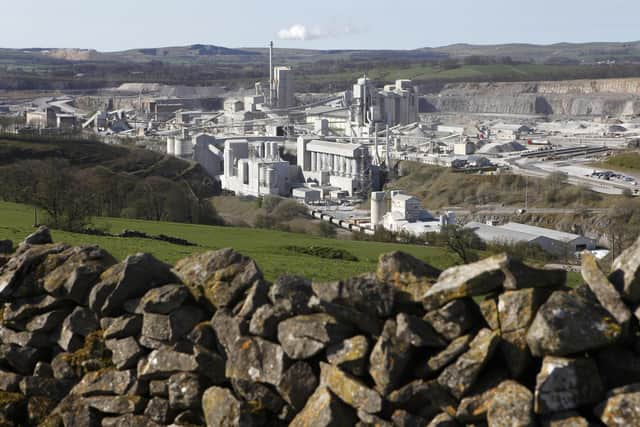

He said: “The cement and lime industry has been a part of the region’s rich industrial heritage for more than a century. However, as we move into the future low-carbon economy, industry needs to adopt new, sustainable ways of operation and production.
“Peak Cluster would enable this transition to protect around 2,000 existing jobs connected to the cement and lime plants in Derbyshire and Staffordshire and stimulate investment.”
Safety has repeatedly been raised as an issue with the pipeline.
Mr Parkin said: “Gas and liquids have been transported using pipelines for over 100 years in the UK.
“There are currently around 27,000km of high-pressure pipelines carrying natural gas and a range of other fluids, including aviation fuel, ethylene and other chemical products. The practice is very well-established and robustly regulated, and the UK has a global reputation for safety in this field.
“Carbon capture and storage (CCS) technology has been used since the early 1970s and there are more than 8,000 km of CO₂ pipelines operating globally.”
He says as of mid-2025, there were more than 600 CCS projects at various stages of development, globally.
He told the Advertiser that the UK’s first two CCS projects, HyNet in Cheshire and North Wales, and East Coast Cluster in Teesside, are both in construction.
All aspects of the pipeline’s design, monitoring and maintenance would follow the full set of safety measures required by the Pipeline Safety Regulations, he said.
These are all measures typical of high-pressure natural gas pipelines, including the 27,000km of pipelines in the UK, and ensure pipeline design consider factors including corrosion, third party damage, proximity to communities and ground movement. These measures include; ‘heavy wall' pipeline in areas of high population density, aerial surveys, pipeline ‘walks’ and vantage point surveys undertaken regularly along the route of the pipeline as well as in-line inspection – this is where an inspection tool is run inside the pipelines to measure for corrosion, dents, painting and coating defects.
Mr Parkin said: “We are also exploring market proven, leak-detection technologies that could be installed along the pipeline to identify potential leaks by detecting tiny changes in vibration along the fibre‑optic cable.
“This would allow us to detect issues in real time and quickly isolate sections of the pipeline.”
Although the major infrastructure project has not been given the go-ahead one yet the route which has been suggested initially is an Above Ground Installation of up to 100m x 100m on the hills between Dove Holes and Chapel.
The pipeline would then travel under the Buxton rail line and behind Chapel High School, cross Manchester Road near the Hanging Gate Pub, go behind Chapel Golf Club and up the hill above Tunstead Milton.
It would then cross Eccles Road near to the junction with Milton Lane, cross Sunart Fields going down to Silk Hill/Bings Road, travel under the Goyt River and Peak Forest Canal.
Residents are concerned about landslides and leaks as the route passes through so many communities.
Mr Parkin said: “The development of a pipeline route is a long and technically detailed process.
“We are still at an early stage and considering all options to determine the best route for the pipeline.
“So far, Peak Cluster has identified a wide search area, which includes land where the pipeline could potentially be laid.
“The search area takes into account built-up areas, geology, existing infrastructure, and areas of environmental importance.
“We are using the feedback from local communities and other stakeholders gathered during our initial consultation to continue to develop a further iteration of the project design with greater detail on our proposed pipeline route.”
He says over the course of the next three years, this process will shape a route for the pipeline that is ‘safe, has minimal environmental impact and is constructible’.
Peak Cluster is being developed to help ensure the UK can continue to have a secure, reliable supply of British-made cement and lime, Mr Parkin says.
“It is essential for building homes and infrastructure, producing safe drinking water and creating healthy soils for food production.
“Concrete, of which the key ingredient is cement, is the second most‑used material on Earth—only water is used more.
“At the moment, there simply aren’t any alternative materials to cement and lime and that can be produced at the huge scale we need to fulfil the demand across the UK.”
The Advertiser questioned Mr Parkin on alternative ways to capture the carbon dioxide emitted during manufacturing of cement and lime.
He said: “As cement and lime are produced, carbon dioxide is released directly from their main ingredient – limestone.
“Currently, that carbon goes straight into the atmosphere, adding to climate change.
“The only proven way to stop the carbon dioxide being released is to capture at its source at safely storing the carbon dioxide permanently underground.
“Our starting point for Peak Cluster was to look at different ways to reduce carbon emissions from cement and lime plants to find the most efficient approach.”
He said there were three three options, the first to move the cement and lime plants to the coast.
This would necessitate transporting the raw materials such as limestone rock from where they are found naturally in Derbyshire and Staffordshire, by rail or road in many thousands of journeys.
The second option is to capture and transport the carbon dioxide emitted by road in trucks. The estimated number of truck movements added to the roads is 400 each day.
The third is to capture and transport the carbon dioxide emitted via a buried pipeline, to a large, secure underground store.
Mr Parkin said: “Having evaluated the options, an underground pipeline to transport carbon dioxide emissions from the industrial sites to be stored permanently within the seabed was determined to be less disruptive to the local communities and business in the long term, and with less overall environmental impact, including that on local air quality.
“In order to securely lock away the large quantity of carbon dioxide emitted from the Peak Cluster cement and lime plants, we would need a large store.
“There are no suitable structures in which to safely store carbon dioxide near to the cement and lime sites.
“This is why we would need to transport the captured emissions through a buried pipeline to MNZ which has the capacity to safely hold around 1 billion tonnes of CO₂ beneath the East Irish Sea which is all the carbon dioxide emissions from the Peak Cluster’s cement and lime plants for around 330 years.”
Mr Parkin said he encourages resident feedback in the next consultation on the matter.
He added: “In addition, as part of our plans for the future operation of the project, we would work with local stakeholders to understand how we can best benefit the local area.
“Our plans for community benefit opportunities are still very much in development and as a result, we would encourage local residents to provide feedback on community benefit opportunities in the second consultation phase being held later in 2026.”