
No Environmental Statement required for proposal to build up to 580 new homes on Green Belt near Chesterfield
A company’s proposal to build up to 580 new homes in the Green Belt near Chesterfield will not require an Environmental Statement.
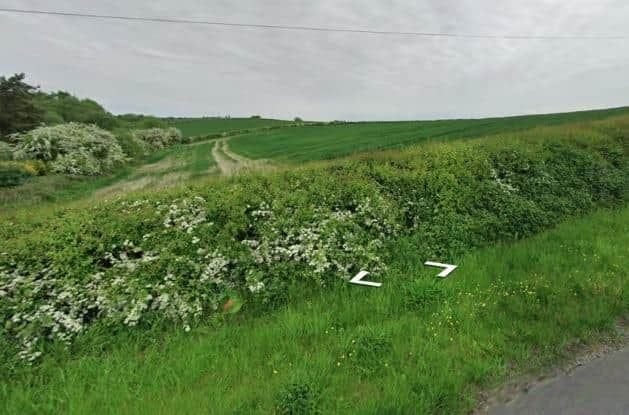
Pegasus Group, an agent acting for Harworth Group, has stated that an outline planning application to develop land on the south side of Whittington Road near New Whittington is anticipated to be submitted to Chesterfield Borough Council in autumn 2026.
The agent submitted a request for an Enviromental Impact Assessment Screening Opinion to the council which has now ruled that an Environmental Statement is not required.
The council based its decision on an officer’s report which looked at the size and design of the proposed development; cumulation with other existing development and/or approved development; the use of natural resources, in particular land, soil, water and biodiversity; the production of waste; pollution and nuisances; the risk of major accidents and/or disasters relevant to the development concerned, including those caused by climate change; risks to human health, for example due to water contamination or air pollution.

Key statements in the report included: “The cumulative effects of such a large scale development are relatively unknown at this stage given the work pending on the local plan allocations to meet the uplift in the amount of housing required throughout the Borough, and uncertainty regarding The Former Staveley Works site and Chesterfield to Staveley Regeneration Route. The impacts this development will have would have to be carefully considered. It is noted however that relatively few approved larger developments have taken place recently around New Whittington and Barrow Hill, reducing the likelihood of cumulative impacts from this development.
“The location of this substantial housing development is on the edge of the urban area of New Whittington and is contained by existing roads and railways. Given the scale of the development it is considered that the proposal will result in some urbanising effect in a previously non-urbanised area. However, given its proximity an urban area and the presence of visible site boundaries it considered that this would be limited mainly to the local area around New Whittington and Barrow Hill. Air pollution impacts are likely to be mainly to surrounding roads and given the scale of development and lack of existing issues is considered that these can be dealt with via suitable mitigation measure as part of a planning application.”
In conclusion, the report stated: “There are likely to be visual, ecological, and air quality impacts resulting from the development, however much of this harm would be localised and can be mitigated through the remit of any planning application.”
A resident, whose property directly backs onto the proposed site, expressed “strong objection and deep concern” in an email to the council They wrote: “This development will have a severe and detrimental impact on my daily life and the wider community.”
The writer objected to the loss of community green space which is used by families for children to play and dog walkers. They commented: “Destroying this agricultural land removes a vital natural amenity from New Whittington.
"The developer is questioning the need for an Environmental Impact Assessment. Given the scale of the destruction of natural fields, a full EIA is absolutely essential to evaluate the loss of habitat.”
Severe congestion in Whittington which serves as the sole main route from this area to New Whittington roundabout was among concerns raised by the correspondent. The objector’s email said: “Additionally, Barrow Hill is subject to known, recurring flooding. When these flooding events occur, traffic is forced to divert, causing an overwhelming volume of vehicles directly onto the roundabout. Adding the daily vehicular traffic of up to 580 new homes to a system that is already struggling, let alone during flooding, showcases a severe impact on day to day commutes. A development of this scale is completely unsustainable without a comprehensive, independent cumulative transport assessment that accounts for these local flood diversion patterns.”
The additional strain on local infrastructure and social facilities was also highlighted in the writer’s objections.They stated: “New Whittington’s existing social infrastructure is already under immense pressure. Local GP surgeries and primary schools are operating at or near maximum capacity. Introducing a major development of up to 580 homes will inevitably overwhelm these vital services, leading to unacceptable wait times for healthcare and a severe deficit in local school placements for children. The developer has failed to demonstrate how the local area can absorb a population increase of this magnitude.”
The writer commented: “A development of this scale directly behind existing residential homes will create enormous, unacceptable levels of noise pollution, both during the extensive construction phase and permanently thereafter.”