
Mayor’s £298m transport fund paves the way for Chesterfield and Hope Valley schemes
East Midlands Combined County Authority has approved £298.19m of further Government funding for the Mayoral Transport Fund for the next three years to lay the foundations for key projects including improvements across Chesterfield and for the Hope Valley Mini Switzerland integrated public transport scheme.
The authority recently approved the Department for Transport’s Transport Investment Programme allocations for 2026/27 to 2028/29 as part of the region’s Mayoral Transport Fund award which previously received agreed allocations of £470m for better buses, road repairs and safer cycle routes for the next three years.

EMCCA Mayor Claire Ward said: “I am committing a further £298m from my Mayoral Transport Fund to create the reliable, safe, and accessible transport network that our region needs.
“By improving key bus routes, upgrading bus stops and stations, and enhancing active travel networks, we’re helping communities to be better connected to jobs, training opportunities, and each other.

“Transport is a key part of everyone’s daily lives, and for too long, our communities and businesses have had to contend with a transport network that was holding them back.
“By working with our partners across the region, we are building a network that works well as one system and supports the East Midlands to thrive.”
EMCCA’s investment plans feature feasibility testing for the Chesterfield Cluster project of over £1m, overseen with Derbyshire County Council, for projects to improve transport links between the town centre and its railway station for the revised Station Masterplan, for town centre transit to the planned Peak Resort and for connections around the Chesterfield Hotel site, Waterside, town centre regeneration, and Spire Neighbourhood plans.
Other projects include £3m for a groundwork investigation with a feasibility study into the Chesterfield Staveley Regeneration Route ahead of a separate funding bid to Government for the overall estimated ‘£197m’ bypass scheme which has been overseen by Derbyshire County Council.
An EMCCA spokesperson stated: “This Chesterfield Staveley Regeneration Route scheme is critical to unlocking land across the Staveley and Rother Valley Corridor directly facilitating 1,500 new homes and 5,700 new jobs as set out in the Chesterfield Local Plan and the Outline Business Case which was submitted to Department for Transport in 2023.
“Delivery of housing on this vast area of brownfield land will protect other greenfield sites from future development where housing would be far less sustainable and accessible. The Outline Business Case has been submitted to DfT’s Large Local Majors programme.
“The Department is due to make decisions on this programme in 2026, committing to completion of the current stages of the programme is key in re-affirming the suitability of the scheme.”
It is hoped the Chesterfield-Staveley bypass scheme will support business, growth, the economy and plans for new homes.
Plans for the A61 Chesterfield to Clay Cross corridor, also overseen with Derbyshire County Council, have also benefited from £3.5m of EMCCA funding for feasibility testing for possible interventions on what is regarded as a strategic link from and including its junction with the A617 to Clay Cross.
It is hoped these highway improvements will boost connectivity and unlock potential employment and housing growth areas while supporting economic development and productivity and strengthening and extending reliable public transport.
EMCCA has also agreed a £100,000 allocation for the Chesterfield Walton Hospital for the upgrading of footpaths and bus stops to provide easy access to the site from a nearby frequent bus service and from the town centre to encourage greener, safer, healthier transport while improving connectivity.
Two streams of funding have also been allocated to support Derbyshire Market towns including totals of £450,000 and £14.25m aimed at creating a connected, vibrant, and sustainable network of market towns that supports inclusive economic growth, improves quality of life.
And £100,000 has been allocated for the Barlborough active travel link to Clowne Greenway, overseen by Bolsover District Council, to create an improved active travel network link for walking and cycling.
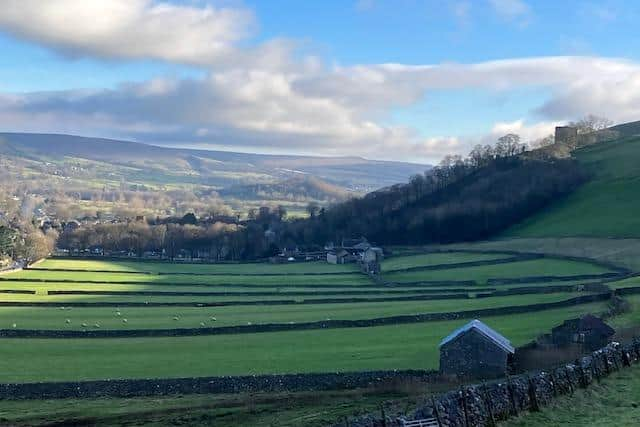
One of the most exciting projects for the region is the Hope Valley Mini Switzerland integrated public transport scheme to create a Swiss-style, integrated network with hourly, timed connections between buses and trains.
This is supported by £6m of Department for Transport funding for service enhancements, ticketing, information, marketing and project-support matched with £6m of EMCCA’s total capital requirement funding from its Transport Investment Programme for bus stop and interchange enhancements, information and ticketing development with a ride app.
This builds on previous work by Hope Valley Climate Action, a Community Interest Organisation, who formulated the Mini Switzerland proposal to create a Swiss-style, integrated public transport network.
The scheme aims to be implemented in partnership with bus companies, rail operators, local authorities, adjoining combined authorities, Peak District National Park and Visit England.
An EMCCA spokesperson stated: “We will be securing a project management resource shortly to manage this multi-agency project over the next 36 months.”
It is expected this project will be phased over a three-year period with capital enhancements and maintenance and a communications campaign in the first year, a service enhancement and project launch in the second year, and a review with longer term considerations in the third year.
EMCCA has also recognised the M1 motorway Junction 30 and the ‘Treble Bob Roundabout’, near Barlborough, are key to housing, growth and inward investment supporting the Hartington and Staveley growth corridor and the Explore Park Investment Zone site, while also being an important part of a high volume east-west freight corridor through the region.
Interest in this scheme has increased significantly, according to EMCCA – no doubt influenced by the massive Clowne Garden Village housing scheme for 1,800 homes and a proposed Great Wolf water park scheme for nearby Whitwell Common – and EMCCA has realised that further development work on these network plans may need to be investigated.
The latest allocation of £298.19m of funding, approved on June 8 at an EMCCA Board meeting, aims to transform travel across Derbyshire and Nottinghamshire with new electric buses, upgraded bus stations and shelters, safer walking and cycling routes, and improved real-time travel information.
An EMCCA spokesperson stated: “These investments continue the principle of using the revenue allocations to develop the pipeline of future scheme investments.
“Crucially, this will enable a comprehensive approach to be undertaken, prioritising delivery options for transformational investments in the later years of this settlement period, further driving delivery of the region’s strategic priorities as outlined in the Growth Plan and emerging Mayor’s Transport Plan.”
Other improvement projects earmarked for funding in Derbyshire include five new transport hubs including at Glossop, Clowne, and Ilkeston, a transformation of active travel, and 700 new real-time information displays at bus stops, at transport hubs and at key destinations with a particular focus on Bolsover, Derbyshire Dales, High Peak, and South Derbyshire.
Derby City projects include new walking and cycling routes including the MickMack cycle route, and around Ashbourne Road and Prince Charles Avenue, the A38, and Station Road, Mickleover, and an upgrade for 120 bus stops with improvements for Derby Bus Station.
Nottinghamshire projects include upgrades for walking and cycling routes at the Lady Bay and Cyril Road and Mabel Grove junctions, improvements for key bus routes and junctions in Hucknall, Sutton, and for for the A60 at Baum’s Lane, as well as new transport hubs at Radcliffe-on-Trent, Cotgrave, East Leake, and Ollerton, as well as a new bus station in Sutton-in-Ashfield, 900 new real time displays and solar powered lighting at 500 shelters.
Projects for Nottingham include a new cycle track along Wigman Road linking to Harvey Hadden Sports Village, improvements to bus services including new electric buses for Nottingham City Transport and Trent Barton and new bus shelters, reducing passenger delays by improving busy bus routes including the A6002, Thane Road, and Meadows Way and pedestrian improvements.
The Mayoral Transport Fund is part of the Government’s total of just over £2bn of Transport for City Region funding, announced in 2025, for EMCCA to span over a six year-period for Derby, Nottingham, Derbyshire and Nottinghamshire which aims to deliver capital improvements to transport infrastructure.
EMCCA says it aims to continue to develop the projects with councils across the region to support long-term transport planning and inclusive growth.
The investment aims to modernise the region’s transport network, support economic growth, and improve environmental sustainability while delivering improvements for Derby, Derbyshire, Nottingham, and Nottinghamshire.