
"It's too complex for the NHS": Derbyshire woman in race to raise £125,000 for life-saving spinal surgery
A Matlock woman is in a desperate race against time to raise £125,000 for a medical evacuation to Spain and surgery not available on the NHS, or face permanent neurological damage from a condition which currently forces her to lie horizontally around the clock.
Lilybank Close residents Sophie Carter, 30, and her mum Dawn have been left no option but to appeal for public donations before it is too late, with a specialist clinic in Barcelona one of only two worldwide capable of providing treatment.
Though she was unusually flexible as a child, it did not emerge until early adulthood that Sophie had been born with a form of the rare genetic Ehlers-Danlos syndrome (hEDS), which affects proteins such as collagen essential to the body’s connective tissues – skin, tendons, ligaments, blood vessels, internal organs and bones.
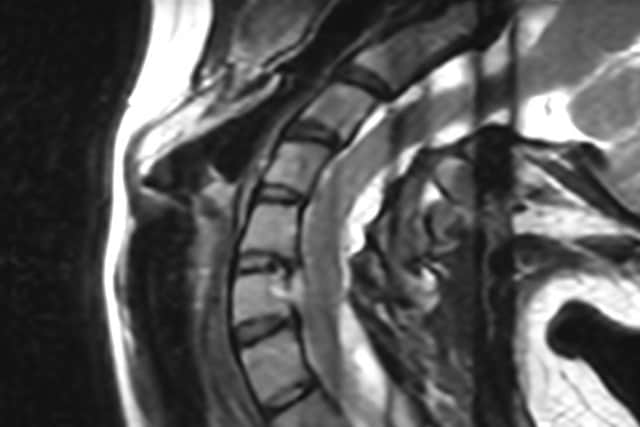
For some the symptoms can be mild, but at the start of 2026 Sophie learned she had severe craniocervical instability (CCI) – abnormal movement due to loose ligaments at the junction between her skull and spine.
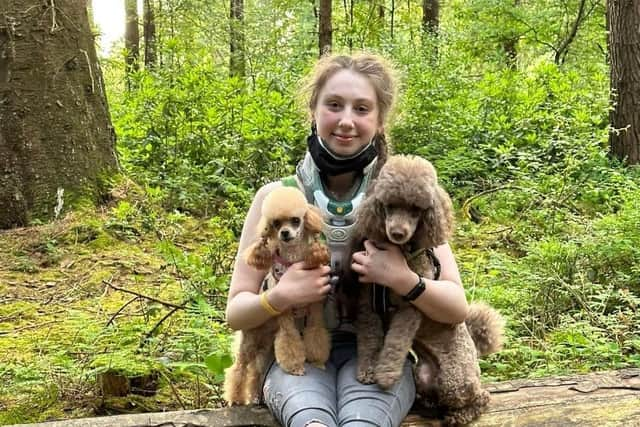

Medically described as ‘hypermobile’, her reality is anything but. As shifting vertebrae have compressed her brain stem and spinal cord, Sophie’s quality of life has deteriorated rapidly.
She said: “It’s really extreme, constant pain, like someone drilling into your spine and skull, while your head feels heavy like a bowling ball that you can’t balance.
“In January I could still sit up for 15 minutes, still use my wheelchair, but now I have to lay flat almost all the time.
“It also affects my vision, hearing, swallowing and the whole autonomic nervous system – any process in the body you don’t usually have control over.”
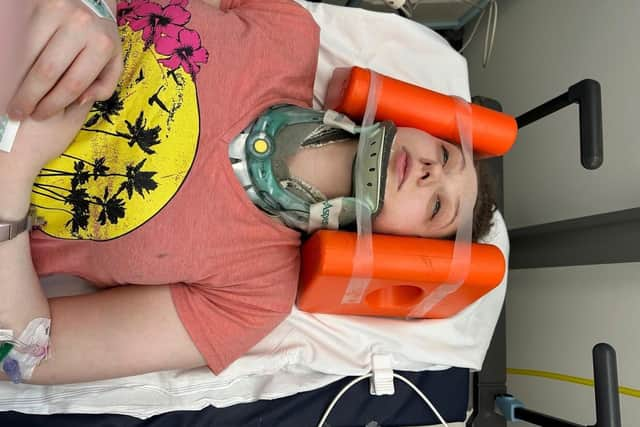
The instability is so dangerous that even if she can fund the operation in Catalonia, Sophie will have to travel by medical transport plane, remaining flat and cushioned against the forces of flying.
Surgeons would then carry out a cranial cervical fusion, creating an internal scaffolding system of titanium rods and screws between the base of the skull and a vertebra below, reinforced by bone grafts to create a lasting support structure.
Further procedures may be necessary too. The team in Barcelona cannot fully assess Sophie’s condition until she undergoes imaging tests on site – all of which must be factored into the cost estimates – they are, however, optimistic she can expect a significant degree of recovery.
Without that intervention, she will continue to face increasingly frequent loss of consciousness, episodes of paralysis and speech loss which can last for more than 24 hours, tremors, vertigo, nausea and the likelihood that the damage gets progressively worse until it is permanent.
Sophie said: “It was a shock to be told that I needed this surgery as soon as possible. The problems sort of plateaued in 2023. I knew it was getting worse again but I didn’t realise it was quite so severe, and then the symptoms went off a cliff.
“We’re not a wealthy family, so when the quotes came back that was an even bigger shock. We didn’t want to ask for help, I’ve always wanted to be a person that helps others, but when the neurosurgeon said without this operation it would become irreversible, it became clear that we had no choice.”
As it stands, around £10,000 has been pledged by friends, family and people who have come across the story online.
Sophie said: “We’ve been trying to fundraise since January but it’s not easy when you’re so ill. I’ve been incredibly moved to seen any donation or message of support come in.
“It’s difficult to put into words what it means when you’re going through something like this. I could never get there on my own. I’ve lost so much but I’ve gained a new sense of friendship.
“The kindness of strangers has helped me believe this massive target might actually be reachable, and it’s restored my faith in humanity.”
Patients like Sophie are currently falling through a gap in NHS services. The expertise exists in different parts of the system but there is no established pathway that takes hypermobile EDS patients with suspected CCI from diagnosis to specialist assessment and, when necessary, to surgery.
Diagnosis alone can be difficult. Upright imaging is not routinely available in the NHS and a standard MRI, performed lying down, will not reveal the true picture of any instability when the spine is supporting the weight of a patient’s head.
Sophie said: “I’ve been told there’s no care available on the NHS. The NHS really is amazing, it’s just that sadly help isn’t available for this specific condition. I have a specialist physiotherapist and neurosurgeon but all of that has to be paid for privately.
“In July I was admitted to hospital after I lost consciousness and fell at home. The doctors told me my case was too complex for them. It’s scary to know that at any point I could be permanently paralysed, or worse, but for some reason I’m too complex for UK doctors.”
The absence of a dedicated NHS service, and the fact that patients are being forced into dire straits and out of the country for treatment, was debated by MPs at Westminster in March.
Derbyshire Dales representative John Whitby has also raised Sophie’s case directly with the Department of Health and Social Care.
She cannot afford to wait for change. The risk grows with every passing day, and so does the emotional toll.
Dawn said: “As a mum it is so heart-breaking to seeing my daughter suffering so much, crying in my arms because the pain and symptoms are unbearable and she desperately wants to get just some of her life back but I can’t help stop her suffering alone.”
Sophie said: “Mum is not well herself and this is making her health worse. She was trying to do everything for me but as I’ve deteriorated I’ve needed more and more, and she just can’t do any more. We’re trying get professional care support at the moment. We both feel trapped in this situation.
“It’s upsetting for me to have to rely on others so much, especially when I want to be the one helping mum. I’ve lost all my independence. The simple things and day-to-day tasks that most people take for granted, I’m completely reliant on others for. I’m living horizontally, trapped in this body, but my mind still wants to do everything.
“My dogs, Bonita and Melody, have been a huge help, keeping me company. I rescued one of them, but I’d say she’s rescued me more. When I’m paralysed and cold, she’ll come and lie on me to keep me warm.”
Sophie added: “All of this has been a bitter pill to swallow, and really hard. When I was younger I was active, independent and ambitious. I liked going out with friends, looking after other people and taking the dogs out walking in the beautiful countryside we have here in Derbyshire.
“I studied photography, and had a deep love for it. I was really excited about using what I learned about setting up my own business. Even as my condition developed I thought I would keep sticking to my dreams as much as I could.
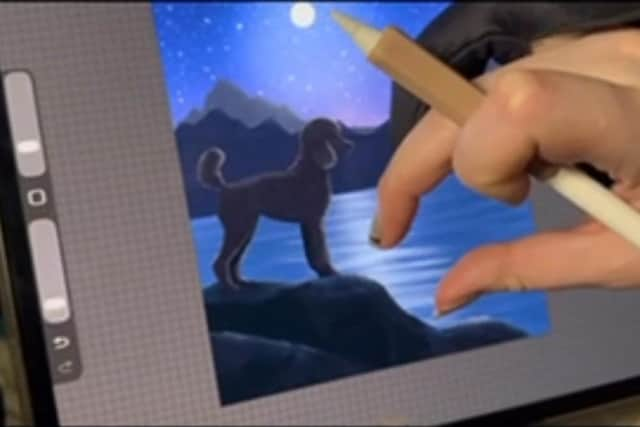
“Now I still try to do art, but it’s a few minutes at a time on a tablet suspended over my bed. I try to paint the places that I’ve been before, or wanted to go to before I got ill. I never could have imagined my life would be this restricted.”
While Sophie may have been stopped in her tracks, her drive and determination remain.
She said: “I try to stay hopeful about life after surgery, and doing all those things I miss. Nobody can say how long I would be in Spain because it depends how the rehab and recovery goes. It’s a really daunting thing to think about, going so far from my home, family and support.
“The doctors say it should be a major improvement to my quality of life. Even just being upright again would mean I regain my independence.
“My condition has got so debilitating that it won’t change overnight, but the surgery will stop the decline and then I’m fully ready to work as hard as possible and go as far as I need to rebuild my life and recover as much as I can.”
For more details and donations, go to gofundme.com/f/help-sophie-get-life-saving-spinal-surgery. To follow the story further, find @spineforsophie on Instagram.