
Google streetview screenshots, monitoring and blacklisted communication: The untold tale of a Derbyshire council’s costly battle with a retired teacher
Google streetview screenshots, records office monitoring, blacklisted communication and alleged “malicious revisionism” – we can reveal the untold tale of a council’s costly battle with a retired teacher.
In mid-September, a tribunal court judge ruled in favour of Helene Ball, aged 81, of George Road, Matlock, in an expensive and trying three-year dispute with Derbyshire County Council which left the former teacher in ill health and feeling persistently bullied.
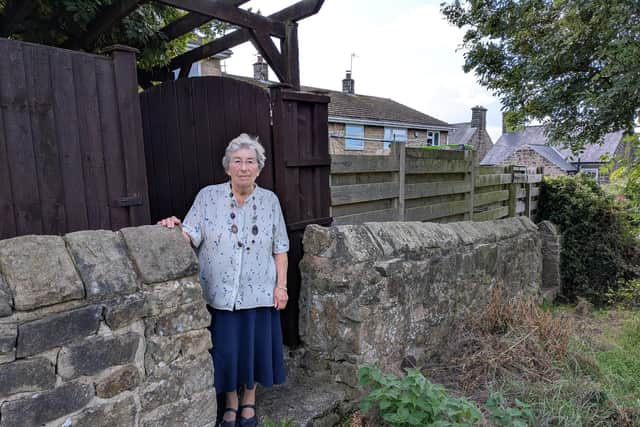
This brought to a close a battle which started with the council installing a metal fence panel across the 98cm gap in Mrs Ball’s rear garden wall on the morning of April 26, 2023.
That move formed part of the authority’s broader aims to sell off and build homes on its former Cavendish Road car park, which sits to the rear of Mrs Ball’s property. She had crossed the land for 59 years unopposed and unrestricted.
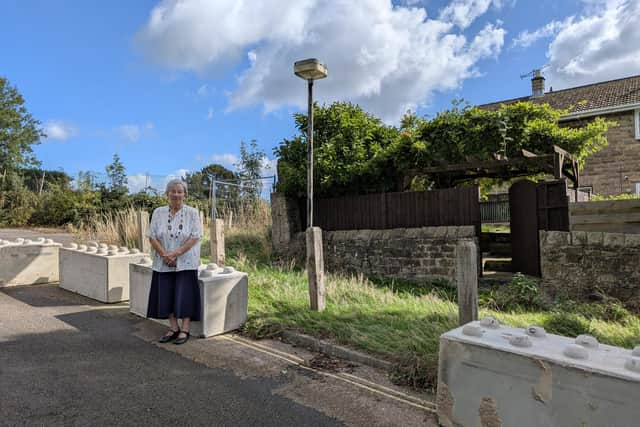

Now, following the court victory and the granting of immediate prescriptive easement rights, the events which followed that fence installation have been laid bare via an extensive complaint filed to the authority by Mrs Ball’s son, David.
This includes internal council emails obtained by Freedom of Information and subject access requests, as well as those forming part of the legal battle itself.
The documents challenge the county council’s and its leadership’s portrayal of the events, which they have issued through public statements and live radio broadcasts.
When we approached the council for comment, including a requested named statement from a councillor and giving them just under 24 hours notice, an authority spokesperson said: “We would deal with Mr Ball’s complaint in line with our procedures and would report back to him in the usual way when we have gone through that process thoroughly.”
It has repeatedly apologised for the “distress and upset” caused to Mrs Ball.
The council has been repeatedly asked for the full cost to the authority of the legal case, minus those which may be owed to Mrs Ball. This is the only part of the situation yet to be determined, with a judgement in the case having already been handed down.
Estimated costs to Mrs Ball herself stand at around £40,000, the Local Democracy Reporting Service has been told.
A spokesperson was challenged on the continued refusal to release costs and said: “We will release the costs when they have been finalised by the court.”
This has also been requested via a Freedom of Information request, which also led to a refusal to provide the costs.
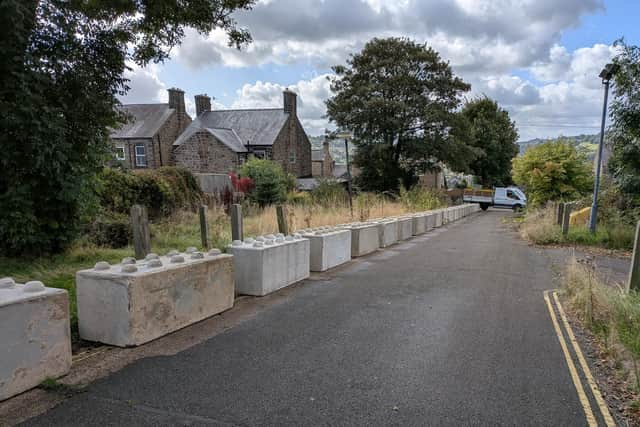
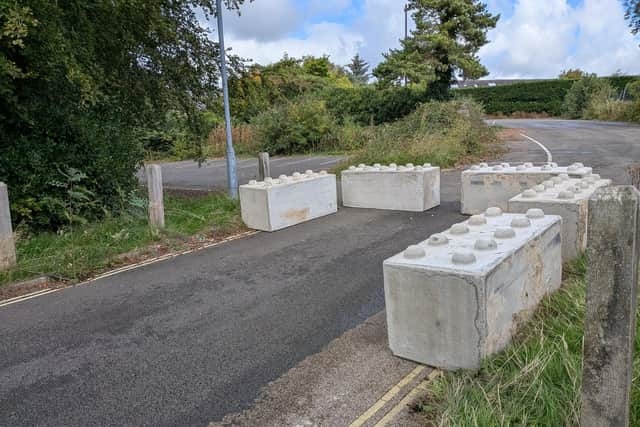
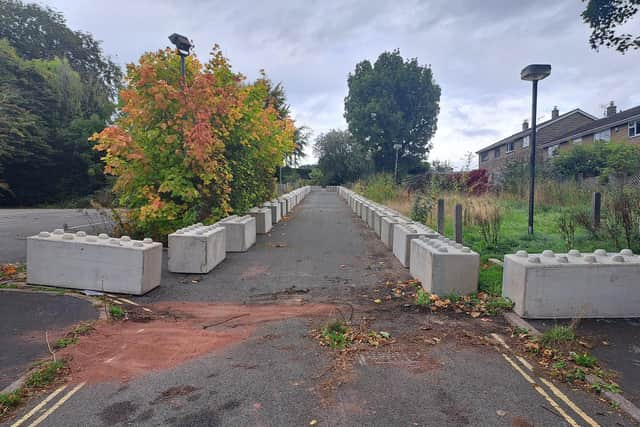
On September 17, after the result of the court battle was made public by the courts, 54 large concrete Lego-like blocks were arranged in a narrow channel to allow vehicle access to Mrs Ball’s property.
Despite its refusal to provide all other costs, the authority has said these blocks cost £7,700.
A plan for the protected access was submitted to the court and approved, with the blocks to not sit within the road carriageway, but along its borders. This is not what has been installed.
In an email written by council officials on May 17, just over a month after the fence panel was put in place, the authority said it would only remove the fence panel if Mrs Ball started legal action.
Legal action was then started by Mrs Ball, but she and her son contend that the purported narrative from the council and its leadership that they were merely the “respondent” with proceedings “brought against it” is disingenuous at best.
Documents uncovered by Mr Ball show he was effectively blacklisted by the council over alleged “vexatious” requests for information that would help support his case, including his visits to the Matlock Record Office being catalogued and officials being told not to respond to him. He says he was just undertaking extensive fact-finding for his mother’s case.
The complaint shows the council tried to initiate a temporary access agreement over the land, which had Mrs Ball have signed it, would have seen the end of her permanent right to access due to historic use.
In total, the fence panel stayed up on the wall for 349 days before it was removed by force.
Council emails show the authority was also irritated that the unlawful fence panel was taken down via Mr Ball through abatement rights.
Documents show the issue is indisputably linked to the council’s attempted sale of the car park for housing, and connection to the rejected plan to build more than 400 homes on the Matlock Wolds on the hillside north of the site, including a drainage easement agreement.
That sale was agreed and then withdrawn and now the car park is no longer available for the sale, with £100,000 having been spent on the scheme.
Meanwhile, transcripts from court, forming part of the complaint, along with documents of the evidence base, show the council only had four Google streetview screenshots to support its argument about transgressing Mrs Ball’s access rights.
These showed the entrance to the car park and signage for four dates – March 2010, October 2014, April 2019 and September 2022 – which the authority purported backed up its claim that access was clearly restricted and enforced, with this claim fully rejected by the tribunal judge Robert Brown, who queried the council’s “limited” evidence.
Councillor Stephen Reed, the authority’s deputy leader, and the council through public statements, have insinuated it could not drop the case and that all paths for negotiation were taken.
However, documents show the council rejected a statutory six-month negotiation period aimed at avoiding the May 13 tribunal hearing.
Mr Ball dubbed the council’s approach to the issue “defensive, adversarial and dismissive”.
This was matched by Judge Roberts, who assessed the case as containing “unsubstantiated assertions” with council representation “surprisingly combative”, “mostly unhelpful”, “totally irrelevant” and “pugnacious”.
Since the publication of an article on the judge’s decision, Reform UK’s county council administration has “withdrawn engagement” from this author journalist, ceasing all communication with the 42-strong controlling group until further notice.
Mr Ball said: “Accusing a journalist of inaccuracy while simultaneously spewing state-funded disinformation into the public domain is hypocrisy at best, propaganda at worst.
“Derbyshire County Council spent three years aggressively pursuing an unwinnable case, wasted tens of thousands of pounds of public money, and got heavily penalised by the judge.
“For them to now use malicious revisionism to distort the clear documentary record – portraying my mother as the aggressor and themselves as reluctant participants – is an insult to local taxpayers and a cruel continuation of the distress they have caused to an elderly, disabled resident.”