
Derbyshire firm’s fears over Government’s 50per cent tariff plan on imported steel
The East Midlands Mayor has written to the Chancellor of the Exchequer Rachel Reeves with concerns for certain manufacturing companies who fear significant and harmful extra costs due to Government plans to introduce a new tariff of 50per cent on steel imported into the UK.
Labour Mayor Claire Ward, of the East Midlands Combined County Authority, acknowledged the Government’s bid to protect the British steel industry but she highlighted the plight of Derbyshire’s West Special Fasteners, of Dronfield, and similar manufacturers who rely on different types of steel imported into the UK and could subsequently face crippling extra costs.
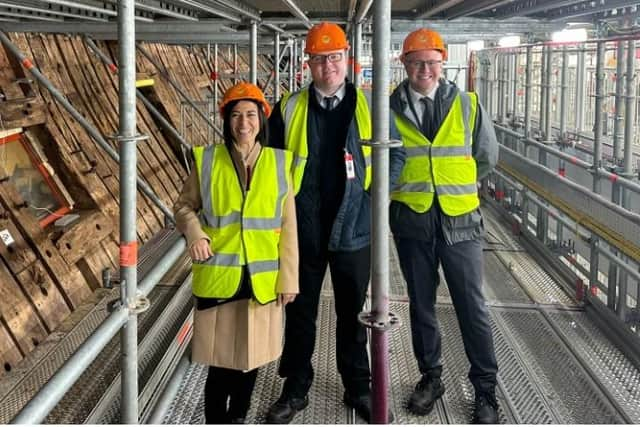
Ms Ward said: “West Special Fasteners, a company in Derbyshire that employs 70 people, manufacture a specialised product that requires a steel of a specific gradient, that cannot be sourced in the UK on the scale that they require.
“They have stated there will not be enough time for our own steel mills to produce the steel they need, and that many other supply chain companies will need, to continue to manufacture their products.

“They fear they will lose out to European competitors, who will not face the same tariffs when buying in the materials for manufacture.”
Ms Ward met with West Special Fasteners who recognise and support the Labour Government’s intention to protect the UK steel industry but the firm is calling for these tariffs, due to be introduced from July 1, to be brought in at a much steadier pace to allow UK mills to produce the appropriate gradients of steel required.
The East Midlands Mayor stated if there is no plan to produce these gradients and types of steel in the UK then a reduction or exemption from the tariff is required because without these actions, the future of the company is at risk.
MP Liam Byrne MP, Chairperson of the Business and Trade Select Committee, has raised similar concerns and Ms Ward stated that she agrees with his conclusion that ‘the measures risk serious and immediate harm to downstream industries that are critical to UK growth, exports, and national security’.
Managing Director Sonja Skelton, of award-winning West Special Fasteners, of Callywhite Lane, Dronfield, which has worked on many famous structural projects, said: “The Government are trying to protect the UK steel industry but unfortunately that has unintended consequences if all sectors are not consulted and represented.
“What they fail to see is that many materials within category 14 and 27 of the legislation cannot be manufactured in the UK without the correct approvals which could take years to achieve.
“Also, the UK steel mills have a limited size range of manufacture, they simply cannot cover the demand or approvals required to support critical sectors such as aerospace and defence.
“If a tariff is to be put in place to protect UK industry and steel production, why would you put a tariff in place on materials that are not currently manufactured in the UK? Those materials should be available tariff-free elsewhere as they are not currently manufactured in the UK.”
Ms Skelton explained that West Special Fasteners has to purchase certain approved raw material in bar form from Europe because this is not manufactured in the UK and it would take years for UK steel mills to gain the required accreditation and years of investment to produce all the sizes required to meet UK demand.
She added: “We are put in an impossible position from July 1 where this grade of material, that we have no choice but to purchase from Europe, be hit with a 50per cent tariff.
“There are tariff-free quotas being put in place, but they are so small, they will be exhausted within a matter of days so we must come to the realisation that we will be hit with a 50per cent tariff on any of this material we purchase from July 1. This will make us uncompetitive in the fastener industry overnight.”
The British Chambers of Commerce has also warned that changes to UK steel quotas and tariffs could add millions of pounds to UK manufacturers’ costs.
It stated in a letter to the Business Secretary, Peter Kyle, the proposed changes risk creating ‘real financial and logistics problems’ for industries including construction, engineering and manufacturing which rely heavily on imported steel products that cannot be obtained domestically.
The new system, set to be introduced on July 1, reduces tariff-free import quotas, or duty-free import volumes, by about 60per cent overall, which is significantly higher than the EU’s 47per cent reduction, according to the BCC, but some categories of steel are facing cuts of up to 90per cent.
Tariffs on imports above the quota limits are set to rise from 25per cent to 50per cent, according to the BCC, creating a double hit for firms already struggling with high costs and fragile supply chains.
The BCC warned that firms could be left with little choice but to source steel from cheaper, less sustainable overseas suppliers, undermining the UK’s decarbonisation ambitions and encouraging offshoring of production.
William Bain, BCC Head of Trade Policy, said: “The Government rightly takes the protection of domestic steel production seriously, and action by both the EU and US on tariffs means the status quo is unsustainable.
“But there is a serious risk of unintended consequences from its tariff and quota proposals which could harm the UK’s manufacturing base at a critical time.
“The economy is already reeling from the impact of the Middle East conflict and soaring energy prices.
“Yet these plans will force up costs sharply for firms which rely on imported steel products that simply aren’t available from domestic suppliers.
“The scale and speed of the quota reductions, combined with steep tariff increases, will create a perfect storm for key supply chains.
“Many companies are already warning they will lose competitiveness, cancel orders or relocate production overseas if these changes proceed.
“Without intervention, we risk undermining both our industrial strategy and our net zero objectives. Ministers must act quickly to rebalance the proposals, so they support the entire steel ecosystem, not just a part of it.”
The BCC has joined the East Midlands Mayor in calling for lowering or phasing in the planned 50per cent tariff rate above quota limits, as well as extending transitional easements for existing orders from three months to 12 months.
Ms Ward stated that protecting British steel cannot come at the cost of endangering the UK’s supply chain of small and medium-sized enterprises and she has urged the Chancellor and the Department of Business & Trade to look at ways of mitigating the increasing costs to businesses from these tariffs.
The BCC has also asked the Government for a reduction in the scale of quota cuts to align more closely with international partners, for the publication of a full impact assessment on downsteam industry sectors, and a speeding up of work towards a UK-EU agreement to remove tariffs on steel trade.
Ms Skelton added: “They need to understand which materials cannot be manufactured currently and offer an exemption on those.
“We are running out of time now and an urgent decision needs to be made by the Government. The best option would be to remove categories 14 and 27 from the legislation as they were tariff-free previously.
“When the UK steel mills have the relevant accreditations in place and have ramped up there manufacturing capacity to meet full UK demand in all sizes and forms, then tariff legislation could be amended at that point. 50per cent tariffs on material that is simply not available in the UK will have catastrophic consequences on all downstream businesses.”
She also said: “If we become uncompetitive in the fastener market, we are all at risk.
“I don’t want to be put in a situation where I have to make some unthinkable decisions. For me and my co-owners, it’s been really hard for us, our mental health is at an all time low, the stress we are under is horrendous, through no fault of our own.”
The Government’s new ‘steel trade measure’ is due to start from July 1 from when it will limit tariff-free steel imports, reducing overall quota volumes by 60per cent compared to the steel safeguard measure.
Any imports above these levels will then face a 50per cent tariff, according to the Department of Business & Trade , and the measure will apply to imports of steel products that can also be made in the UK.
The Department for Business & Trade states that domestic steel making is essential to the resilience and security of the UK’s critical national infrastructure and defence supply chains but like many other countries, the UK steel industry has been severely affected by persistent global overcapacity.
The effects of overcapacity, compounded by high operating costs, have resulted in UK crude steel production declining by more than 50per cent in the last ten years, according to the Government, and it argues that without action this will endanger the UK’s ability to produce steel, particularly for defence, energy and transport.
Minister for Industry, MP Chris McDonald, told the House of Commons on July 17: “We need to balance the need to protect domestic steel making whilst maintaining secure, reliable supply chains for downstream businesses. Imports will remain important.
“The Government has engaged extensively with businesses across a range of sectors, including manufacturing, when developing this measure. Indeed, last week I held a roundtable with downstream industry with my Right Honourable Friend the Member for Rhondda and Ogmore.
“We, and the Secretary of State, also heard from several colleagues about the concerns facing businesses in their constituency. We are listening carefully to companies throughout the supply chain as we finalise the measure.”
Mr McDonald said a transitional arrangement has been introduced so the new measure will not apply to goods under contract before March 14 and imported between July 1 and September 30 and a carry-over mechanism has been introduced to give importers more flexibility and the measure will be reviewed after twelve months to ensure it remains fit for purpose.
He added: “We are also engaging intensively with the European Commission on our respective steel measures and are working to find a bilateral solution that protects vital UK-EU steel trade.
“This engagement reflects the unique structure of our trading and security relationships, and the interconnectedness of our supply chains.
“But we need to be clear. If we do not act, then we will not have steel making in the UK. The US, Canada, the EU are all acting. We must too.”
Reform UK-controlled Derbyshire County Council has stated it is backing the BCC and Make UK as they lobby the Government over concerns about the new measures to reduce duty-free import volumes of steel and to impose tariffs on steel imports above this quota.