
Derbyshire farmer brands Government inheritance tax change a “betrayal” which could see farms sold off and some “evicted”
A Derbyshire farmer says he and others feel “betrayed” by Government tax changes which could see farms sold off and some food producers “evicted”.
George Adsetts owns a 200-acre crop and poultry farm in partnership with his father David Adsetts in Bolsover. Prior to this year’s budget farmers such as the Adsetts could claim 100 per cent relief on inheritance tax, passing the business down through the generations.
However, during last month’s budget that changed. Under the new system the relief will be restricted to the first £1 million of combined agricultural and business property. Above this amount, landowners will pay inheritance tax at a reduced rate of 20 per cent.
The Government claims the bulk of claims – based on its latest figures – were below the £1 million threshold and “almost three-quarters of estates claiming agricultural property relief would not be affected by the changes”.
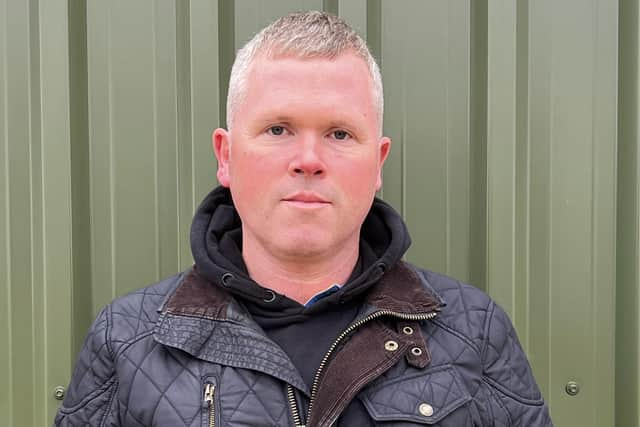

However Bolsover farmer George Adsetts, 39, says those who have previously claimed for under £1 million are not farms but “smallholdings or pony paddocks”.
He said: “The Government has completely miscalculated the strength of feeling – the National Farmers Union (NFU) and a lot of the farming community dispute the figures that the Government has used.
“The Government published some numbers on an A4 sheet of paper from 2021 to 2022 – just one year’s figures. Ordinarily Government figures are published with several years’ worth of data but for some reason, they’ve only published a single year’s data that might be representative or it might not.
"The bulk of the claims are for very low amounts of money, less than £250,000 to £500,000, but agricultural land is £10,000 to £15,000 an acre. So for the levels the Government are talking, it’s smallholdings or pony paddocks. They’re not farms.
"The average farm in this country is somewhere around 300 acres and puts the average farm at £3 million to £4 million. Hobby farmers or small holdings will be unaffected but arguably they shouldn’t be claiming the relief in the first place – they’re not producing food for the nation.”
On November 19 George and thousands of others like him will descend on Westminster to protest about the tax change.
He said: “I think everybody I know is going to that. I’ve not spoken to a single person yet that thinks it won’t affect them. Farms will be getting split off. Agriculture has always had an exemption because in order to farm you sit on a very high-value asset with land for a very low return – you could have a £3 million farm but you’re making £50,000 a year.
"There are dozens and dozens of farms in the Chesterfield and Derbyshire area that are third and fourth generation – people that have farmed since the 1800s.
"If anything happens to my father it could seriously affect us – everybody thinks it’s wealthy landowners shouting about paying more tax but there’s many tenant farmers renting land from places like the Chatsworth and Welbeck Estates and a lot of the large estates will be massively affected.
"If the land is sold off those tenants will be evicted – there will be a massive backlash from rural areas. We’re now wondering if we’re going to be farming in 10 or 20 years’ time of this is the position of the Government.
"If all of a sudden there’s a 20 per cent tax applied to it, 20 per cent of the farm would need to be sold off and then it’s no longer viable. So then the whole thing gets sold off.
"There’s a feeling that the Labour Government just doesn’t understand farming at all. they’ve got a few books out of the library and read what it means and said ‘this will work’.”

George, who is chairman of Chesterfield and Eckington National Farmers Union group chairman, says farmers feel “completely betrayed”, especially as business property relief is included in the £1 million threshold. He said: “That’s all going to get absorbed into this million pounds.
"A million pounds is a lot of money but when you have it tied up in assets it buys you very little. Very little if you want to produce food. There’s a massive amount that goes into a farm.”
NFU President Tom Bradshaw, commenting on the Government figures, said: “Treasury officials have assumed that all previous Agricultural Property Relief (APR) claims
are working farms, which is not the case. Nor did these claims include those eligible for Business Property Relief (BPR).
"Far from protecting smaller family farms, which is what ministers say they’re doing, they’re actually protecting private houses in the country with a few acres let out for grazing whilst disproportionately hammering actual, food-producing farms which are, on paper, much more valuable.
"Even Defra’s own figures show this, which is why they’re so different to the Treasury data this policy is based on. With Defra data showing two thirds of farms could be affected, it was good to hear that the Treasury would look at the discrepancy in figures.”
Responding to George’s comments, a spokesperson for the Department for Food and Rural Affairs said the Government’s approach was “fair and balanced”.
He added: “With public services crumbling, a £22bn fiscal hole inherited from the previous government and 40 per cent of Agricultural Property Relief going to the 7 per cent wealthiest claimants, we made a difficult decision to ensure the relief is fiscally sustainable.
“Around 500 claims each year will be impacted and farm-owning couples can pass on up to £3m without paying any inheritance tax - this is a fair and balanced approach.”