
"We've survived two World Wars": Guardians of Derbyshire's Bakewell tart respond to fears for its future
Derbyshire’s parched fields and puddled reservoirs have prompted concern and conversations about the effects of the climate crisis this summer, but could the weather gods soon be polishing off a local delicacy for dessert – the beloved Bakewell pudding?
Knives are out for the sweet treat enjoyed and exported by Derbyshire residents for the past 150-plus years, if a report this week in the Daily Telegraph is to be believed.
The basis of the story was the launch of a new artificial flavouring powder, Cherry Bakewell Sensation from ingredient manufacturer Macphie, which promises the familiar taste to people whose allergies rule out the real key ingredient – almonds – and perhaps a low cost alternative for corner-cutting food firms.
But the cherry-picking headline on top threatened “Climate change ‘could kill off the traditional Bakewell tart’” – with Macphie touting their product as “a solution for supply chain stability,” amid concerns about growing conditions in California, the world’s number one almond region.
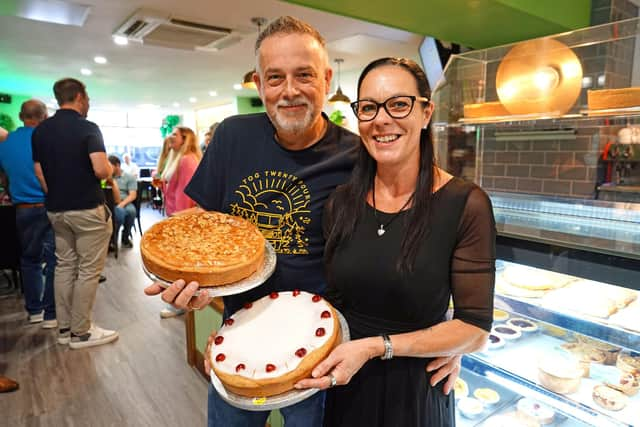

Duncan Kirk, owner of the town’s famous Bakewell Tart Shop, has been inundated with media calls about the article and in his view the story’s claims are a little nuts, even if they contain a kernel of truth.
He said: “In the last two months, the price of almonds has gone up significantly, maybe 15 per cent for the raw product, but that’s still cheaper than it was in 2019.
“Almonds are a highly profitable, positive-yield crop, popular in new health products like almond milk, so there is a lot of incentive for farmers to grow them.
“That’s seen production extended across California, and rapidly emerging in places with similar climates like Spain, Morocco and China, and it’s part of the industry that has benefitted greatly from technical innovations in farming.
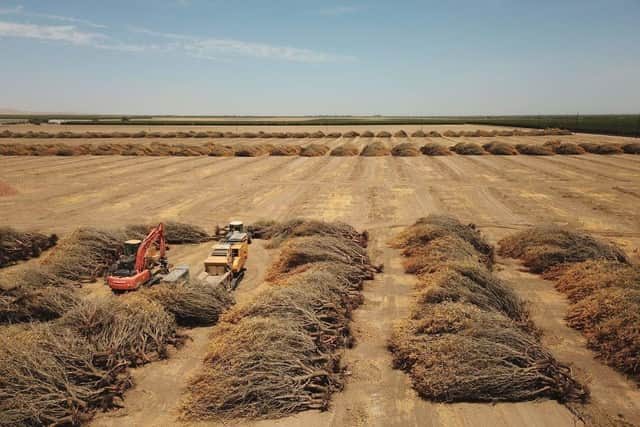
“Total global supply has doubled since 2007, so I’m not particularly concerned about the future availability.”
It is possible that the almonds used in the fabled original Bakewell pudding came from the east rather than the west, but California’s modern growing industry took root at around the same time with the Gold Rush of the mid-19th century.
Though its enduring commercial and technological success has revolutionised dietary habits in many parts of the globe, some might say the USA has taken too big a slice of the tart.
Duncan said: “I don’t fear an international shortage of almonds but I do fear the dominance of California producers. They supply 70 to 80 per cent of the world’s almonds, so acts of god that affect production there quickly have a direct impact on pricing.
“We saw the same with flour after the Russian invasion of Ukraine, because Ukraine was such a big producer for Europe. Global events can have a massive impact but that tends to be relatively short term.
“My sense with this latest spike is that the wildfires in California earlier this year may not have burned almond crops but may have caused a lot of smoke damage. I think that’s had a bigger impact than anything else.
“That’s something that arguably makes almonds different. The California fires were a short-term event, but climate conditions mean these events are becoming more and more frequent.”
In fact, the United States Department of Agriculture last month forecast that this year’s almond crop would reach 3billon pounds (1.4bn kilograms), which would be a ten per cent increase on the 2024 harvest and the second largest in California history, despite the fires and the heavy rainstorms that followed in the spring.
That does not mean there is nothing to be worried about. California has officially declared drought in around half of the years of the 21st century so far.
That presents many challenges to farmers, not least a greater risk from increasingly intense fire seasons stretching ever-further across the state in more unpredictable patterns.
Then there are side effects such as the struggles of pollinator bee populations, and this year’s reports that huge plagues of rats have developed an appetite for almonds after spreading across barren, abandoned fields, churning up irrigation channels as they go.
The state has a long history of fraught politics around water distribution too, with demand from its vast agricultural lands coming into conflict with urban centres such as Los Angeles and San Francisco when it comes to reservoirs and irrigation infrastructure.
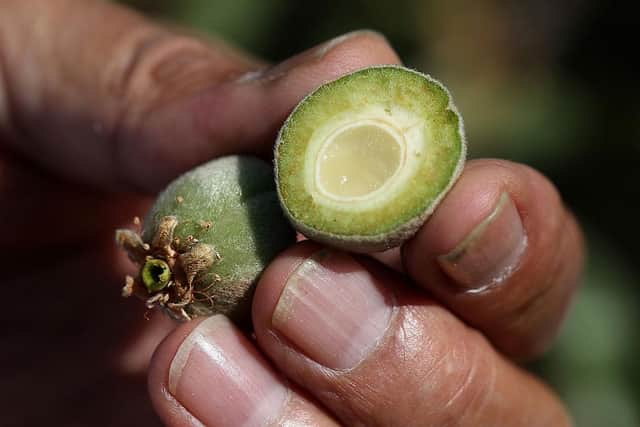
Almonds are an especially thirsty crop, requiring around four litres of relatively clean supply to produce each nut.
By some estimates, the amount of water that California uses annually to produce almond exports would provide water for all LA homes and businesses for almost three years.
Added to that, as the wildfires raged in January, against the advice of local officials President Donald Trump ordered the release of more than 22billion litres of water being held in reserve for the dry summer to come – around half the total capacity of our three Derwent Valley reservoirs – a much-criticised move which had negligible benefit for firefighting efforts.
California agriculture is also highly reliant on a labour force currently feeling the heat of Trump’s hostile immigration policies, at the same time climate breakdown is driving more people in Latin America to dream of livelihoods in the north.
Back in Bakewell, Duncan says his business is well prepared to weather the storms, given all the experience of his long career as a senior food retail executive prior to taking over the shop with his wife Fay.
He said: “We don’t deal in raw almonds but our bakers buy blanched almonds through wholesalers, and we still notice fluctuations in price before it gets to the British supply chain. Like all crops, it’s seasonal and variable and prone to natural disasters.
“But things like labour and fuel costs have a much bigger impact on pricing. When the ingredient price goes up it’s not really driven by a single ingredient, but the average across all of them.
“We haven’t had to change our supply arrangements yet, or put up prices for our customers, because all of these factors are already priced in.”
He added: “If the cost of almonds gets really significant it won’t change our recipe. It may eventually have an impact on price but we would continue to retail Bakewell tarts and puddings on a similar pricing model.
“This business has been producing through two World Wars, the Great Depression, two pandemics and many other significant world events which have disrupted the supply of almonds, so the current situation doesn’t concern me in terms of our viability.”
If the valiant guardians of Bakewell’s authentic recipes are not phased by a volatile climate, what about their imitators and the competition from synthesised ingredients?
Duncan said: “A Bakewell tart or pudding is not a Bakewell tart or pudding without almonds. That doesn’t mean in future we wouldn’t offer a non-almond alternative but it’s not in our plans.
“We do sell gluten free and vegan tarts, but the environment we operate in means we could not guarantee a tart free of any contamination from nuts. That would be impossible, and we’re talking about people’s health here.”
He added: “I’ve never considered using these artificial ingredients, and nor would I in future. Maybe we could be accused of being a extremely naïve but I think protecting the Bakewell tart is something we take seriously. The recipes are more than 160 years old, they’re very much protected and adhered to.
“Almond essence is used in some Bakewell tarts, while we use ground almonds, so there are already cheaper alternatives but we don’t go down those roads.
“When we bought the business in 2019, we bought the recipe too and we do feel like its custodians. If we were to change, we’d lose a little bit of heritage and history, and that would be doing a disservice to future generations.”