
Pigs arrive in Derbyshire nature reserve to begin biodiversity renewal project
Some new residents have been snuffling around an idyllic woodland glen in the Dales this week after Derbyshire Wildlife Trust introduced a group of pigs to one of its nature reserves in an effort to stimulate ecological renewal.
Three young sows have been introduced into a 1.4-acre fenced area of the four-acre meadow at Lea Wood, near Cromford, in a project supported by a £21,000 grant from the Tarmac Landfill Communities Fund.
The idea is to explore how pigs can act as a proxy for missing native species such as wild boar, helping to restore natural processes that once played a key role in adding diversity to local habitats and ecosystems – diversity which has been lost to threats like changing land use, pollution and climate change.
Amy Bennett, living landscape officer at Derbyshire Wildlife Trust, said: “Grazing animals have always played an important role in shaping our landscapes, and this pilot at Lea Wood gives us an exciting opportunity to explore how pigs can help restore those natural processes.
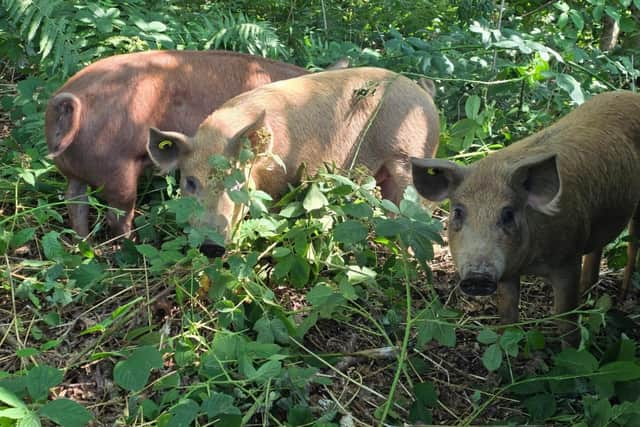

“We’re showing how pigs can act as a proxy species, using their natural behaviours such as rootling, digging and wallowing to break up dense bracken and create more varied habitat structure for wildlife.”
Derbyshire Wildlife Trust’s vision is to create a more dynamic, wildlife-rich landscape across the Derwent Valley corridor.
Lea Wood is already known for its species-rich meadow habitat, ancient woodland and carpets of bluebells in the spring, but there is still significant opportunity to create a richer ecosystem for the species that depend on it.
Parts of the site are dominated by bracken, creating thick thatch layers which limit the number of species able to establish there.
By rootling, digging, snuffling and wallowing, the unassuming pigs will turn over soil and break down dense patches of bracken and grasses to create a patchwork of microhabitats that support a wider range of plants and wildlife.
More delicate or dormant plant species should be given the sunlight and space they need to thrive, then attract pollinators like butterflies and bees and create habitats for a variety of insects, in turn attracting birds and small mammals.
Slow worms and grass snakes, both recorded on the site, will also benefit from the creation of more open basking areas.
The fenced area has been carefully designed to ensure there is no impact on existing public footpaths, whilst remaining highly visible to allow visitors to observe the pigs at work while continuing to enjoy the site.
Volunteers will play a central role in the project, supporting the trust’s team with regular welfare checks, fence inspections and day-to-day monitoring of the pigs. Training will be provided in pig management, ecological monitoring and interpretation, helping volunteers share the story of how grazing animals are helping restore natural processes.
Monitoring will focus on habitat change, biodiversity response and vegetation structure, combining specialist ecological surveys with citizen science, building a solid base of evidence to understand how pigs contribute to landscape-scale grazing systems and how they might be integrated more widely in future.
Amy said: “Huge thanks go to Tarmac for providing us with the funding to move forward with the project. The long-term ambition is to develop a pig grazing strategy across our sites in the Derwent Valley.
"By reintroducing pigs as a missing species, we hope to demonstrate what is possible when natural processes are allowed to shape the landscape once again.”