
“No criticism” of Derbyshire council over homes inquiry decision
“No criticism” can be levelled at a Derbyshire council for its 11th-hour decision not to defend a successful 400-home planning inquiry, an investigation has found.
Kate Olley, an independent planning and public law barrister hired by Derbyshire Dales District Council, has concluded she “cannot realistically make any criticism” of the authority for its decision in a closed-doors meeting, but found shortfalls elsewhere.
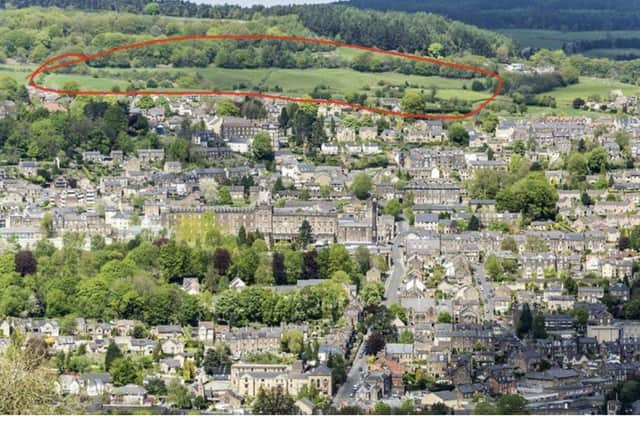
The district council had rejected plans for 423 homes on what is known as the Wolds on the hillside above Matlock in March 2024.
In January 2025, a closed-doors meeting saw councillors decide not to defend the appeal for the plans they had rejected after “cast-iron” legal advice which claimed the case was not defensible.
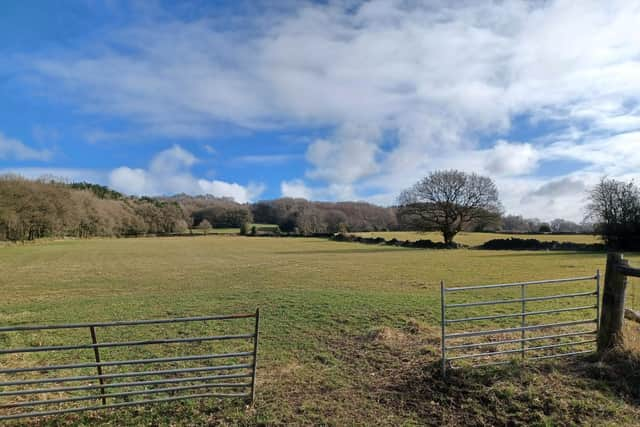

Government inspector Joanna Gilbert rejected the appeal from William Davis Homes last summer after the Wolds Action Group, comprising fundraising local residents, represented the only formal opposition, supporting extensive drainage concerns over the hillside plans above a flood-hit town.
In September last year, furious councillors backed a private independently-led inquiry into how legal advice slammed as “garbage” persuaded them to drop their defence of the Wolds appeal.
The council spent £192,000 on its non-defence of the appeal inquiry, while campaigners spent £15,000 on their successful defence.
In her investigation report, Ms Olley said: “In relation to the decision itself not to defend, at the time that it was made, I cannot realistically make any criticism.
“At the point in time that the decision was made the council was really left with no other choice, because none of the independent expert witnesses that it had engaged were in a position to support the respective reasons for refusal of the application.
Ms Olley said: “I deal now with the way in which the decision was taken not to defend the appeal. The closed nature of the meeting appears to have caused as much, if not more, upset, frustration and confusion than the decision itself that the appeal could no longer be substantively defended.
“The problem, of course, is that constituents were then necessarily left in the dark. An all-member briefing was conducted, to explain why the council needed to withdraw from actively defending the reasons for refusal, but members were not able to share those reasons with those who elected them and for whom they work hard to represent.
“This put those members in an impossible position, though it seems to me that it was an unavoidable one.
“I do not think that the council could possibly have taken a decision which would have involved ‘revealing its hand’ in an open, public forum.”
Meanwhile, Ms Olley details claims that the council met requests from campaigning residents with “radio silence” or “a straight no” when asking for access to information.
She said it was “of concern” that the campaigning residents were “always the last to receive anything”, which risked them missing key deadlines.
Ms Olley said residents felt “totally and absolutely left out” by the district council – and Derbyshire County Council – and she said campaigners “deserved to feel that their expertise and knowledge was accorded its due respect”.
She says the district has taken steps since the Wolds inquiry to work closer with community groups and residents over appeals, including in Windsor Close, Ashbourne, and Throstle Nest Way in Brailsford, including sharing evidence and wider involvement from local councillors.
Ms Olley said: “In my view, steps that the council has taken represent effective steps taken to ‘learn lessons’.
“I endorse those in the hope that they may serve to rebuild some trust between the council and the community.”
She made 11 recommendations to the council highlighting how it and the county council can improve how it involves the community and direct them to helpful information, including responding promptly to requests, even if that request is not possible, saying “it should not simply fail to respond”.