
Derbyshire council criticised over proposed U-turn on controversial weedkiller
Five years after banning a controversial weedkiller over fears for human and animal health, Derbyshire Dales District Council will this week debate its reintroduction to their environmental management strategy – a move which has sparked criticism from within.
In October 2020, the authority’s previous Conservative administration agreed to phase out glyphosate from its outdoor maintenance programmes, restricting its use to tackling only invasive species such as Japanese knotweed and giant hogweed.
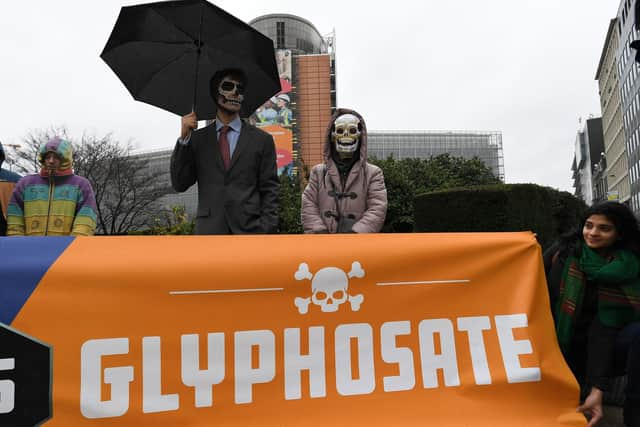
The decision was taken in light of “many studies questioning the safety of the product, linking the chemical to conditions from infertility to cancers,” a multi-billion dollar legal award to a cancer-stricken US couple who sued manufacturer Monsanto in 2019, and other pending cases relating to the impact of glyphosate products on humans, wildlife and the shared environment.
On Thursday, May 14, the council’s community and environment committee will debate a recommendation “For the council to reinstate the use of glyphosate-based products as a weed management solution across footpaths, closed churchyards, open cemeteries, war memorials and district council owned buildings like the leisure centres and the town hall.”

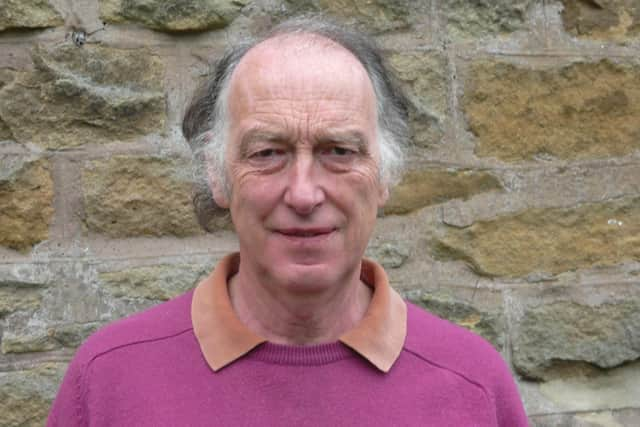
The prospect has been fiercely criticised by Councillor Peter O’Brien, the independent representative for Hathersage who tabled the original proposal to stop using glyphosate and says residents have been bombarding other members of the council with opposition since the possible U-turn came to light.
He said: “To say that I’m disappointed with the proposal to reintroduce glyphosate is an understatement. During the last five years, the council has led the way with its commitment to biodiversity as well as recognising that glyphosate may bring a range of risks to human health, even if the debate as to whether it is carcinogenic is still unresolved.
“Hall Leys Park in Matlock and Bath Gardens in Bakewell show that it is perfectly possible to keep areas clear of weeds, without resorting to glyphosate.
“The council has recently invested thousands of pounds in promoting new health walks, so it would be ironic if they now re-start using a chemical which may have the opposite effect, not to mention the detrimental impact on on bees and wildlife in general. I hope my colleague councillors will see sense, and reject this proposal.”
Concerns over the chemical brought renewed scrutiny by regulators, and while the European Commission reapproved the use of glyphosate until 2033, it has been banned in public spaces by Luxemburg and Portugal, and in private settings by the Netherlands, France and Denmark.
The issue has sparked protests both for and against in countries around the world, often pitting farmers against environmental groups.
The UK’s Health and Safety Executive is currently conducting its own review which could result in new rules, but the Pesticide Action Network UK (PAN UK) reports that over 40 per cent of UK councils have reported restrictions on glyphosate use.
Some have banned it outright, and others have already reversed bans, including Brighton on Hove, North Lancashire and the Isle of Wight, due to challenge in managing weed growth.

Following its decision to stop using glyphosate, DDDC invested in a mechanical weed ripper and began trialling alternative chemical solutions, but a new report from the director of community and environmental services, Ashley Watts, and ‘clean and green’ manager Samantha Grisman notes that “more commonly, hand weeding and the use of hand tools have been the most dominant forms of weed removal across the district.”
That appears to be a losing battle, based on reported concerns expressed by councillors, parish and town councils, and individual residents over the rapid growth of weeds.
Mechanical tools have proved problematic in some hard-to-access spots, or sensitive ones such as war memorials, while high-visibility sites like the town hall and leisure centres have required more manpower hours than the team has capacity for.
Last summer, that prompted the climate change and biodiversity working group to ask officers to conduct new trials of glyphosate, with results brought back to the group in February 2026.
Of the alternative methods explored, two acids were said to present their own dangers and require more intensive use, and a biodegradable hot foam product Foamstream took three days and traffic management to apply to a trial area around Eyam and still required “considerable hand weeding” weeks later – compared with two hours for one man on a quadbike spraying glyphosate.
According to council documents, there were also experiments with burning weeds or employing NaturaVolt, an external contract service to apply electrical currents to the ground – but concluded the pros did not significantly outweigh the cons in either case.
The new report notes: “In conclusion, there are alternatives to glyphosate in weed management. However, the Council would need to invest in more resources to see the same results as glyphosate-based products. For example, financial investment and the potential for additional staff with the additional times expected with alternatives.
“A continual use of either Foamstream or NaturaVolt could provide desired results however, the trails have shown that glyphosate-based products remain the most effective and efficient weed management product.”
If approved for reintroduction, glyphosate use would be capped at 30 litres per year – similar to its pre-2020 level – and be sprayed on areas across the district in April and October, starting this autumn.
Those doing the work would need to achieve the necessary safety certificates and wear personal protective equipment.
DDDC declined to comment further ahead of the meeting, which begins at 6pm, and will be broadcast via livestream at youtube.com/watch?v=87DgaATZYdc.