
Chesterfield named UK’s invasive plant hotspot by new study - with Japanese knotweed and giant hogweed among those causing problems for property buyers
Chesterfield has been named the UK’s worst hotspot for invasive plant species including Japanese knotweed and giant hogweed.
England and Wales property specialists SAM Conveyancing analysed data on 20 of the most common invasive plants to see where in the UK homeowners and property buyers are most at risk.
The analysis examined the total number of recorded occurrences per 100 km2 of land in each local authority to determine which property areas could be most affected by the nuisance.
Chesterfield came out on top, with 53 occurrences of invasive plants per 100km2. While the famous Japanese knotweed is incredibly abundant here, with 889 total occurrences, it is giant hogweed that presents the biggest problem – with 1,771 total occurrences in the area. Bolton was second in the list with 51 occurrences per 100km2, followed by Brent, Kensington and Chelsea, Liverpool and Camden. Bristol, Blackburn with Darwen, Hackney and Cambridge were also included in the top 10 hotspots for invasive plants.
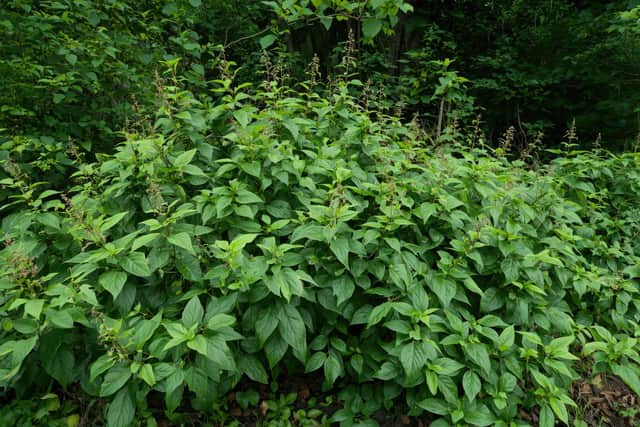

When it comes to which invasive plants Brits are most likely to face, many might assume that Japanese knotweed – which has 115,767 known occurrences across the UK – is by far the most common.
But the most common invasive species in the UK is actually Himalayan balsam, with 157,728 known occurrences across the UK. it can be recognised by its broad, almost square-like seed leaves that are followed by lance-shaped true leaves, scented pink and purple flowers, and sturdy hollow stems with reddish tints. The ornamental plant is now classed as an invasive weed due to its rapid growth early in the season, which crowds out other plants and creates soil erosion along water courses.
Following Japanese knotweed is the well-loved buddleia, also known as the butterfly bush, which has 67,397 known occurrences. Rhododendrons come next, with 66,162 known occurrences and giant hogweed, which has 62,719.
Monbretia and cherry laurel are the next most common to watch out for, with 41,454 and 40,814 occurrences respectively.
Many property hunters might wonder whether discovering an invasive plant near their property or on the plot itself is a sign they should avoid the sale.
For buyers, the risk is critical because if a property is affected by an invasive plant such as Japanese knotweed, the value of the property could be devalued by 5% to 20% and make the property unmortgageable without a professional management plan.
If you do not spot it until the sale has gone through, or the seller has concealed the weed, then the risk may not just be devaluing the property. Depending on the particular species, it could burrow into the property’s foundations and cause subsidence.
Many invasive plants are also considered controlled waste under the Environmental Protection Act 1990, which means you cannot simply pull them up and throw them in the green bin.
Property specialist Andrew Boast, founder of SAM Conveyancing, said that an invasive plant species does not need to ruin the prospect of your dream home.
He said: “Before you let the stress take over, it's important to look at the actual data. While an invasive plant isn't necessarily a dealbreaker, it is a game-changer. Whether you are worried about your mortgage being declined or the sheer cost of digging it out, the first step is knowing exactly what you're up against.
“A hotspot doesn't mean that invasive plant is present in every property in the area, but you'll want to keep your eyes peeled during the viewing. A known invasive plant occurrence near your home is often just a prompt for better due diligence.
“Your Surveyor also needs a heads-up. If you know you're in a high-risk area, you can ensure your RICS surveyor pays extra attention to the boundaries.
“In the world of conveyancing, this means lenders will be more cautious. Most banks won't lend on a property with knotweed, for example, unless there is a professional management plan and a 10-year insurance-backed guarantee in place.
“The mortgage valuer will either state the valuation is nil until a specialist surveyor has provided a report with a treatment plan, or reduce the valuation or insist on a retention (holding back funds) until treatment has begun.
“It may be tempting to avoid telling the lender if your survey report flags the issue. However, it is important to note that if you are aware of the presence of certain invasive plants (like Japanese knotweed) and fail to inform your mortgage lender, then you are in breach of your mortgage terms and your home may be repossessed.”