
Solar eclipse: Stunning natural phenomenon takes place in skies above Derbyshire and the Peak District tomorrow – and these are all the details you need to make sure you don’t miss it
A solar eclipse will take place in the skies above Derbyshire and the Peak District tomorrow – and these are all the details you need to make sure you don’t miss the stunning natural phenomenon.
A partial solar eclipse will see the moon cover around 90 per cent of the sun in parts of the UK tomorrow (Wednesday, August 12) – with Derbyshire among the places where residents will be able to take in this natural phenomenon.
This partial eclipse is predicted to be the deepest in the skies above Britain since the famous total eclipse of 1999.
The Royal Observatory Greenwich has confirmed that the eclipse will begin in London at around 6.17pm, before reaching its maximum at approximately 7.12pm. However, exact timings and the percentage of the sun that will be obscured will vary across different parts of the country.
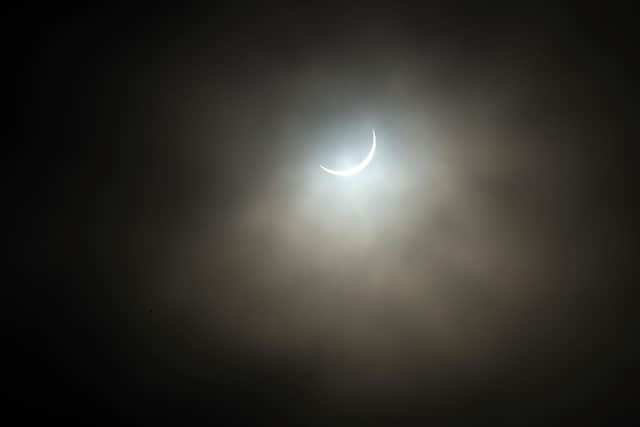

While the most remarkable views are expected across the west and south west, it is it is hoped that the eclipse will also be visible across Derbyshire.
It is believed that the greatest views of the moon blocking the sun will be between 6.13pm and 8.03pm, and the time of the greatest eclipse is expected to be at 7.10pm. The sun could be almost totally obscured in Derbyshire – with the eclipse having the potential to reach 92 per cent coverage across the county.
The best place to view the eclipse is at an elevated location with an unobstructed view to the west.
Those hoping to watch the eclipse should avoid looking at the sun directly with the naked eye, in order to avoid damaging their eyes.
It is possible to buy so-called eclipse glasses, because ordinary sunglasses are not safe for looking at the sun.
Safety advice from NASA states that eclipse viewers should always comply with the ISO 12312-2 standard and should be carefully inspected for scratches, punctures or damaged filters before every use.
Other options included making a pinhole projector to project an indirect image of the sun, which you can do with household objects including a collander.