
Derbyshire County Council trials a new weapon in the fight against potholes in Chesterfield
Derbyshire council claims it could have a new weapon in the fight against potholes as it continues to roll out an asphalting road treatment programme across 63 residential roads in the county.
The county council has begun £1.1million of work on a new asphalting road treatment programme in the face of criticism over potholes – but it has also now revealed a further weapon in its arsenal.
In addition to currently using a new process called micro asphalting, the council has also started to trial a new pothole repairing material called Roadmender Asphalt as an option to help improve the region’s roads.
Cllr Charlotte Cupit, Cabinet Member for Highways Assets and Transport, said: “It’s exciting to be bringing this new material to Derbyshire’s roads. Over the last few months we’ve been to see other areas that have started using it as well as the factory where it’s made, so it’s good to now be able to try it out across the different parts of our county.”
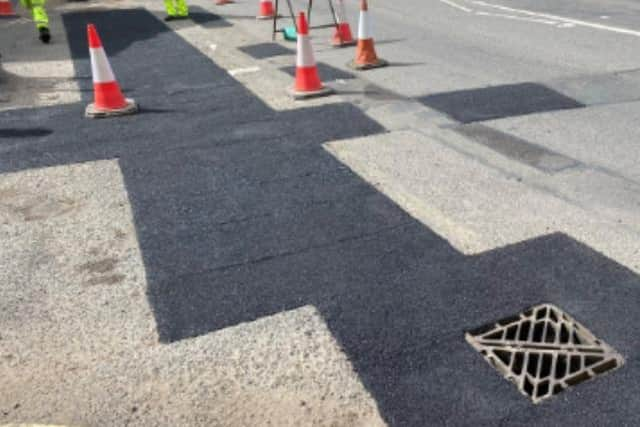

Roadmender Asphalt, which is produced in Sheffield, boasts a high-recycled rubber content from old HGV tyres and it is more elastic than traditional asphalt which means it can be applied directly onto roads in need of repair as a new protective surface where potholes or cracking damage have previously occurred.
It is heated up on site and then applied as a quick-setting molten liquid and the council stated there is no need to dig out the road or to seal the edges as it acts as a sealant and binds to the existing road surface leaving a new waterproof top layer.
Derbyshire County Council expects this will mean less disruption as the process can be completed in less than half-an-hour on site and avoids longer traffic management or road closures and it is also better for the environment with recycling and reduced waste.
The council intends to test Roadmender Asphalt in different areas including junctions, pothole hotspots, on deteriorating areas, on main roads, roundabouts, rural roads and housing estates. Testing has started in Chesterfield and Dronfield and the council aims to extend the trial to other areas in the coming months.
Cllr Cupit said: “Whilst it’s right to harness new technology for road repairs and to be as efficient as possible, we also continue to push both the new regional mayor and Government for the funding needed to maintain roads across the county and country. That would enable us to accelerate proactive programmes such as this.”
The council is currently using another new process called micro asphalting which involves a liquid mix of stone, cement and bitumen applied to better seal the road surface from water to prevent damage and to fill in potholes.
Extensive micro asphalting work is currently taking place over 92,000sq metres in Derbyshire and includes work on 63 roads particularly in Newbold, Chesterfield.
The micro asphalt repair programme – which started in July and was due to finish at the end of August – is part of the council’s ongoing highways capital programme and part of a £27m investment in roads, pavements and transport across the county this year.
Cllr Cupit apologised earlier in the year for the state of the county’s roads which had been put down to reduced investment, ageing highways and floods.