
The Derbyshire Auction House telly star Irita Marriott opens up about balancing business and family life, treasures in her home and trends in antiques
"I wear a lot of hats….auctioneer, house visits, cataloguing. My job has a lot of different layers," said telly’s antiques expert Irita Marriott.
Perhaps a Wonder Woman tiara is hiding under one of those hats, such is the exhausting schedule of The Derbyshire Auction House star.
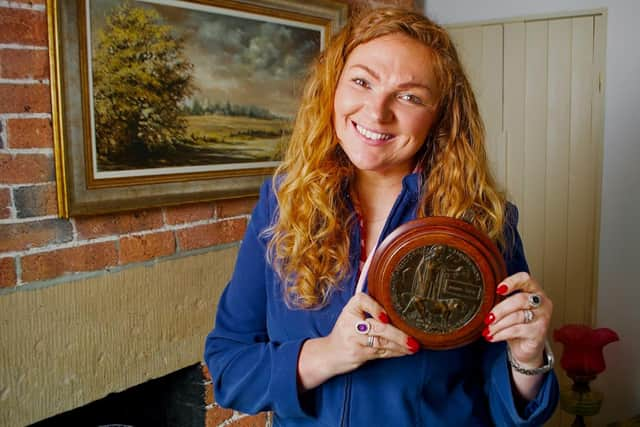

Irita works up to 18 hours a day between juggling family life as the mum of two boys, aged seven and nine years. She said: “It's a fine balance - being a working mum is the hardest job in the world, then you have mum guilt on top of that. What I will do is take my kids to school if I don't have to be somewhere early in the morning, work a day and then I'll go home, have dinner with them, do the homework, do the bedtime and once they've gone to bed I'll come back to work."
One of the few women in England to be at the helm of an auction house, she runs Irita Marriott Auctioneers & Valuers in Melbourne and lives within 10 miles of her workplace.
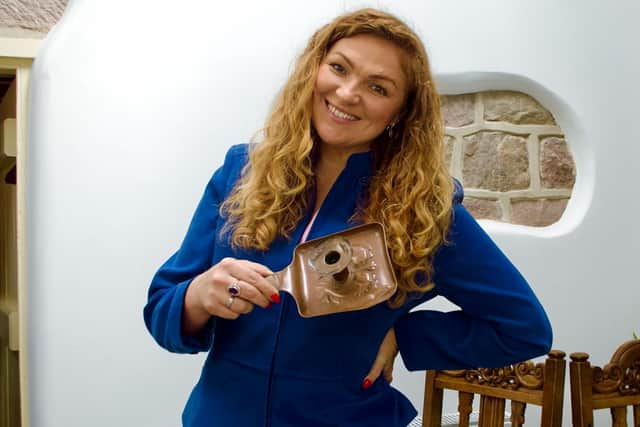
Having the pick of antiques at her fingertips must surely mean that her family home is bursting at the seams with expensive treasures. Irita said: "I could probably go on one of these shows and make a whole sale out of antiques at home. I don't have anything of high value. When I buy something, it's not because it's expensive or because it has a really good name attached to it, it’s things that catch my eye - things that might remind me of somewhere we’ve been, of times together, or of somebody for some reason."
Her sound advice is applicable to anyone looking to invest in antiques. Irita said: "The main thing to remember is buy something you love, then it doesn't really matter what it cost you or what it might be worth in the future.
"At this moment, men's watches are very popular. Coins have an incredibly strong market. Georgian jewellery is the most popular, it was particularly well-made, handcrafted and exquisite.
“If you look 30 years ago, everyone wanted a Toby jug, everybody was paying hundreds of pounds for musical jugs and brown furniture. Now the trend's changed, Toby jugs are £1 a piece, musical jugs unsaleable, the classic Victorian pieces such as twist leg furniture and drop leaf tables are still being bought by American and Korean customers but they will not pay anywhere near what they used to be worth.”
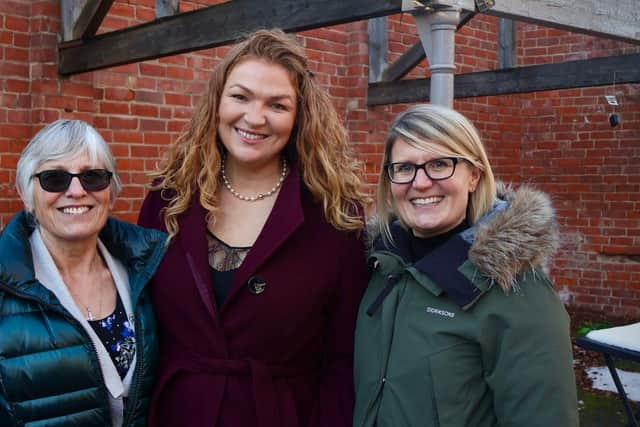
Irita puts her heart into getting the best return she can for people whose treasures she is entrusted to sell. "There's more to this job than people realise,” she said. “ It's not just selling somebody's items; it's the journey that you go on with the customers, from the moment they start thinking about selling the items then all the way through to achieving the result and passing them the money.
"It's not always about finding something really expensive. Sometimes it's just going in someone's house and they're thinking they don't really have anything to sell or that nobody will appreciate what they have and you being able to say, actually, I love what you have.
"Every day is different. You do not know what is going to come through the door, if you go to a valuation day what are you going to see, if you go to someone's house what are you going to find….it's like Christmas every day."
Irita has worked in the industry since she was 27 years old. She said: "From the moment I touched antiques, I could never imagine doing anything else. I can genuinely say I was probably the youngest and only woman of that age to be walking around antiques fairs. It's not an easy industry to be in as a woman - it's always been seen as a man's world. There are over 3,000 auction houses in England and only a handful of those are run by females. We desperately need the younger generation to come into this industry to carry on and learn and have apprenticeships or have the interest in it. There's a huge shortage of antique valuers nationwide.
"This is the greenest industry we could be in because we're upcycling - we're constantly finding new homes for things that people don't want. People buy things to use, people buy things to upcycle to make into something completely different. We're saving things from not going in landfill, we're giving them a new owner who will love them and cherish them again."
Upcycling was instilled in Irita from an early age in Latvia where she was born and had a tough childhood. She said: “The hardest part was being born in the USSR so my birth certificate is Russian. I was only six years old when we gained independence so those years under the iron curtain were not the easiest of years for anyone living there. I remember a time of hearing on radio that Germans were coming into the country and that people needed to get ready to flee homes. I was about four years old, I picked up a handkerchief with my bits and bobs, put it on a stick and said to my mum 'I'm ready to go whenever I need to go’." Irita moved with her mum from the countryside to a city and recalls particularly hard times between the ages of six and eight years. She said: “My bed was made from pallets that came out of a bin. The clothes that I wore were from the Salvation Army charity, we had to walk the riverbanks in the morning to see if there was any food left over from barbecues or parties. Everything that I've been through has made me stronger; I don't think I would be where I am if it wasn't for the way I grew up."
At the age of 18, Irita went to work as an au pair in America. After a couple of years she moved to England where her first job was in a garden centre in Yorkshire. She said: “I started as temporary staff and ended up being the buyer and retail manager...my old boss at the garden centre said I could sell snow to Eskimos!”
Irita first dipped her toe in the water of selling pre-loved items at car boot sales. She said: "I put boxes out and watched what the dealers were picking up to figure out which were in trend and what people wanted. I would buy job lots in auctions for £30, £40 and £50 to make money out of them.”
She developed her passion for antiques by reading up on their provenance and attending fairs. Irita matched her blossoming confidence in recognising money-making items by increasing her spending. She said: "Before I opened the auction house I'd go in an antiques shop and think that's £1,000 - OK, I'll buy it because I can see profit in it."
Her auction house opened in 2023 and Irita conducted her first auction in January 2024. Her second auction featured an antique Roman cameo ring that was estimated at £200 to £300 and made £19,000. "That was pretty incredible," she said. "To be on the rostrum with a room full of people and cameras pointed at me, it's fair to say the nerves were very high; there were times I had to move my microphone because all they could hear was my heartbeat!"
Irita’s entrance into the world of television showed her determination to carve out a successful career. She said: "I was obsessed with Antiques Road Trip when I started because I was watching it to learn. Everyone on Road Trip is headhunted – no-one was going to come and headhunt me because I didn't own an auction house then, I wasn't an auctioneer, I was just a small time dealer in antiques fairs."
She took the matter into her own hands by ringing a producer on Antiques Road Trip asking what she needed to get a job. After six months of home videos, interviews and screen tests, she achieved her goal. Irita said: "When I first started in TV, my main thing was I wanted to be the true me. I didn't ever want my children watching me in fifteen to twenty years time on telly and saying 'that is not actually what my mum is like’."
Now she has seven series of Antiques Road Trip, three seasons of Celebrity Antiques Road Trip and countless episodes of Bargain Hunt to add to the feathers in her cap. Her own series, The Derbyshire Auction House, in which she assesses people’s treasures countrywide, has just begun its second season on the REALLY channel.
Irita laughed when asked about an interview in which she disclosed that she'd like to be a contestant on Strictly Come Dancing. "That's haunting me," she said. “We can all have far-fetched dreams – I’ll leave it as one of those. My list of ambitions is almost as long as my arm. There are a lot of small things I'd like to achieve but if I look at an overall picture, all I want to do is have a business where people that work in it are happy, the customers are happy and in years to come my kids can be proud of what I have built."
*The second series of The Derbyshire Auction House screens on the REALLY channel on Mondays at 9pm and is available to stream on Discovery+. Episode one in the 10-programme series includes a feature on Margaret from Belper who is having a clear out prior to moving house. Find out whether a collection of jewellery bought from a shopping channel, a First World War death plaque and a pair of Victorian obelisks made from Ashford marble mined in Derbyshire will raise enough money for Margaret to treat her elder sister to a holiday.