
Pruning to take place on famous ancient Derbyshire yew tree - reputed to be 2,000 years old - after cracks appear
Sensitive pruning is set to take place on a famous yew tree with the aim of halting recent structural deterioration.
Derbyshire Dales District Council is set to carry out the work on the ancient Darley Dale tree, close to the main entrance to St. Helen’s Church.
The tree, reputed to be up to 2,000 years old, is located in a closed churchyard managed by the council.
Believed to be older than the church itself, the ancient tree is listed as a tree of historical significance nationally.
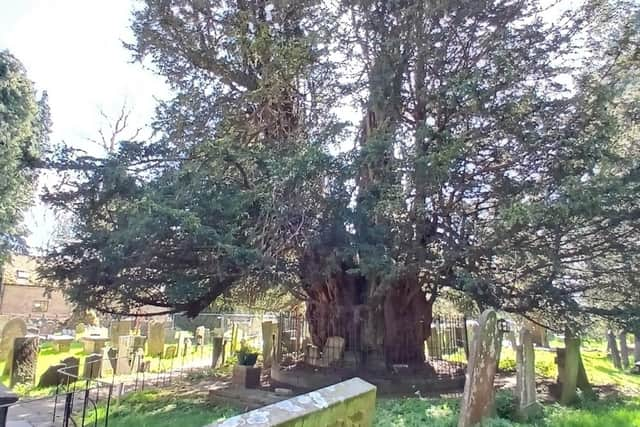

It is subject to a Tree Preservation Order (TPO), and the council, which is responsible for administering this particular TPO, has given permission for the works.
At a recent inspection, District Council Trees Officers identified several recently opened cracks, which indicated movement in the northern stem of the yew. As an immediate precaution, the footpath beside the tree was
fenced off to prevent people walking beneath the part of the tree concerned.
Two independent inspections from Veteran Tree Specialist consultants were promptly commissioned by the council. Both inspection reports recommended reducing the length of relatively young branches to

reduce end weight and wind loading to the northern stem. These branches are growing from the top of the northern stem, which shows evidence of having been reduced in height many years earlier, probably responding to previous structural concerns or storm damage.
A lighter pruning of the southern stem was also recommended to manage its canopy size. This aims to prevent potential structural damage to this stem because it was found to have only a very thin remaining thickness of sound undecayed wood, likely compromising strength.
The pruning specification is for: reduction of upper reaches of branches growing from the northern stem by no more than 3m, reduction of upper reaches of branches growing from the southern
stem by no more than 1m, and reduction of the northern stem’s lower crown lateral branches by no more than 0.5m with no pruning cuts greater than 30mm diameter.
A council spokesperson said: "We are acutely aware of the historical, landscape and amenity value of this ancient yew, and these considerations have informed our prudent and sensitive tree management works recommended by independent arboriculture specialists. It is important that these pruning works proceed promptly with the aim of preventing otherwise likely catastrophic structural failure of the northern stem in particular.
"A lighter pruning of the southern part of the tree’s canopy aims to manage overall crown balance and load distribution, mitigating potentially increased wind loading caused by the pruning of the northern part of the canopy.”
The ancient yew has one of the broadest lower stems of any yew in England, with a girth of around 10m (33 feet). Around the base of the tree are ancient graves, stone tablets commemorating some outstanding actions during the Second World War and historic iron railings.