
Pioneering drones take flight to help restore Peak District ravine woodlands devastated by ash dieback disease
A pioneering drone seed-spreading trial has taken to the skies above the Peak District, to explore innovative new ways to restore precious ravine woodlands devastated by ash dieback disease.
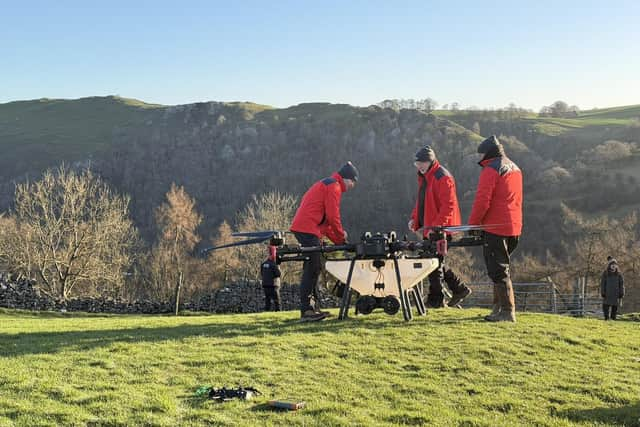
The trial, believed to be one of the first of its kind in a steep, compact ravine woodland setting, used specially designed drones to spread a mix of native tree seeds across a 0.75-hectare plot at Dovedale and a similar area at Lathkill Dale.
The seeds, including field maple, wych elm, alder, small-leaved lime, birch, rowan, yew, goat willow, crab apple and holly, have been carefully selected for ravine woodland restoration.
The steep, rocky sides of Dovedale and Lathkill Dale present a major challenge for conservation teams. While traditional tree planting and seeding has been carried out across the Peak District Dales, as part of the wider LIFE in the Ravines project, and by the teams at Natural England and the National Trust, some slopes are too dangerous or difficult to work on by hand.
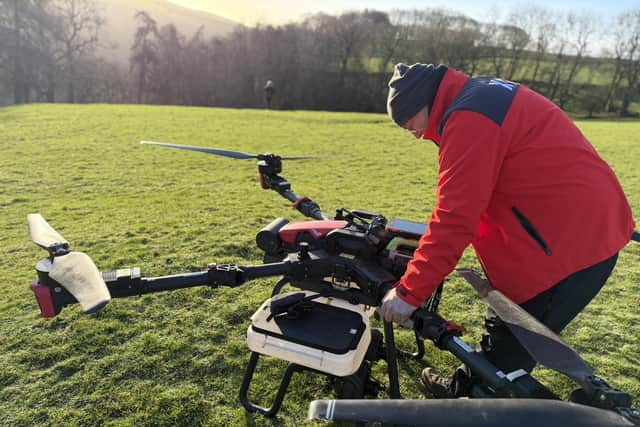

Although drones have been successfully used for reforestation in open upland landscapes such as the Scottish Highlands and Dartmoor, this trial represents a significant step into new territory, applying the technology to steep, confined woodland ravines.
Adam Linnet, Lead Ranger at the National Trust in the White Peak, said: "This trial will help us to explore new techniques and technology to work at the pace and scale needed to help the woodlands in the area recover and thrive again.
“The trees in the steep sided ravines in and around the National Nature Reserve at Dovedale support wildlife, store carbon, stabilise the ground, prevent erosion and flooding, and make the area look beautiful throughout the seasons.
“The technology used in this trial mimics natural seed dispersal so we are hopeful it could provide a solution to help trees establish in harder to reach areas, creating healthier and more resilient woodlands."
Martin Evans, Woodland Restoration Manager at Natural England, said: "The ravine woodlands of the Peak District Dales are among the most precious and challenging habitats we work in.
“Ash dieback has created an urgent need to act, but the sheer steepness of these slopes means we must think creatively about how we restore them."
The success of the trial will be carefully monitored. Trays have been placed within and around the seeding areas to check accuracy of seed dispersal. One-metre-square monitoring plots will be established and visited several times a year to track germination rates and sapling survival.