
Photos from the group’s protest at the Royal Courts of Justice and the Palace of Westminster in London have been supplied to the Derbyshire Times by Angela Madden who chairs the Women Against State Pension Inequality group.
Ms Madden, who lives near Chesterfield, said: “We do not want to be taking legal action, but we have been forced to, due to the Government’s total denial of justice.”
The campaigners are seeking a judicial review to force the Government to reconsider its decision to reject a compensation package for women who were affected by changes to state pension eligibility. An appeal launched by WASPI to fund the legal challenge has topped £156,000.
The Government has said that compensation could cost the public purse £10.5billion.
A petition signed by 160,000 people triggered a Parliamentary discussion this week at which Liz Jarvis, the Liberal Democrat MP for Eastleigh, said: “This debate is about justice, fairness and doing what’s right. To say we haven’t got enough money to put things right simply isn’t good enough.” Imran Hussain, the Labour member for Bradford East, commented: “A high court challenge should not be necessary. We must ensure that WASPI women are not abandoned once again.”
Work and Pensions Secretary Liz Kendall confirmed three months ago that there would be no compensation for three million women born in the Fifties who were affected by the alterations in state pension age eligibility. The Government rejected the Public Ombudsman’s recommendations for recompense after acknowledging that there had been maladministration by the Department for Work and Pensions in delaying its communication to the women affected by the changes.
A spokesperson for the Government said: “We accept the ombudsman’s finding of maladministration and have apologised for there being a 28-month delay in writing to 1950s-born women. Evidence showed only one in four people remember reading and receiving letters that they weren’t expecting and that by 2006 90% of 1950s-born women knew that the state pension age was changing.”
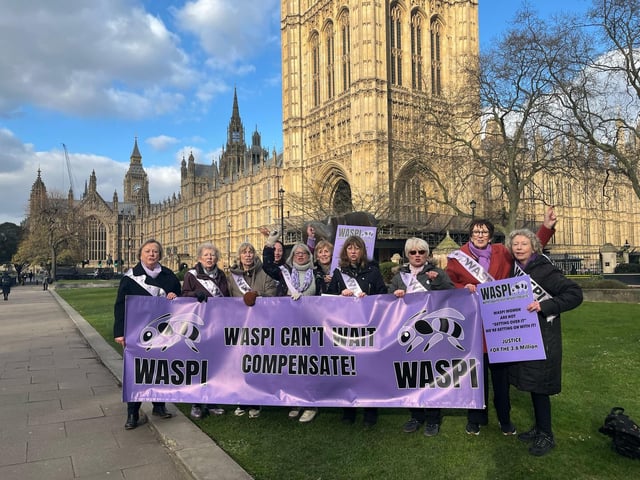
1. Protesters outside Parliament
Angela Madden, second left, with WASPI protesters outside Parliament before the petitions debate. Photo: Submitted
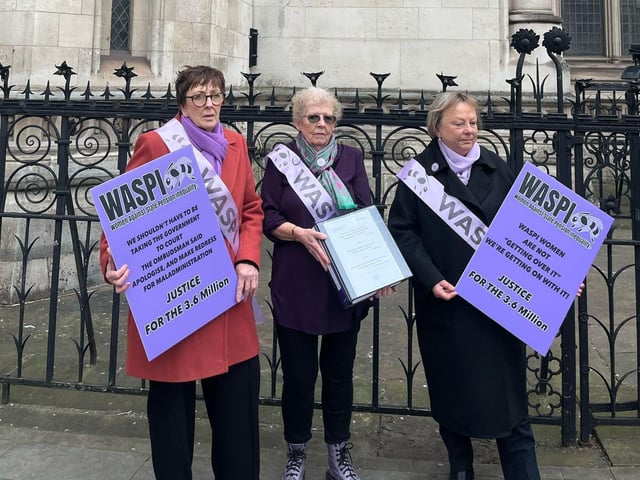
2. Outside the High Court
WASPI chair Angela Madden flanked by communications director Debbie de Spon and campaign manager Jane Crowley outside the High Court in London. Photo: Submitted