
New online archive shares Peak District village carnival traditions worldwide - thanks to £64,233 in funding
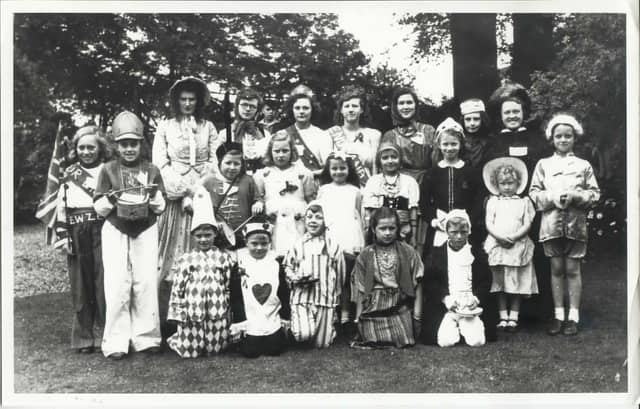

Some of the Peak District’s oldest traditional village festivities have been preserved for future generations in a new website and community heritage project backed by National Lottery funding.
The Winster Wakes Archive is now available to the world online after more than a year’s work to curate a collection of resources from residents past and present over more than a century.
The Wakes began as holidays run by parish churches and linked to the feast day of their patron saint, later becoming unpaid holidays when mills and factories closed for maintenance and villages would stage an ever-changing line-up of sports events, games, performances, funfairs and feasting.
Local volunteers have digitised and catalogued a vast trove of photos, documents and oral histories from Winster’s celebrations – which have kicked off on the first Sunday after June 24, the Nativity of John the Baptist, for at least 160 years – as well as the activities of the famed Winster Morris dancing troupe.

Celia Pendlebury, chair of the project steering committee said: “One of the special things about Winster is its unbroken tradition of Wakes Week. It’s still incredible vibrant, even compared to neighbouring villages.
“The Morris dancers are also thought to be the oldest continuous team in England, dating back to the 1840s. The tradition has fizzled out elsewhere in Derbyshire, then been recreated from the records, but in Winster each time it dwindled it came back around some of the same members so there was a continuous memory.”
Celia said: “I joined the Morris group as a musician when I moved to Tansley two years ago, and realised they had this enormous archive of material that had been collected over the years, and there was an urgency to do something with it because some of those involved were reaching a stage where they wouldn’t be able to contribute much longer.”
As a project manager in the civil engineering sector who has also completed a research degree in English folk music, Celia quickly grasped the scale of the task and the need for external support.

An application to the National Lottery Heritage Fund secured a grant of £64,233 to pay for the website, the training for residents to build it and properly catalogue its contents and the equipment to digitise and organise everything in one place.
Among the highlights already revealed ed by the project are the carnival’s earliest records of controversial bear-baiting, neighbourly squabbles, the practice of frog-dancing and biographies for many of the characters who have been central to village life.
Celia said: “There are maybe two things that make something like this nationally important. One is the academic study of semi-rural festivities. There are so many wakes weeks and carnivals across the Peak District and places like Northumbria, where I learned to play the smallpipes.
“But I grew up in Salisbury and there’s nothing like this there. It’s all classical music. So these festivities and carnivals that people arrange for themselves make a really interesting subject for study.

“Local festivals have, in general, been disproportionally underrepresented in heritage collections because the memorabilia – photographs, documents, costumes, cine film – is often hidden in small, private, attic-based collections.
“Memories have been democratised in a way over the last 50 years now everyone has a camera or smartphone, but there’s not always a collective way of organising it, which is is important with community events.”
She added: “That’s the other important thing, which is more practical. These events engage the community and create a strong sense of belonging. They’re a great way to come together and meet new people.
“It’s been interesting to see how a village works through doing this. Every time we found we needed help with something like internet security, somebody knew somebody who could offer that knowledge. That kind of interconnectivity is something I’ve not seen before.

“After getting under the skin of all this, I feel like an honorary Winster resident, but this year I’m helping to organise the first proper Tansley carnival for a couple of decades. We want the website to inspire anyone that kind of DIY entertainment in any community that reads about us.
The project has been supported by the Winster History Group and placement students from the history department at the University of Derby, and all the collected materials will be entered into permanent archives of the Derbyshire Record Office in Matlock.
The website will continue to expand and evolve as more material is gathered and uploaded, and the project team is still inviting contributions from anyone with a story of Winster Wakes, photos or home video.
Celia said: “It’s early days for the website but we can see from the analytics that we’re already getting visitors from as far away as Germany and the USA.
“We define the Winster community as anyone with a background or interest in the village. It’s not just the people who live here now. There’s been a lot of interest on Facebook with people contacting us to donate material.”
Beyond the project, the team hope the assembled skills and equipment will become a sustainable element of the community which can be turned to other purposes.

Celia said: “The lottery funding is officially for a two-year project, and the website if funded for seven years, but the grant has to support an element of organisational sustainability. We’re hoping this will continue as a service for anyone wanting to get old pictures, slides, and cine film preserved.
“Right now our priorities are the carnival and Wakes week, but if someone had a pack of photos from 1984, for example, which includes images of these events, we could digitise them all and then ask if they wanted to submit the pictures to the archive.
“We’re also looking for more recollections if anyone would like to be interviewed, and we’d like to recruit some younger volunteers too so we’ll be running more training and outreach sessions over evenings and weekend which people can fit around work, and there will be things happening as part of this year’s Wakes week.”
Anyone interested in contributing time or material to the project can contact Celia via 07704 388874 or [email protected].
To browse the archive, go to winsterwakesarchive.org.uk.
This years Winster Wakes Week begins on Sunday, June 29, with the carnival staged on the following Saturday. For further details, check out winster.org.