
Hotel, new homes and office set for approval at historic Derbyshire council HQ - with severe doubts over financial viability
A hotel, dozens of new homes and an office are all set for approval at an historic Derbyshire site, but financial viability concerns over the project have been raised.
A flurry of plans for Derbyshire County Council’s Matlock headquarters, which had been set in motion by the previous Conservative administration, are now set for approval.
The scheme, last priced at £132 million, was started in 2023, with five planning applications filed in 2025. Some were submitted before Reform UK took office that May and some very shortly after.
This overall project was to be funded by private developers but led by county council-funded consultants and a “master developer” to the tune of £4.24 million.
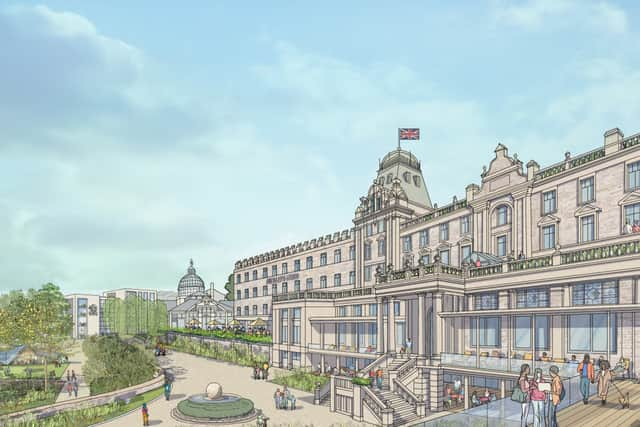

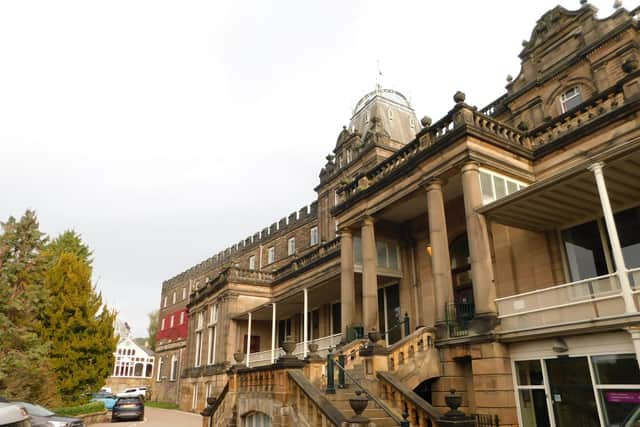
The main aim of the project is for the council to decamp from County Hall, an ageing Grade-II listed former hydro spa, which is larger than it requires, expensive to heat and requires many millions of pounds of repairs.
Its plan had been to turn the headquarters of the council, which is to be abolished in March 2028, into a luxury hotel.
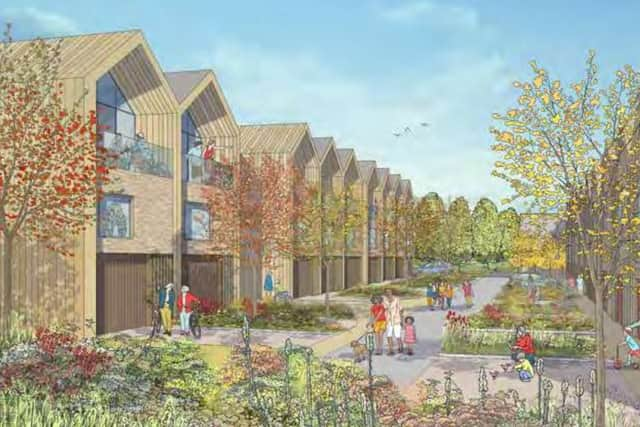
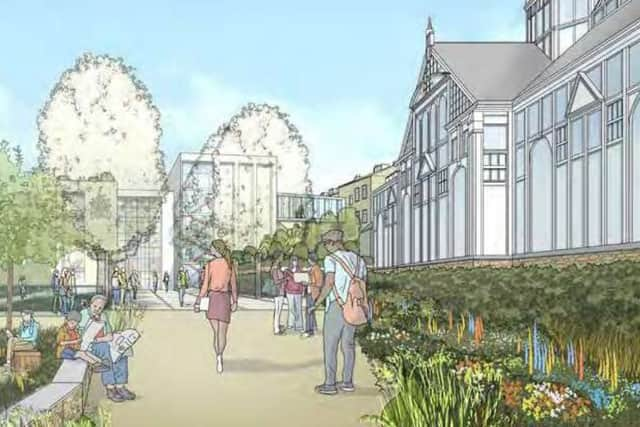
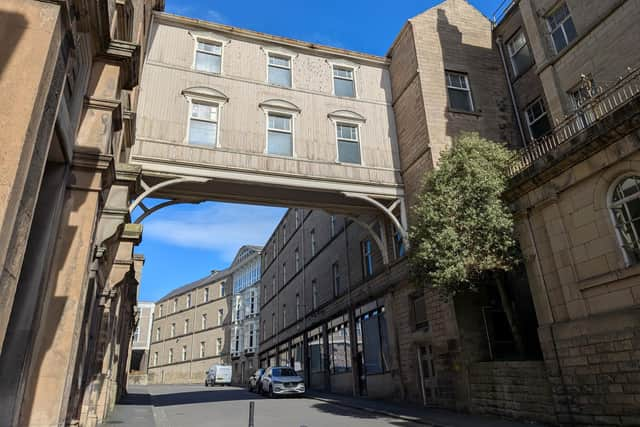
Meanwhile, buildings connected by wooden bridges across Smedley Street would be converted into 45 flats, 50 newbuild houses would be constructed on the current lower staff car park, and a replacement council HQ – for an authority now set to be scrapped – would be built on the current business centre site to the west of the main HQ and Winter Gardens conservatory.
Derbyshire Dales District Council officials have recommended that all five applications are approved at a meeting on Tuesday, September 8.
However, planning reports detail back-and-forth debates over the development’s viability, which unfolded during questions of how many affordable homes the scheme would be able to provide – if any.
The end conclusion detailed by district council officers is “the viability appraisal presents a development with a significant financial deficit which questions the deliverability of the scheme”.
Independent assessors Keppie Massie detail in the district council report that the entire project would have a net development value of £86.14 million, with construction costing £84.62 million.
It concluded that the development was “unviable”, with a residual land value of minus £13.19 million, even with no affordable homes and after readjusting for under and overestimations from the council.
Councillor Rob Reaney, Reform’s former deputy leader, had said the current administration would only part with County Hall as HQ as a “last resort” after all options had been exhausted.
Jeremy Ruse, Reform’s Derbyshire Dales chairman, had said the County Hall project was “crazy” during the cost of living crisis, saying “people must come before new comfy offices and gambling your money on redevelopment”.
District council reports detail a combined total of 18 objection letters, seven supporters and eight residents highlighting comments and concerns.
The county council itself has asked that the authority pay £865,329 to itself to provide further spaces at Highfields secondary school to offset the newbuilds and flat conversions, along with £3,523 for library supplies.
Its archaeology department has opposed the homes and office application due to the lack of a thorough assessment.
Meanwhile, the Victorian Society also objects, saying historic buildings would be affected and parts demolished and the designs are not “sympathetic”, with the harm outweighing the benefit.
The county council’s own highways department has raised concerns that there may not be enough allocated parking spaces for the planned hotel conversion, with 110 to be retained for that purpose, competing with the other planned uses, with much of the current 597 spaces to be built on.
It has also urged for a restriction to just 300 employees and to have no full council meetings between 9am-5pm on weekdays – with current meetings usually from 2pm on Wednesdays.
District officers say the overall change in vehicle movements between the current uses and proposed combined changes would be 723 extra trips per day – 2,048 up from 1,324.
On the homes and office plans, district council officials said: “The proposals provide an opportunity to improve the landscaped setting of a listed building which over the years has been degraded by unsympathetic changes, principally large areas of landscaping being turned into car parking.”
In relation to the hotel conversion and 45 flats revamp, they said: “The proposals would deliver a number of benefits namely the reuse and conversion of a listed building which will have economic, social and environmental benefits.”
The scheme is aimed at downsizing council office space from a 2,000-staff ageing and outdated facility to a 500-staff energy-efficient replacement and handing off repair and decarbonisation costs running into the tens of millions of pounds.
The planned hotel conversion is expected to create 130 full-time jobs, boost the Derbyshire economy by £147 million and the Matlock economy by £56 million, along with £1.2 million a year in extra council tax.
Reports published by the authority in 2024 detailed the potential cost of each scheme, with the new five-storey eco-friendly council office for 500 employees potentially costing £34 million, the hotel conversion costing £72 million and the creation of homes in a block on the site costing £26 million – a total of £132 million.
Developers and private companies would be funding the schemes, but the council had budgeted last year to spend £20 million over three years on the overall project.
The council had said the cost of maintenance (£57 million), a repairs backlog (£56 million) and the price of decarbonising County Hall (£59 million) totalled £172 million.
In its hotel application, the county council said 100 parking spaces would be allocated for the redevelopment, with 100 rooms covering 16,750 square metres.
Meanwhile, the winter gardens glasshouse would be brought back into use as a wedding venue, two two-storey bridges over Smedley Street would be demolished, the covered veranda to either side of the County Hall entrance steps and an adjacent office extension would be demolished, and the former stable block would also be demolished.
The council details that the historic council chamber and committee rooms will likely be converted back to their original functions for banqueting and events and the winter gardens will be revitalised to create a dancing and events space once again.
It said in its replacement office block plan that the current chamber would be “booked by the council as needed” from the future owners – with no facility to be built in its new office building.