
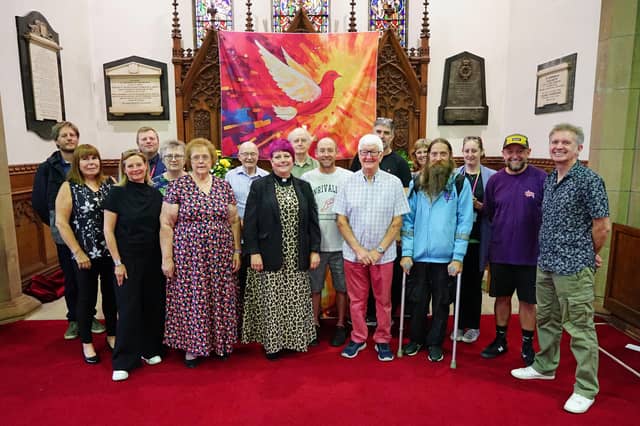

Chesterfield’s pivotal place in the story of the birth of the modern railway was officially celebrated at Holy Trinity Church – the final resting place of railway pioneer George Stephenson.
The ambitious project, made possible by a £240,600 grant from The National Lottery Heritage Fund, will see the Newbold Road church transformed into a visitor destination and educational hub celebrating Stephenson’s legacy and Chesterfield’s rich industrial history.
Attendees at the event heard about plans to enhance visitor facilities, develop interpretation materials, and deliver an engaging programme of school activities, community events, and skills-based volunteering.
The project is further supported by EMR, Cross Country Rail, Raymond Ross Fund, Graysons Solicitors, and Holy Trinity Church.
Reverend Jilly Hancock of Holy Trinity Church said: “Today marks the start of something truly special for Chesterfield. This project will not only celebrate George Stephenson’s remarkable achievements but also reconnect our community with the wider industrial story that helped shape the town. We are so grateful to The National Lottery Heritage Fund, our partners, and everyone who has backed the project.”
Alongside commemorating Stephenson’s contribution, the project will explore Chesterfield’s wider Victorian expansion, the growth of the Clay Cross Company, the region’s railway and coal mining heritage, and the 40th anniversary of the Miners’ Strike.
Made possible thanks to National Lottery players, the project comes at a time of renewed interest in railway history, with 2025 marking the 200th anniversary of the birth of the modern railway.
It was on 27 September, 1825, that George Stephenson’s steam-powered Locomotion No. 1 travelled 26 miles between Shildon, Darlington, and Stockton, carrying hundreds of passengers to great fanfare.
He went on to oversee the building of the North Midland Railway line which runs through Chesterfield. During this time he founded the Clay Cross Company producing coal, iron ore and limestone.
George spent last 10 years of his life living in Chesterfield at Tapton House. He also pursued his hobby of gardening and growing exotic plants and vegetables and to grow straight cucumbers he had glass cucumber straighteners made at one of his factories. When he died in 1848 he was buried beside his second wife, Elizabeth, by the altar inside Holy Trinity Church.
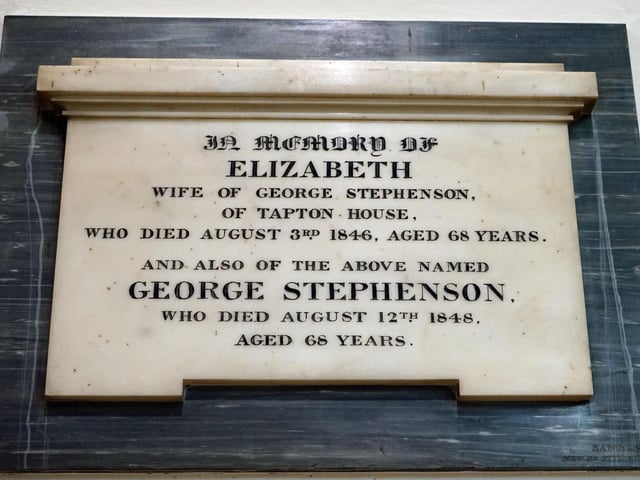
5. Final resting place
The final resting place of George Stephenson and his wife Elizabeth, in Holy Trinity Church, Chesterfield. Photo: Brian Eyre
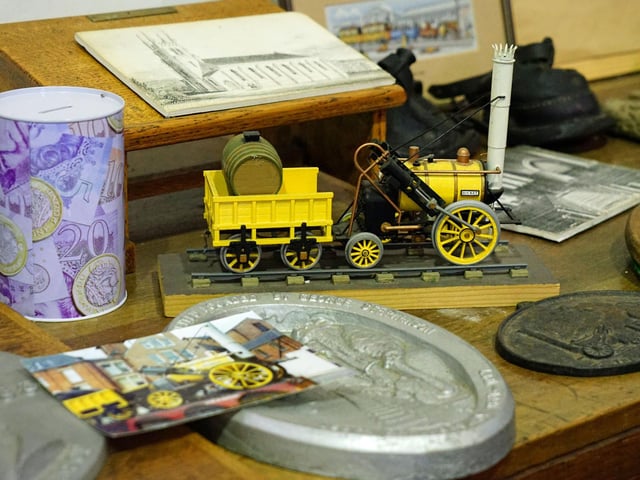
6. Ambitious project
The launch of a new heritage initiative marking the start of a £240,600 project funded by The National Lottery Heritage Fund, honouring the life and legacy of George Stephenson in his final resting place in Holy Trinity Church, Chesterfield. Photo: Brian Eyre