
Derbyshire councils expect decision on LGR plans by the New Year despite costly delays
Chesterfield Borough Council’s leader has revealed that a decision on Local Government Reorganisation for Derbyshire is expected in the New Year despite costly delays to introduce new north and south unitary authorities for the county.
Derbyshire’s county, district, borough and city councils have been preparing since 2024 for LGR with Government plans to replace the authorities with two larger unitary councils – a Derbyshire North Council and a Derbyshire South Council – between 2027 and 2028.
But after LGR was paused in September and stalled again in October for some areas including Derbyshire, Chesterfield’s Liberal Democrats described local authorities as ‘zombie councils’ stumbling through a stalled LGR plan wasting millions of pounds of money.
However, Labour-controlled Chesterfield Borough Council’s Leader, Cllr Tricia Gilby, said: “Local Government Reorganisation is a significant decision that will affect local communities for many years to come, and it is important that we get this right.
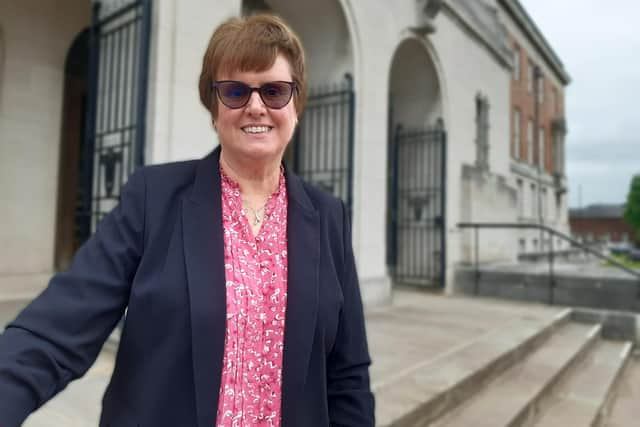

“We have been advised that the Government intends to make a decision in the New Year, and this will provide greater certainty and enable Derbyshire to move forward.
“In the meantime, Chesterfield Borough Council remains firmly committed to delivering high-quality services for residents, communities and businesses.”
But Derbyshire County Council opposition Liberal Democrat Leader, Cllr Tom Snowdon, who is also a Chesterfield Borough Councillor, has argued that huge amounts of time and money have already been wasted on preparing to abolish councils and to replace them two bigger ones while making staff redundant.
Liberal Democrat councillors have voted against LGR on Derbyshire County Council and Chesterfield Borough Council.
Cllr Snowdon claimed the cost of the LGR restructure over three years in Derbyshire is expected to be between £66 million to £81 million.
Critics are concerned about a reduced number of Derbyshire councillors, the loss of local control and decision-making, tax increases and whether the plans will create savings.
But the Government argues that LGR will provide more powers on planning and transport and create savings, greater efficiency, improved public services, and economic growth.
Amber Valley Borough Council has raised concerns and taken action over LGR plans to split its area into both the north and south Derbyshire unitary councils but it has stated that it is looking forward to further clarity on the next steps and the timetable.
NE Derbyshire District Council, Bolsover District Council, Amber Valley Borough Council and Derby City Council all stated that their focus and priority remains on delivering services for residents and communities.
Bolsover District Council Leader, Cllr Jane Yates, said she is proud of how Derbyshire’s councils have worked together despite different perspectives but with a shared determination to secure the best outcome for communities.
Reform UK-controlled Derbyshire County Council has backed County Councils Network’s concerns over the LGR process warning that changes to the process risk undermining evidence-based proposals, wasting taxpayers’ money and creating councils that may not be sustainable for the future.
The County Council Leader, Cllr Alan Graves, said the council supports Local Government reform where it can create better-run, more efficient councils, protect critical services and deliver better value for taxpayers.
But he highlighted concerns have grown over the way the process is being conducted, particularly where the criteria councils were originally asked to work against appear to be receiving different weight.
CCN Chairperson, Lincolnshire County Council Leader Sean Matthews warned the LGR process has been repeatedly changed and he highlighted the enormous amounts of council time, money and resources involved.
Cllr Graves has also argued that for Derbyshire to be sustainable the case for a single unitary Derbyshire council should be reconsidered.
Derby City Council Leader, Cllr Nadine Peatfield, said work by councils across the county has created strong partnerships and a shared understanding of the opportunities and challenges of LGR placing the city council in a strong position to respond when a new decision is made.
She added: “We look forward to engaging with the Government and receiving clarity on our position in the new year. At the moment, there has been no change to the criteria for this process, and it’s good to know we have a timeline for a fully tested and robust decision.”
Derbyshire’s county, borough, district and city councils previously insisted they were in a ‘strong position’ to respond to the Government’s decision in September to pause and review LGR plans.
A Ministry of Housing, Communities and Local Government spokesperson said: “We remain committed to shifting power from Whitehall to the places where people live and work and we know strong Local Government Reorganisation will create significant longer-term savings for taxpayers.
“£63 million in capacity funding was previously announced to support places going through reorganisation.
“Future final decisions will be based on the best evidence available and there will be further opportunities for affected councils to have their say.”
Local elections for Derbyshire and other unresolved areas will go ahead in May, 2027, on existing council boundaries, according to the Government, which stated that new unitary councils will be established by 2029 with elections to shadow unitaries in May 2028.
Derbyshire’s ten affected councils include: Derbyshire County; Derby City; NE Derbyshire District; Chesterfield Borough; Bolsover District; Derbyshire Dales; High Peak Borough; Amber Valley District; Erewash Borough; And South Derbyshire District.