
Derbyshire council says increasing council tax and housing rent will help secure services
A Derbyshire council leader has told how it has been necessary to increase its share of residents’ council tax bills by 2.99per cent for the 2026-27 financial year to avoid cutting services in the future after a bid by opposition councillors to freeze the rate failed.
Labour-controlled NE Derbyshire District Council approved its Medium‑Term Financial Plan for the financial years 2026-27 to 2029-30, at a council meeting, on January 26, including a 2.99per cent increase in its council tax precept for the 2026-27 financial year along with a 4.8per cent increase in social housing rents for its tenants from April, 2026.
This was agreed despite efforts by opposition Conservative Group Leader, Cllr Alex Dale, who called for a freeze on increasing the authority’s council tax precept which was backed by Green Party Cllr Frank Adlington-Stringer while Independent Cllr Ross Shipman also suggested reducing the planned increase.
Council Leader, Cllr Nigel Barker, told the meeting: “It is not something we have not considered. We are not naive in that respect but there are decisions to be made at every level.
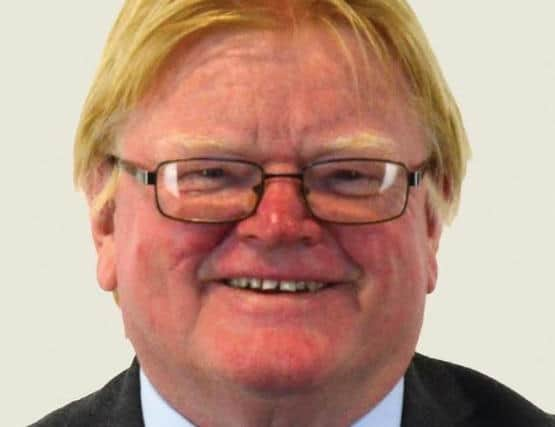

“There is a consequence to not putting the council tax up. Maybe not this year but it compounds itself every year and if you are not careful you have to bang it up massively or you cut your services to meet your budget.”
Cllr Dale’s call to freeze the authority’s council tax and Cllr Shipman’s bid for just a one per cent increase both failed and were outvoted and the council finally voted by a narrow margin in favour of the 2.99per cent increase for its precept of the overall council tax bill to be faced by residents during the 2026-27 financial year.
The council has stated the decision comes at a time of major national funding changes affecting all councils, along with inflationary pressures that continue to push up the cost of delivering services but its approved plan sets out how the council will continue to protect essential frontline services while investing in homes, neighbourhoods and long‑term improvements.
The Government’s financial funding settlement for councils is now based on three years from 2026-27 as opposed to just one-year allowing for better planning and the council says it represents the most significant redistribution of funding in Local Government in 25 years.
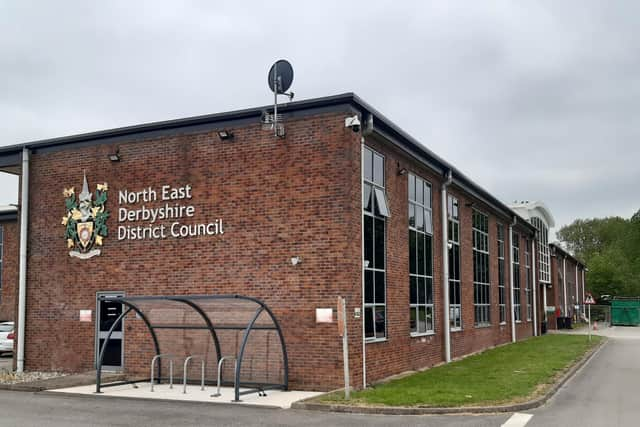
Council Director of Finance and Resources Jayne Dethick told the meeting that having a three-year settlement of funding and finance is a real benefit and helps with financial planning as opposed to the previous one-year settlements.
But it also includes a full reset of the business rates baselines which means a sizeable reduction in the business rates income for the council.
The council says its council tax increase will help ensure essential services — such as waste collections, parks, planning, community safety and environmental health — continue to operate effectively despite ongoing financial pressures with many outside of its control.
Its capital programme for the year includes continued vehicle replacement, asset management and investment in schemes such as the Warm Homes Local Grant project.
Cllr Pat Kerry, Deputy Leader and Portfolio Holder for Strategic Leadership and Finance, said: “A council tax increase at 2.99per cent is being recommended in the report. The income generated each year helps us to offset growth and more importantly helps us to improve the base for future years when things become more challenging.”
However, Cllr Dale argued that his Conservative Group does not think it is right to increase the council tax by nearly three per cent for the money to go into reserves that may be redistributed for others if the council is abolished in future years under Local Government Reorganisation plans yet to be finalised.
He said: “We know with pretty strong certainty the council won’t exist in that time-frame because we are really looking at the next three years and building up reserves does not make sense for residents.”
Fellow Conservative Cllr Martin Thacker, who backed Cllr Dale’s call for a council tax freeze, told the meeting residents face a cost of living crisis, inflation and a Derbyshire County Council council tax increase and he feels the district council’s investment strategy could have filled an identified shortfall in its budget by other means.
Green Party Cllr Frank Adlington-Stringer also agreed with Cllr Dale’s attempt to freeze the council tax rate because he said it was necessary to stand up to a Labour Government failing to address the cost of living crisis and an inequality crisis.
Independent Cllr Ross Shipman, who had called for only a one per cent council tax rate increase, said: “Every single bill goes up and suddenly you cannot buy anything. It’s all the bills that come into a household that go up three per cent or four per cent.”
However, Labour Cllr Kevin Gillott argued that a 2.99per cent council tax precept increase is the equivalent of a £6.48p increase per year for a Band D property on a resident’s overall council tax bill while most other differently banded properties will involve smaller amounts at the equivalent of a 10p a week increase for many.
He added that there is always a risk for councils trying to balance their budget and it is important to allow some flexibility.
Council Leader Cllr Barker said setting the budget and acting on the level of council tax is one of the hardest things the council has to do and every year there is a challenge not to put pressure on residents but the council needs to fund services.
He added: “I know Local Government Reorganisation is looming and there is an argument not to increase council tax and spend our reserves but I do not think that is the right thing to do.
“It is still needed to raise the council tax because to not do that would be cutting our nose off to spite our face and the thing to do is to set a budget.”
The council’s budget report recommended a council tax precept increase of £6.48 to be levied in respect of a notional Band D property amounting to a 2.99per cent increase which the council voted for with 58per cent in favour and 42per cent opposed and which is the maximum expected from the Government for a district or borough council.
Councillors voted by a majority and approved the council’s Medium-Term Financial Plan in respect of the General Fund including the budgets for the 2025-26 and 2026-27 financial years and for the financial projections in respect of 2027-28 to 2029-30.
The General Fund Capital Programme was also approved as the current budget for 2025-26, and as the approved programme for 2026-27 to 2029-30 and that budget under-spends are to be transferred to the Resilience Reserve to provide increased financial resilience for future years.
The council pointed out that funding legislative changes for food waste collections will involve an increase to ongoing revenue costs.
And Local Government Reorganisation plans, which could see district and borough councils abolished in the future and replaced with one or two unitary councils for the whole of Derbyshire, was also identified as a main uncertainty on the council’s financial health and viability and reserves.
The council stressed that council tax income is a significant funding stream providing over a third of the annual income needed to fund the services in the General Fund and that any increase each year not only services a relevant year’s budget but also increases the base for future years.
Its share of the overall council tax bill in 2025-26 was set at £216.67 for a Band D property which was an increase of 2.99per cent, and its approved increase for 2026-27 is again 2.99per cent which aims to generate an additional annual revenue of £311,511 for the council.
The council has taken into account pay awards, energy costs, fees and charges, inflation and interest rates and the cost of services when setting its council tax rate increase.
Councillors also voted by a vast majority in favour of setting its social housing rent levels for the 2026-27 financial year with an increase of 4.8per cent to be introduced from April 1, 2026, in line with the national rent policy.
The council also approved The Medium-Term Financial Plan in respect of its Housing Revenue Account in respect of the 2025-26 and 2026-27 financial years and the financial projections in respect of 2027-28 to 2029-30 and the HRA Capital Programme was approved in respect of 2025-26 with an approved programme for 2026-27 to 2029-30.
It also approved management fees to housing managers Rykneld Homes in respect of 2026-27 for undertaking housing services at £13.962m and for undertaking capital works at £1.1m.
The council says it recognises the pressure that rising household costs places on tenants, however increasing rents is essential to ensure the Housing Revenue Account can continue to provide safe, warm high quality homes and services.
NE Derbyshire District Council and Rykneld Homes were also recently awarded the highest regulatory judgement of C1 recognising the strong performance and high standards achieved in managing and maintaining council homes.
Councillors acknowledged the pressures felt by households and emphasised that decisions on increases were made only after careful consideration of the long‑term financial stability of the council.
Council Deputy Leader, Cllr Kerry, said: “We understand that any increase in bills affects our residents and these decisions are never taken lightly.
“But with significant national funding changes and rising service costs, this plan ensures we can continue delivering the high‑quality services people rely on while investing in warm, safe and well‑managed homes.
“It’s a responsible approach that protects residents now and strengthens our communities for the future.”
Derbyshire County Council is considering plans to introduce an on-going 4.99per cent increase to its council tax precept between the three financial years of 2026-27 to 2030-31.
Derbyshire Constabulary’s Chief Constable Rachel Swann and Police and Crime Commissioner Nicolle Ndiweni-Roberts recently confirmed the commissioner’s plans to increase the force’s council tax precept for the 2026-27 financial year which, for a Band D property, will increase by 5.11per cent to £308.60.
The overall council tax bill for Derbyshire residents includes an accumulation of numerous precepts determined by the county council and relevant local authorities including district or borough councils, parish or town councils, the police and fire authorities.