
Derbyshire cement and lime plants in Peak District identified for carbon capture storage scheme
Derbyshire County Council and the Peak District National Park Authority are eager to be involved in a consultation on ground-breaking plans to use lime and cement works in Derbyshire’s Peak District to capture, transport and store carbon dioxide and protect the environment.
Peak Cluster, which is a collaboration between cement and lime producers in Derbyshire and Staffordshire, aims to oversee a project that will capture carbon dioxide from four cement and lime producers across sites in Derbyshire and Staffordshire involving Holcim’s Cauldon plant, Tarmac’s Tunstead cement plant, Buxton Lime’s Tunstead lime plant, and Breedon’s Hope cement plant.
The county council says it is looking forward to taking part in Peak Cluster’s six-week consultation which was launched on January 12 and the Peak District National Park Authority also aims to continue to be actively involved in the process, hoping to balance the benefits of carbon capture against any potential impact to the national park.
A county council spokesperson said: “Quarrying is a key industry within the Derbyshire economy, and we look forward to being consulted on the future plans to develop the industry and help to safeguard and create jobs locally as part of the proposals.”
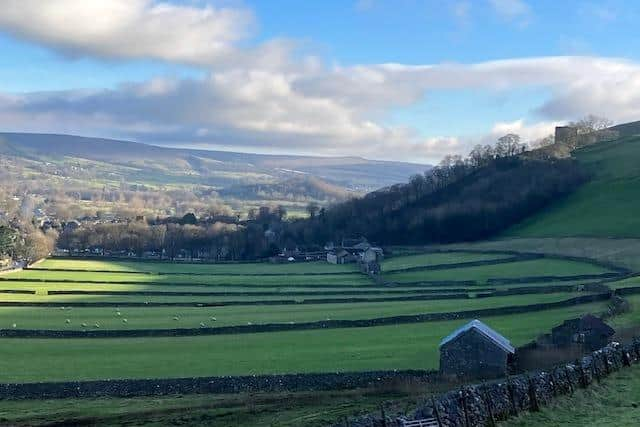

The Derbyshire works include Buxton Lime’s Tunstead lime plant, at Tunstead Quarry, off Waterswallows Rd, in Buxton, Breedon’s Hope cement plant, at Pindale Road, in the Hope Valley, and Tarmac’s Tunstead cement plant, at Waterswallows Road, Tunstead House, in Buxton.
Holcim’s Cauldon plant is located between Cauldon and Waterhouses villages in Staffordshire.
The plans, if approved, would see carbon dioxide transported and stored permanently beneath the East Irish Sea which Peak Cluster claims will help to secure the future of Britain’s cement and lime industries while safeguarding and creating jobs and ensuring a reliable, ‘homemade’ supply of essential materials.
This supply of essential materials would include building material for the UK’s hospitals, homes, rail and essential minerals to purify tap water and maintain healthy soil to graze animals and grow crops.
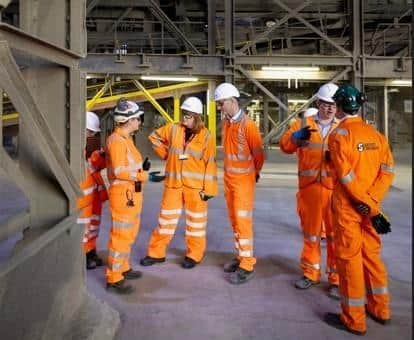
Peak Cluster says the scheme will use carbon capture technology to lock away carbon dioxide emitted at Holcim’s Cauldon plant, Tarmac’s Tunstead cement plant, Buxton Lime’s Tunstead lime plant and Breedon’s Hope plant which will help secure the future for 40per cent of the nation’s cement and lime industries.
Spirit Energy’s Morecambe Net Zero project, which plans to transform gas fields in the Irish Sea into carbon dioxide storage sites, and Peak Cluster are expected to work together to jointly safeguard and create 13,000 jobs by 2050, according to Peak Cluster, with around 1,500 jobs created across the East Midlands and North West during construction.
Peak Cluster also says that cement production is responsible for 7.5per cent of global CO 2 emissions but it claims its plans will prevent over three million tonnes of CO 2 from entering the atmosphere each year while strengthening the industry’s resilience and opening up new opportunities for growth.
A Peak District National Park Authority spokesperson said: “The Peak District National Park Authority has played an active role during early engagement with Peak Cluster and has sought to influence the development of the project to reduce potential impacts upon the National Park as far as possible.

“As further detailed plans become available, the authority will continue to be actively involved throughout the consultation and consenting process seeking to form a view that balances the benefits of carbon capture and the project as a whole, against its potential impacts and the purposes of the National Park and its special qualities.”
Peak Cluster has recognised that the production of cement and lime generates carbon dioxide which it says is the single largest contributor to climate change and with 40per cent of all British cement produced in Staffordshire and Derbyshire it says the industry accounts for as much as 23per cent of the counties’ CO 2 emissions.
But Peak Cluster aims to use carbon capture technology to lock away CO 2 emitted at Holcim’s Cauldon plant, Tarmac’s Tunstead cement plant, Buxton Lime’s Tunstead lime plant and Breedon’s Hope plant which will be safely transported in an underground pipeline to the Morecambe Net Zero central CO 2 storage facility, operated by UK energy company, Spirit Energy.
Peak Cluster Chief Executive Officer, John Egan, said: “Peak Cluster is such an important project for Staffordshire and Derbyshire’s economy – helping to protect our vital industries and retaining the deeply ingrained skills that have been passed down through generations.
“Connecting the Midlands and North West, MNZ – Peak Cluster will create a shared clean-growth corridor between the UK’s industrial heartlands and the offshore energy coast – accelerating decarbonisation and driving regional prosperity.
“It will be the world’s largest cement and lime decarbonisation project – using proven technology to establish the UK as an international leader in responsible, sustainable manufacturing.”
Following initial studies and research, Peak Cluster is now entering its first consultation phase, which will provide those who live and work around the area with an opportunity to find out more from the project team, ask questions and provide input on the project.
The consultation will run from January 12 until and including February 27 and it will feature a range of in-person events and webinars.
Mr Egan added: “The project team are keen to meet with those who live, work, and have an interest in Peak Cluster. We encourage you to visit our website, come and discuss the project with the team at our events and webinars, and let us know your views.
“This first consultation will help us shape the development of more detailed plans, which we hope to consult on again later in 2026.”
Those interested in taking part in the consultation and contacting the project team, can visit www.peakcluster.co.uk for details.
Once the proposals – for what Peak Cluster has described as a ‘nationally significant infrastructure project’ – are finalised, Peak Cluster aims to submit a Development Consent Order application in 2027 for Government approval.