
Campaigners fear developers may appeal over refused Derbyshire woodland holiday park scheme
Resolute campaigners who successfully fought to protect treasured woodland from controversial holiday park plans fear the scheme’s applicants may still appeal to try and overturn the decision to refuse the project.
Save Farley Moor campaigners and supporters persuaded Derbyshire Dales District Council’s planning committee to refuse Forest Holidays’ application to build 75 cabins on 140 acres of woodland at Farley Moor, off Farley Lane, near Matlock.
The council refused the scheme on the grounds that its economic benefits would not outweigh the harm it posed to the character of the area and due to its remoteness regarding public transport.
However, campaigners have raised concerns with the council that the applicants, who they expect to appeal, could adopt a planning strategy used elsewhere to try and get plans approved but this strategy has been dismissed by Forestry England which operates as landlord to Forest Holidays.
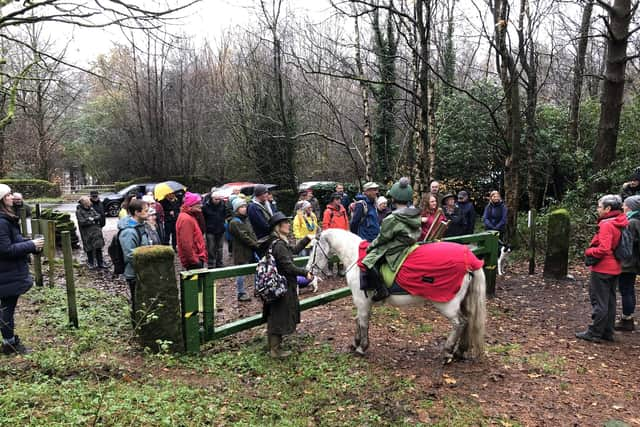

A Save Farley Moor spokesperson said: “While we wait to see if Forest Holidays decide to appeal we have been contacted by other groups around the UK with worrying attempts to by-pass planning law.”
Shalfleet Parish Council, on the Isle of Wight, claimed Forestry England and applicant Unyoked attempted to use a piece of legislation – the Caravan Sites and Control of Development Act 1960 – in a bid to secure proposals for temporary caravans at Bouldnor Forest on the Isle of Wight.
The parish council said this legislation contains an exemption originally intended for small touring caravan clubs.
It claimed Forestry England and partner Unyoked attempted to use this exemption to bypass planning permission, environmental assessment and public consultation at one of the Isle of Wight’s ‘most sensitive ecological sites’ but Forestry England finally abandoned its plans for three mobile glamping cabins.
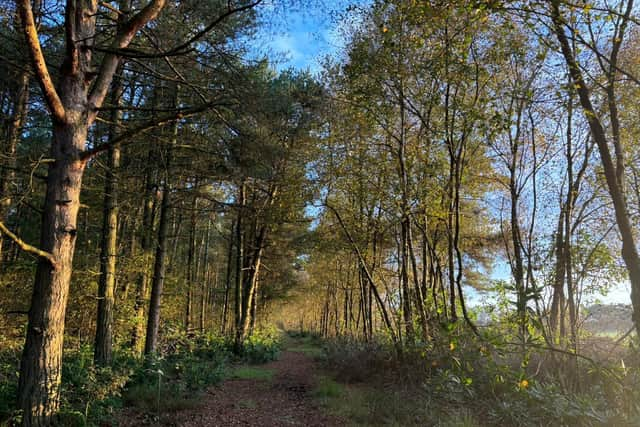
A Save Farley Moor spokesperson said: “The council there managed to get Forestry England to withdraw the application but there is concern that this will be attempted elsewhere.”
The spokesperson added: “The caravan exemption loophole must be closed, Natural England’s oversight failures must be addressed, and Defra (The Government Department for Environment, Food and Rural Affairs) must ensure that public bodies cannot use a 66-year-old statute to bypass planning in sensitive landscapes.”
Forest Holidays’ refused scheme for Farley Moor included a 57.17 hectare site for 75 cabins to accommodate 185 people, a car park, reception, shop, cafe, maintenance building and outdoor play area, archery, a ranger station, storage pods, recycling points, ancillary roads, paths, and parking.
The plans also featured the removal of 1,303 trees to make way for an access road and cabin development totalling around 10 per cent of the trees in the chosen 140-acre project area within the wider 440 acres of Farley Moor woodland.
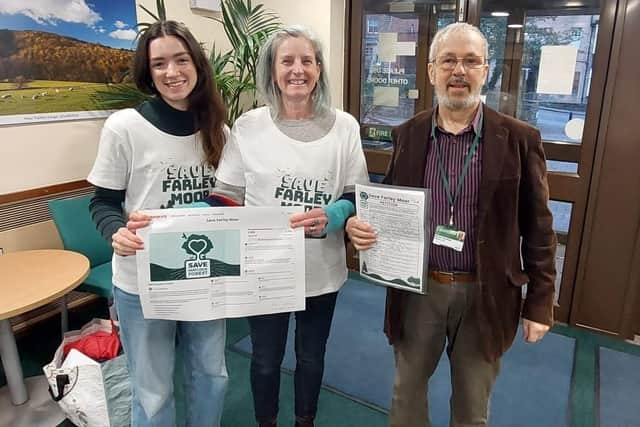
But campaigners raised numerous concerns including the loss of trees, increased traffic, fears of wildfires, noise and light pollution, and that the scheme lacked local knowledge and had failed to consider the area’s characteristics in mitigating flood risks, and the need to protect natural resources and to support local businesses.
Save Farley Moor’s other concerns included potential traffic congestion, road safety and access problems, drainage worries, over-saturation of the area’s holiday market, as well as the need to protect a nearby ceremonial circle dating back to the Bronze Age.
Residents raised further concerns about connectivity problems with the site an hour’s walk from Matlock, as well as the feared loss of public access to the woodland and the ‘urbanisation’ of the countryside.
Forestry England previously stated the scheme would create dozens of jobs and provide a multi-million pound boost for the Derbyshire Dales and the wider area.
It had claimed the overall proposals had been designed to deliver ‘biodiversity net gain’ and there would be ‘no adverse impact or loss of habitat’ and lighting would be carefully considered.
However, Derbyshire Dales District Council’s planning committee voted by a majority in July to refuse permission.
The refusal was based on the scheme’s scale and remote location in relation to public transport making it unsustainable, and on the basis any economic benefits would not outweigh the harm posed by the development to the character, appearance and tranquillity of the area.
Forestry England said Forest Holidays is still considering their options and Forestry England and Forest Holidays will not rely on any exemption arrangements in relation to the Forest Holidays’ proposal.
A Forestry England spokesperson said: “The proposal for Farley Moor is intended to help secure the long-term resilience of Matlock Moor and maintain public access to the forest.
“Significant investment is still needed to make the forest fit for the future. This application was made by Forest Holidays, who remain disappointed with the committee’s decision to refuse the application and are still considering their options.”
Forestry England stated it works with partners as part of its overnight stays strategy and in some locations the partners work with operators who provide low-impact overnight stays under arrangements subject to regulatory oversight and operating within statutory limits.
These arrangements, according to Forestry England, do not remove the need to consider environmental protections and, where appropriate, involve consultation with planning authorities and protected landscape bodies.
The Forestry England spokesperson added: “The Farley Moor proposal relates to our partnership with Forest Holidays and is entirely separate from these arrangements.
“Forestry England and Forest Holidays will not rely on any exemption arrangements in relation to the Forest Holidays’ proposal.
“Forestry England remains committed to creating more opportunities for people to connect with the nation’s forests, working with trusted partners to deliver high-quality, sustainable overnight stays that help more people experience and enjoy these special places.”
Any planning appeal would be submitted to the Secretary of State for the Ministry of Housing, Communities and Local Government to be decided in most cases by a planning inspector.
The council had originally received over 100 formal letters of objection to the scheme with opposition from Matlock Town Council, Darley Dale Town Council, CPRE England, the Save Farley Moor campaign group and the Derbyshire Bat Conservation Group.
However, Visit Peak District and Derbyshire tourism board had supported the scheme and Derbyshire County Council’s highways authority and its flood authority had raised no objections subject to conditions.
The district council’s Environmental Health and Economic Development teams, and its Trees and Landscape and Conservation officers had also offered no objections.
Council planning officers had also conceded the loss of 1,303 trees was less concerning because the woodland is a plantation created for timber production and trees would be felled in the future.
They also stated the scheme would involve long-term woodland management to ensure the remaining woodland would be ‘retained and enhanced in perpetuity’.