
Bolsover District Council says it puts ‘communities first’ with its ‘One Derbyshire, Two Councils’ proposal
Bolsover District Council has established its proposed option under a new ‘One Derbyshire, Two Councils’ plan for the county which it claims will create a better balance of population and an almost equal and stronger level of value across new north and south councils in terms of how much money this proposal could generate.
The Labour-controlled council held back-to-back Full Council and Executive meetings on November 5 to establish its proposal which will be submitted to the Government as part of Local Government Reorganisation plans to set up single, unitary authorities across England with an elected mayor in counties by replacing county, district and borough councils in two-tier authority areas like Derbyshire.
Derbyshire’s eight district and borough councils with Derby City Council have previously agreed their overall preference would be for two north and south unitary councils to replace the county’s current arrangement of ten councils but each have been setting out their personal preferences from a choice of four options under the ‘One Derbyshire, Two Councils’ format while Derbyshire County Council is now considering one single unitary council for the whole region.
Bolsover District Council Leader, Cllr Jane Yates, said: “Work started on Local Government Reorganisation in February 2025 and since then Bolsover District Council has been actively engaged in the joint work of the district, borough and city councils of Derbyshire to develop proposals for LGR that put communities first, preserve Derbyshire’s historic integrity, and respond to evolving needs.
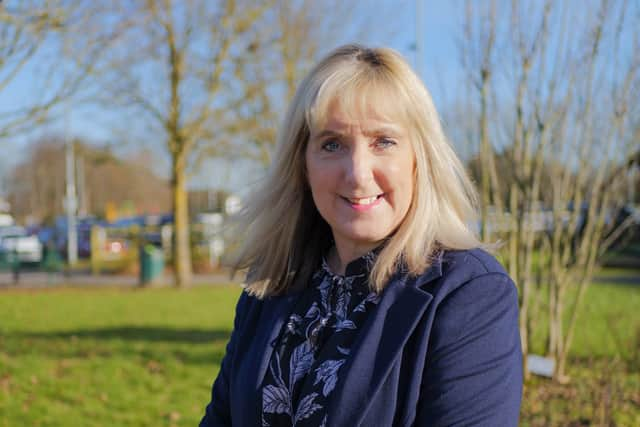

“Our officers have put in a huge effort and invested their time in many different workstreams during what has been a very intense nine months. I want to thank each and every one of them for this hard work and I know they will continue to work just as hard once the final decision is announced by Government next year.”
Bolsover’s preferred Option A1 would see NE Derbyshire, Chesterfield, Bolsover, High Peak, Derbyshire Dales and part of the Amber Valley in one northern unitary council, and Derby City, Erewash, South Derbyshire, and part of Amber Valley in the southern unitary council.
Parishes in the northern council would include: Aldercar and Langley Mill, Alderwasley, Alfreton, Ashleyhay, Belper, Codnor, Crich, Denby, Dethick, Lea and Holloway, Hazelwood, Heanor and Loscoe, Idridgehay and Alton, Ironville, Pentrich, Ripley, Shipley, Pottle and Postern, Somercotes, South Wingfield and Swanwick.
Parishes in the southern council would include: Duffield, Holbrook, Horsley, Woodhouse, Kedleston, Kirk Langley, Mappworth, Mapperley, Quarndon, Ravensdale Park, Smalley, Turditch, Weston Underwood, and Windley.
Option A1 would have different parishes from Amber Valley joining each of the north and south councils and would have a northern population of 567,000 across 2,068sq km and a southern population of 511,000 across 560sq km.
The council argued that under Option A1 the southern unitary council would have less geographic constraint allowing Derby to grow particularly on the north-western border.
It also claimed that Option A1 provides a better overall balance of population, an almost equal and stronger level of the potential value each unitary council may generate – known as Gross Value Added – while providing a more balanced council tax base with a more balanced population of those aged over 65.
Other options being considered by the county’s other city, district and borough councils include Option A which would see Amber Valley in the northern council and would see a northern population of 584,000, and the southern council area would have a population of 494,000.
Option B would place Amber Valley in the southern council and would see a northern population of 456,000, and the southern council area would have a population of 622,000.
And Option B1 would see part of Amber Valley in the northern council and part of Amber Valley in the southern council with Amber Valley parishes split with some in the north and some in the south, with a northern population of 539,000 and a southern population of 538,000.
Cllr Yates said: “In each of the different options presented, the district of Bolsover was in the north, but it is still important for us to consider the options of the composition of the northern authority. We need to be confident that the option we endorse results in the strongest northern unitary council.”
The council argued that Option A1 allows for Amber Valley to be split at parish level ensuring parishes allocated between the northern and southern unitary authorities reflect community ties, geography, and the most practical delivery of services.
Option A1 also retains strong local identity and community voice by respecting parish boundaries as building blocks rather than imposing arbitrary lines that might sever established local connections, according to the council.
The council argued that A1 offers a route to efficiencies and economies of scale – reducing duplication of services, senior management layers, and overheads while maintaining sufficient scale for resilience and infrastructure investment.
It also claims that A1 aligns with the Government’s criteria for reorganisation but allows flexibility to adapt boundary lines more precisely while supporting joined-up strategic working with neighbouring councils and strengthening Derbyshire’s position with links to the East Midlands Combined County Authority.
The one-off implementation costs for LGR for the councils are estimated at £65.4m to be phased over 2026/27 to 2030/31, according to Bolsover District Council.
But the district, borough and city councils claim the proposed ‘One Derbyshire, Two Councils’ forecasts accumulative savings of up to £167m by the sixth year, and despite estimated savings of just £4.4m in its first year these are expected to rise to £44m per annum in its sixth year.
The Government has argued LGR plans will include elected mayors with more powers on planning and transport and that the changes will create savings, create greater efficiency, improve public services, and support economic growth.
But critics are concerned about the loss of councils – with Derbyshire reduced from 447 councillors to 162 – the loss of local control with a risk of greater Government influence, the removal of local decision-making, tax increases, powers being taken away from communities and some also doubt the plans will create savings.
Cllr Yates added: “There is still work to do. There’ll be scrutiny and consultation on the option the Government selects and we’ll work with all partners to deliver the best outcome for our residents.”
NE Derbyshire District Council also voted by a majority on November 3 for Option A1 and this will be presented to its Cabinet on November 6, to be rubber stamped before being submitted to the Government.
Chesterfield Borough Council voted for Option B1 as their preferred proposal – despite opposition from all the present Liberal Democrat councillors – and this option will be presented to the council’s Cabinet on November 11 to endorse before it is submitted to the Government for consideration.
Other Derbyshire district and borough councils, together with Derby City Council, are all proposing to reduce the number of local authorities covering the county from 10 to two but they are also deciding on their preferred options this week before a November 28 deadline to submit all proposals to the Government for consideration.
Derbyshire County Councillors will be asked to consider proposing one single unitary council for the whole of Derby and Derbyshire as the county council’s preferred option for LGR at a Full Council meeting on November 13.
The Government will review all council proposals before making a final decision on how Local Government is best reorganised in Derbyshire in the summer of 2026.
Under the Government’s current timetable, elections to the new shadow authorities would take place in 2027, and the new unitary councils would start to operate by April 2028.
Derbyshire’s eight district and borough councils include: Amber Valley Borough Council; Bolsover District Council; Chesterfield Borough Council; Derbyshire Dales District Council; Erewash Borough Council; High Peak Borough Council; North East Derbyshire District Council; and South Derbyshire District Council.