
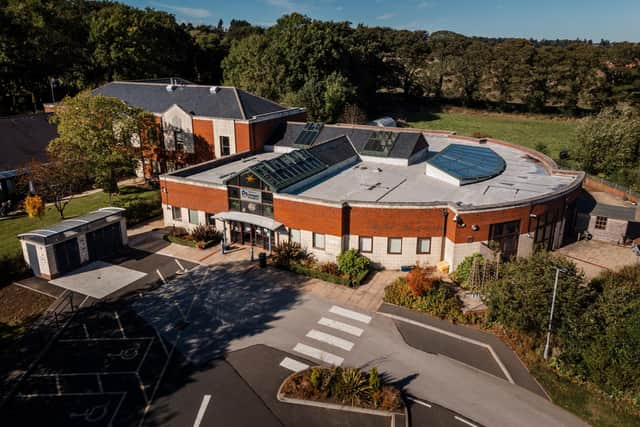
'Ashgate is the only hospice in Derbyshire that provides inpatient palliative and end of life care - a service which the ICB does not fund at any other hospice in in our area'
A health service chief has answered claims by a hospice’s principal officer that there is a north/south divide in NHS funding for palliative and end of life care in Derbyshire.
Ashgate Hospice is faced with the heartbreaking proposals of cutting 52 jobs and reducing its operation of inpatient beds to six from an available 21. The Chesterfield based hospice, which cares for 2,600 patients a year in north Derbyshire, needs to save £2.6million as its reserves are critically low. Barbara-Anne Walker, chief executive at Ashgate Hospice, said: “Our NHS contract value in 2022-23 was £3.9m. This year, the ICB (the NHS Integrated Care Board) have not told us what our contract value will be (despite being over halfway through the financial year) and therefore the contract value currently is the same as last year, namely £4.66m. This is not an increase of 55% since 2022/23 as claimed by the ICB, but rather an increase of 19%.
“We have been repeatedly asking the ICB to talk to us about fair funding since at least the first half of 2024, but have made no tangible progress, despite our openness and best efforts.
“In order to avoid having to make the devastating announcements we made last week, we had asked them for emergency funding of £250k per month. Initially, they indicated that they would be willing to do this in order to allow us to continue providing services whilst we agreed a fair and sustainable funding settlement and worked together to look at specialist end of life care costs across Derbyshire. However, that was taken off the table by DDICB (Derby and Derbyshire Integrated Care Board) at the last minute. Instead, they ultimately told us that they could provide just £100k - and that this money would be to pay for the cost of an independent consultancy to review our hospice’s finances - despite them having already received large quantities of detailed information.

“The short answer, therefore, is that they have offered us no additional funding.”
Barbara-Anne said that without extremely careful management and tight budget controls costs would have increased far more. She said: “Over the year most of the increase has occurred due to the cost of providing clinical care. Staff salaries are by far the biggest part of the increase, most of which are direct staff costs relating to providing care and which includes the National Insurance increase which charities have to pay for and increase to the minimum wage. Energy costs have increased by a further £73K but we also have increased fundraising costs (£200K) as we have to work harder than ever to try to make up the huge and growing funding gap, for example helping us raise more money through our popular Sparkle Night Walk.
“Currently we can afford to only have 15 of our 21 beds open. Because costs have been rising and we’ve been unsuccessful in getting more funding from DDICB despite months of negotiations we now have no choice but to close more of our specialist beds – we will have six of a total 21 open. Meanwhile specialist end of life care beds at UHDB (University Hospitals of Derby and Burton) in south Derbyshire are 100% fully funded by DDICB – none of their 21 beds are closed or closing.
“It is simply unfair that people in north Derbyshire have to try to make up such a big funding gap to keep beds open. That’s why we are saying there’s a north/south divide. We want all our beds to be open like they are in south Derbyshire and to be providing more outstanding care, not closing services and losing jobs and making the inequity worse. What we won’t do though is reduce the quality of our care to stop the NHS having to pay us fairly. Our care is outstanding, and we want to keep it that way."
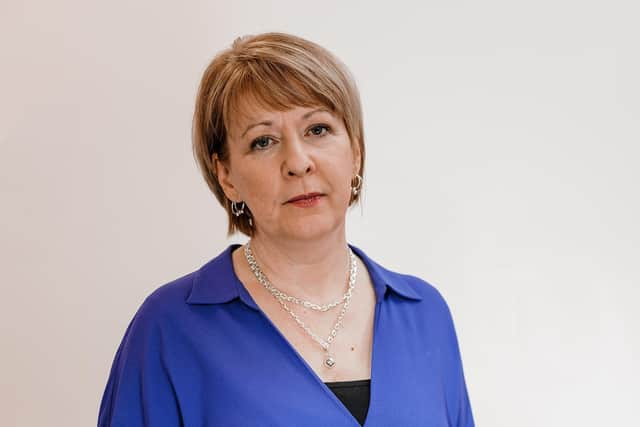
Amanda Sullivan, Chief Executive at NHS Derby and Derbyshire Integrated Care Board, said: “We greatly value the care our hospices provide for our local population and the contribution they make to health and care in our communities.
“We know that local people hugely value our hospices too and they contribute to the services they provide through their fundraising, donations and legacies.
“Ashgate is the only hospice in Derby and Derbyshire that provides inpatient palliative and end of life care - a service which the ICB does not fund at any other hospice in in our area, but is provided by University Hospitals of Derby and Burton, an NHS Foundation Trust.
“It is not possible to compare funding of hospices with funding of a large NHS trust.
“We do not allocate funding for palliative and end of life care on the basis of north or south. We commission palliative and end of life care from a range of providers across the whole of Derby and Derbyshire. In this way we aim to ensure equity of access to these services across our whole area.
"Additionally, due to the nature of NHS contracts, which are paid as a quantum sum for a wide range of services, it is not possible to identify the specific costs for the end of life and palliative care inpatient beds which are commissioned from University Hospitals of Derby and Burton NHS Foundation Trust.
“For all these reasons, it is impossible to infer that the ICB pays less for this care in north Derbyshire than in south Derbyshire.”
In an earlier statement released after the announcement of the proposed cost-cutting at Ashgate Hospice, Amanda said: “The local NHS commissions end of life palliative care from Ashgate, including inpatient bedded care, home visits, day hospice, occupational therapy and physiotherapy, plus other services.
“Local NHS funding represents more than half of the total direct care costs (excluding overheads) of delivering the NHS-commissioned services at Ashgate.
“These arrangements are in line with NHS England guidance and in line with normal practice for hospices, based on benchmarking undertaken by Hospice UK. This benchmarking shows that, nationally, on average, Integrated Care Boards fund around 55% of hospices’ direct care costs, excluding overheads.”
Hospice UK is pressing for hospices that provide specialist care like Ashgate to have their costs fully funded by the ICB.