
Derbyshire County Council has confirmed the cabinet will be “asked to agree” to update school travel policies at the meeting on Thursday, May 21.
The policies are in line with national guidance for eligible school children aged five to 16, Post 16 learners and students with special educational needs and disabilities.
School transport policies in Derbyshire in recent years have been more generous than in other parts of the country – with the announcement rising concerns that some children would be at risk of loosing their free school transport soon.
Up to 10,000 eligible children and young people are supported by the council to get to school each day, involving 1,140 transportation routes and 145 different transportation providers.
What are current school transport policies in Derbyshire?
Up to 10,000 eligible children and young people across Derbyshire are currently supported by the council to get to school each day, involving 1,140 transportation routes and 145 different transportation providers.
Currently all primary school children aged between five and eight are eligible for free school transport if they live over two miles away from school.
Pupils between the age of eight and 16 qualify if they live three miles from their nearest suitable or normal area school.
Children qualify for free transport if the walking route is deemed unsafe; they have SEND or mobility issues or families are on qualifying benefits.
Pupils aged eight or over, are entitled to free school transport if their family gets the maximum level of working tax credit and the they attend is the nearest suitable school and over 2 miles from the home address.
Children aged 11 to 16 are entitled to free transport to any one of the three nearest suitable schools where the distance from home is between two and six miles and if their family gets the maximum level of working tax credit.
Where the school is preferred on grounds of religion or belief, the distance is between two and 15 miles and the school must be the nearest appropriate school.
Children and young people with an EHCP (Education, Health and Care Plan) or significant learning or health needs that prevent them from using mainstream transport safely or independently qualify for SEND transport.
Eligibility is determined through assessment of the child's needs in line with the policy.
In addition to free transportation for eligible pupils, there are additional transportation arrangements where parents contribute towards the cost.
What is national guidance for school transport?
The national guidance states that local authorities only need to provide transport to the nearest suitable school for low-income families or children under the age of eight living over 2 miles away from the school.
Children aged between eight and 16 are eligible for free transport if the nearest school is over 3 miles from home.
Secondary pupils may get transport to one of three nearest schools, or up to 10 miles away if attending based on religion/belief.
Children with Special Educational Needs or Disability (SEND) are eligible for free transport regardless of distance if the child cannot be “reasonably expected to walk”.
What will be discussed at the Derbyshire County Council meeting?
The council said that the school transport changes, set to be discussed on Thursday, May 21, would make policies “clearer, fairer and sustainable” in the face of “rising demand and increasing operational costs”.
Cabinet will be asked to agree to several changes to update the policies including:
• Renaming the Home to School Travel Policy for Children of Compulsory School Age to the Travel to School for Children of Compulsory School Age
• Renaming the Post 16 Transport Policy Statement to Post 16 Travel Support Policy Statement.
• Introducing new personal travel budgets, which is set to give families, where appropriate, a direct payment to choose how their child travels to school, rather than relying on council-arranged transport. The council has argued that this approach would provide greater flexibility, allowing parents to tailor travel arrangements to suit their child’s needs to fit in with family routines and create a more personalised and stress-free experience.
• Enhancing independent travel training where appropriate to support secondary school children and extending it to Post 16 learners with special educational needs and disabilities to get to school safely and confidently on their own. The council said this would be in line with the council’s Preparation for Adulthood Strategy, teaching key life skills which give them choice and control, reduces reliance on others and builds self-esteem.
• Extending the timeframe for arranging specialised travel assistance to 30 days once an application is made to ensure it is “safe, reliable, and in line with contractual and safeguarding standards”.
• Introducing pick-up points for children in place of specialised door-to-door transport arrangements where this is appropriate and based on individual needs. The authority said this would be assessed on a case-by-case basis in consultation with families and would reflect the existing arrangements for children travelling on school buses.
• Reviewing charges for children not eligible for free school transport but who make use of a discretionary offer to pay for spare seats on buses. In line with current policy, and to ensure charges remain viable and fair, they would increase in line with inflation (3.3% at March 2026) from September 2027. For secondary age pupils, charges would increase from £483 to £499 and for primary age children, charges would rise from £434 to £448. Charges would increase in line with inflation each year, the local authority said.
• Changing how the council determines a child’s home address when they live equally between two parental homes.
Cabinet will also be asked to agree to make additional changes to the Home to School Transport Policy for Children of Compulsory School Age including:
• Providing clearer information on how distances are measured when the route is over the statutory walking distance; identifying whether a school is nearer than the normal area school or determining which school is nearer when a child lives equally between two parental homes.
• Providing clearer information on how the council will use its discretion on implementing the policy when a child moves permanently during their final academic years; a parent’s disability affects their ability to get their child to school; for parents whose children are not of statutory school age, such as four-year-olds who attend reception and care experienced children and young people.
• Changing the qualifying criteria for families on low incomes to reflect the expansion of free school meals to all families receiving Universal Credit: Extended rights travel will remain targeted at children receiving free school meals and living in a household with annual earnings of not more than £7,400.
Cabinet will also be asked to agree proposed changes that apply to the Post 16 Transport Policy Statement only:
• Increasing the amount parents contribute where the council arranges transport assistance to ensure fairness, make the service sustainable and reflect rising costs. From September 2026, it is proposed the standard parental contribution would rise in line with inflation (3.3% at March 2026) from £483 to £499 a year. And for low-income families the rise would be £326 to £337. The council has not raised charges for three years. Charges would rise with inflation and be reviewed each year.
The council said that the proposed school transport policy changes follow a public consultation where 450 people gave their views on the proposals.
Councillor Simon Mabbott, the Cabinet Member for SEND and Education, said: “We’ve listened to people’s feedback as part of the consultation and taken this into account when considering how to bring our policies up to date.
“We’re committed to providing efficient and safe transport in line with our legal obligations to support parents in getting their children to school, but the current policies are out-dated and do not reflect how the service is delivered.
“The proposed changes would bring them in line with updated Government guidance and ensure they are fair in supporting all children and young people to get the education they deserve.
“Although we need to ensure the service remains sustainable amid rising demand, we recognise that the cost of living continues to affect many families which is why we are only proposing to raise charges in line with inflation so they keep more of their money in their pocket.
“It would mean the cost of a journey to and from school each day works out at around £2.62 – or £1.77 for low-income families – which is cheaper than one standard single fare on a public bus.
“If all the changes are agreed, they will help to promote children’s independence – and when I’ve spoken to young people with SEND they say they want to be able to do things on their own like their friends.
“They will also provide flexibility for families to decide how they get their children to school which in turn will help to increase attendance for all pupils across Derbyshire.”
In addition to these proposed changes to the policies, it is also proposed that where walking route safety assessments are required these are carried out by qualified officers.
If Cabinet approves the recommendations, the changes to the policies would come into effect from September 2027, except the Post 16 parental contribution charges which would take effect from September 2026.
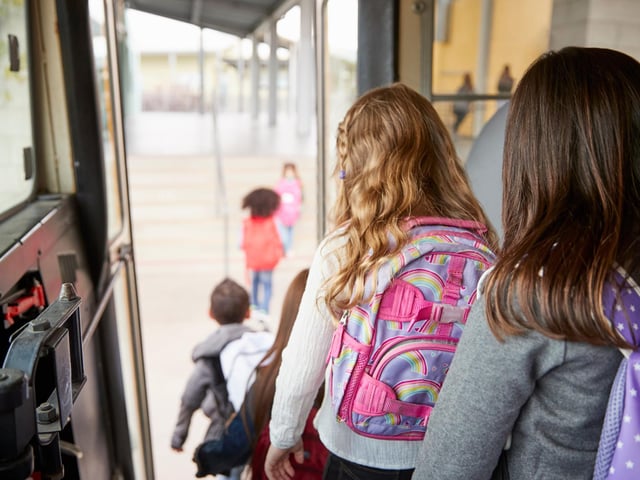
1. Two girls waiting behind their friends to get off school bus
Derbyshire County Council is set to discuss proposals to change home to school transport policies next week. (Monkey Business Images stock.adobe.com) Photo: Monkey Business Images
2. Photo - 2026-05-14T145433.024.jpg
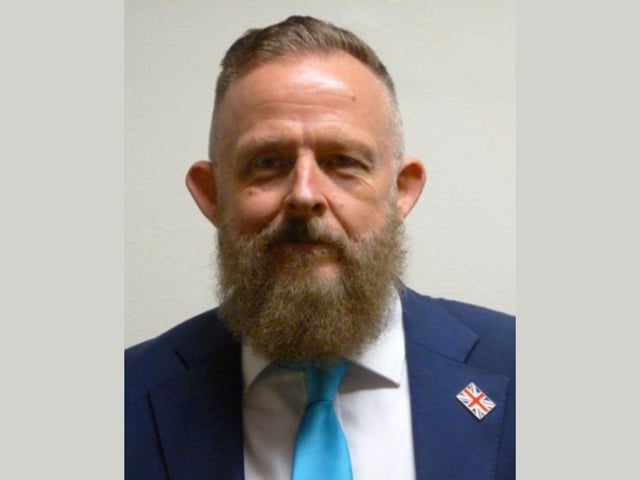
Councillor Simon Mabbott, Derbyshire County Council Cabinet Member for SEND and Education, said the proposed changes would bring local policies in line with updated Government guidance and "ensure they are fair in supporting all children and young people to get the education they deserve". Photo: DCC