
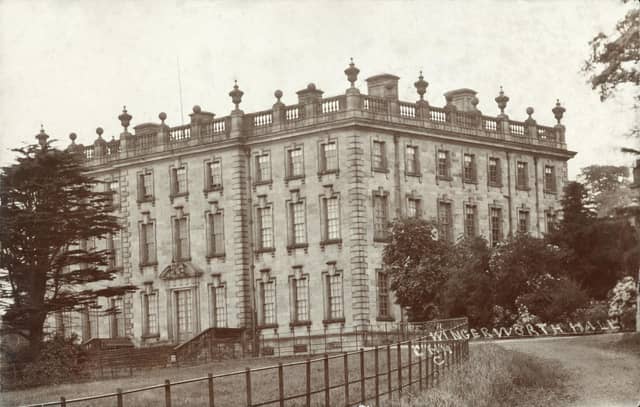

Photos include town centres scenes and impressive historic buildings – some of which no longer exist.
Pictures include Ripley Market Place in 1906, showing the Town Hall and the old Post Office.
Historic buildings such as Bolsover Castle, Eyam Hall and Lea Hurst, the country manor on the estate of William Edward Nightingale, the father of nurse and medical reformer Florence Nightingale.
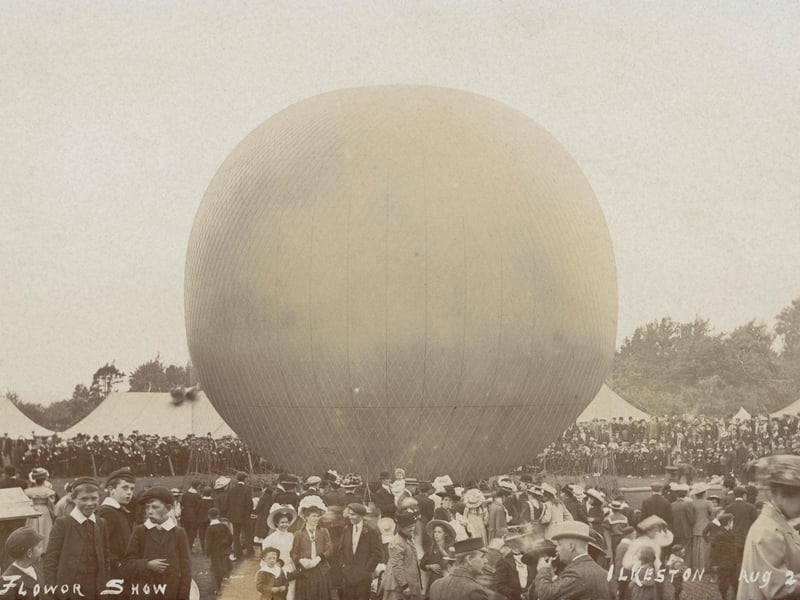
9. Ilkeston
Hot air balloon at Ilkeston Flower Show, Derbyshire, 2nd August 1909. 'Captain' Sidney Spencer's balloon being made ready for its ascent at the 1909 Ilkeston Flower Show on Pimlico Recreation Ground. Pimlico Recreation Ground was improved in the mid-1920s as the Rutland Recreation Ground. (Photo by NEMPR Picture the Past/Heritage Images/Getty Images) Photo: Heritage Images
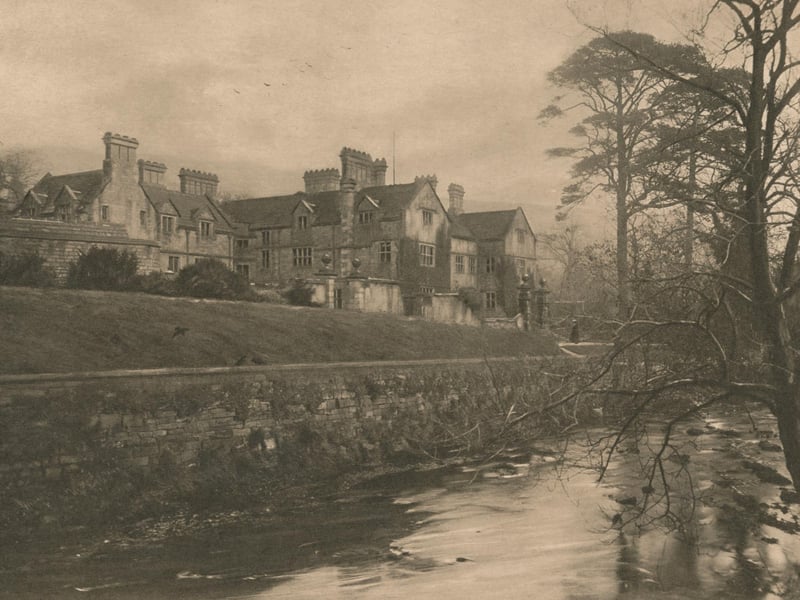
10. Derwent Hall
Derwent Hall, 1902. From Rivers of Great Britain: Descriptive, Historical, Pictorial. [Cassell and Company, Ltd., London, 1902]. Artist Unknown. (Photo by The Print Collector/Getty Images) Photo: Print Collector
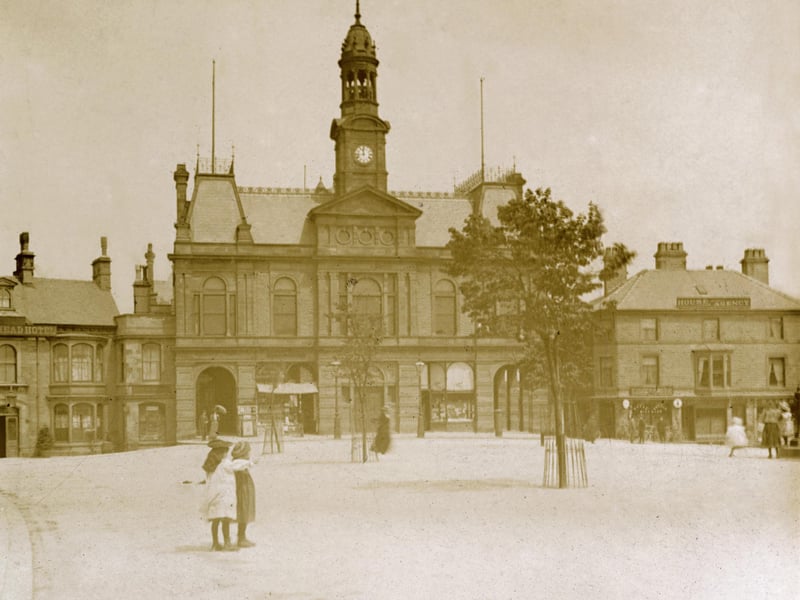
11. Buxton
Buxton Town Hall, c1900s. (Photo by NEMPR Picture the Past/Heritage Images/Getty Images) Photo: Heritage Images
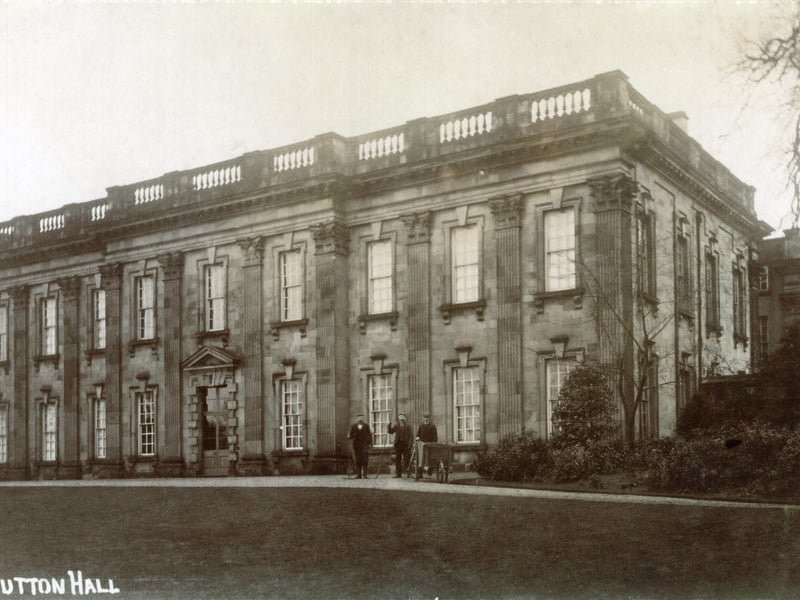
12. Sutton Scarsdale
Sutton Scarsdale Hall, near Chesterfield, pre-1920. Sutton Scarsdale Hall was originally built in the 17th century, but was remodelled into one of the finest Baroque mansions in the county by Francis Smith of Warwick in 1724. At this time the house was owned by Nicholas, fourth Earl of Scarsdale. The Earl died whilst heavily in debt due to the lavish rebuilding of the hall he had commissioned. The hall, and all its estates, were purchased by Godfrey Clarke of Somersall whose son Godfrey was lord of the manor until 1786. Between 1820 and 1919, the hall was in the possession of the Arkwright Family, but was sold by William Arkwright to Haslam Construction Ltd. This company stripped the house of all of its furnishings, and took the roof and some masonry for other construction projects. By 1946, the building had deteriorated to such an extent that arrangements were made to demolish it. However, three days before the demolition machinery were due to move in on the hall the shell was saved by Sir Osbert Sitwell, who was persuaded to buy it by a local resident Harold Taylor. The hall was later given over to the Department of the Environment in the late 1960s. In 1971 emergency repairs were started to secure the building from further decay, and it is now possible to walk around the preserved ruins. This photograph shows the front facade of the hall, which has huge fluted pilasters and a Gibbs Surround doorway. The house has now fallen into ruins, though some of it is preserved in Philadelphia Museum. (Photo by NEMPR Picture the Past/Heritage Images/Getty Images) Photo: Heritage Images