
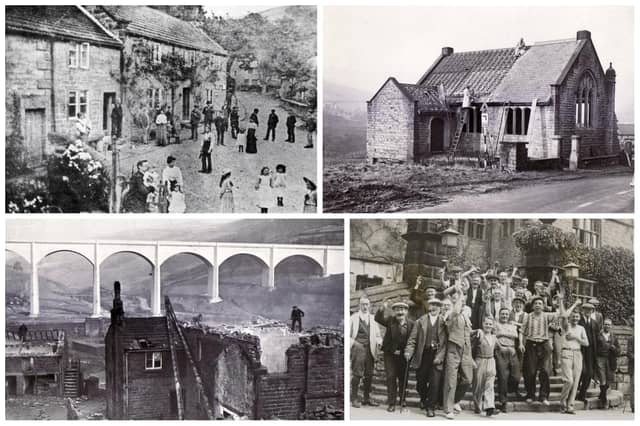

The churches, pubs, farms, schools and homes of Derwent and Ashopton were submerged in 1943, and what remains today is usually hidden beneath the surface of Ladybower Reservoir in Derbyshire's picturesque Upper Derwent Valley.
What many visitors may not realise is that the two small villages were thriving, made up of little streets of pretty cottages.
Derwent had a small community with a school. The most famous building in the village was the Church of St John & St James which was built in 1867 with a tower added in 1873.
After the church was demolished in 1943 the church spire was left intact to form a memorial to Derwent and could be seen spookily emerging from the water. However, it was dynamited a few years later due safety concerns as people would swim out and climb the spire.
The village also boasted a country manor house, Derwent Hall. Built in 1672, Derwent Hall was an impressive building in magnificent gardens with ornamental trees and a large fishpond.
Ashopton was a larger village on the main road between Sheffield and Glossop.
It had a large, busy coaching inn, The Ashopton Inn.
This summer’s heatwaves and the drought conditions created by the historically low rainfall has seen water levels so low that the wreckage of those once-thriving communities have once again been exposed, giving visitors a fascinating insight into the area’s past.
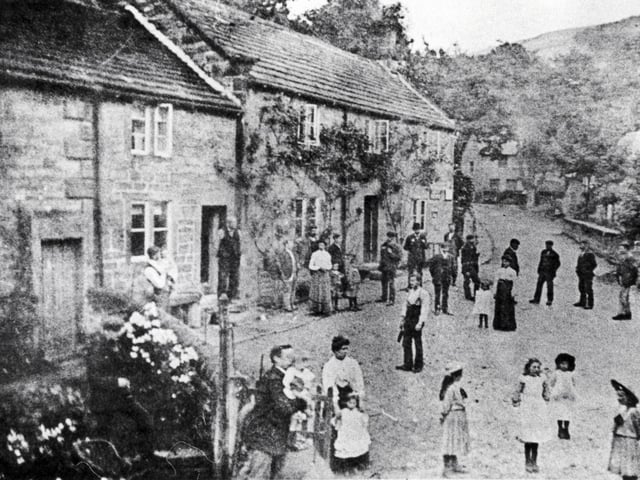
5. Busy day in Ashopton
A busy day in Ashopton in 1912. Residents of the now submerged Ashopton village turned out for this photograph, many of them in their Sunday best Photo: dt
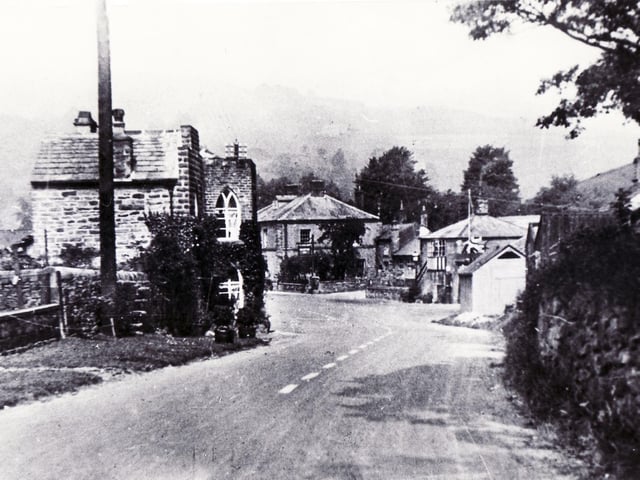
6. More than 100 people lived in Ashopton.
More than 100 people lived in Ashopton. Photo: DT
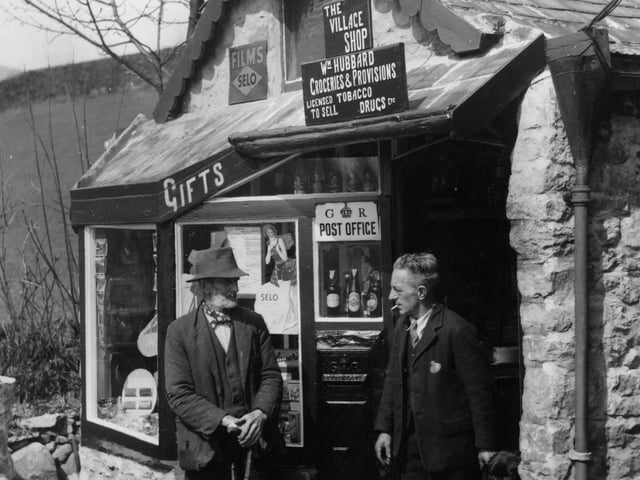
7. Postmaster
Postmaster William Hubbard, who built Ashopton post office single handedly from local stone, discussing its impending doom with a villager on 20 April 1936. The village was demolished in 1943 before being submerged as part of the the Derwent Valley reservoir scheme. The reservoir was opened as Ladybower Reservoir in 1945. Photo: Fox Photos
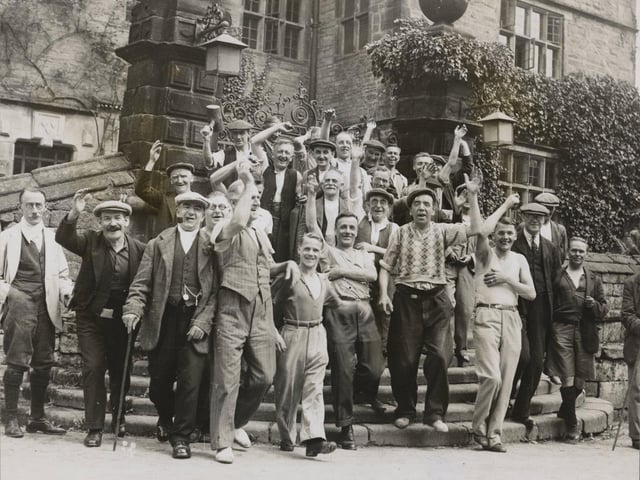
8. Holiday camp for unemployed
Thirty five unemployed men from unemployed occupational clubs enjoying a ten days camping holiday at Derwent Hall, where they spent their time in organised games and rambles. The holiday was intended to set them up to face the winter. Some of the men pictured in happy spirits as they leave the hall for a day in the country. Derwent Hall was on the site of what later became the Ladybower Reservoir. Photo: Hulton Archive