
'The devasting loss of my wife helped to save a little boy’s life' – Chair at Chesterfield Royal Hospital NHS Foundation Trust shares his story
Research shows that 2.5 million people have opted out of the organ donation system, and 1 in 8 families are unsure whether their relative would have agreed to donate. Mahmud is now Chair at Chesterfield Royal Hospital NHS Foundation Trust and attends the annual British Transplant Games, sponsored by Westfield Health.
Thirty-two-year-old Sharon Nawaz unexpectedly suffered a brain haemorrhage and was rushed to the Bradford Royal Infirmary A&E.
When there was nothing more to do, Sharon’s husband Mahmud Nawazwas asked about organ donation - something he never thought he’d have to decide so early on. They had recently moved to Yorkshire, and suddenly, without friends and family, Mahmud faced a tremendous loss and a life-changing decision.
However, with warm encouragement from NHS staff and previous conversations with his wife, Mahmud decided to donate his wife’s organs.
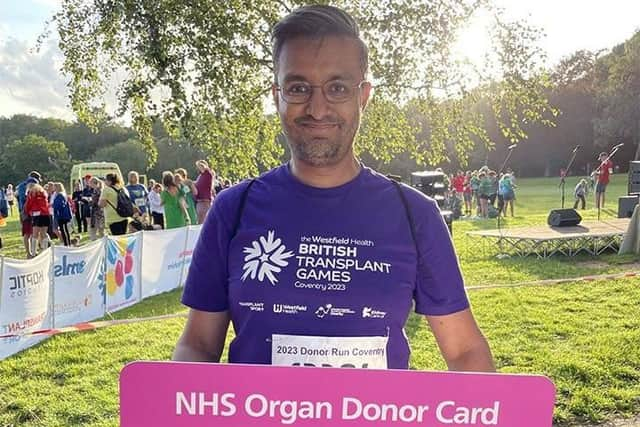

“The grief of a loved one changes your perspective on life, but for me, my wife was the first person that I knew that had died. Everything that I went through was very new, very raw. There was no playbook for how you’re meant to do it,” says Mahmud.
In the UK, the number of people waiting for organ transplants has grown steadily, with 7,500 patients currently on the list. Despite this, many families remain uncertain about their loved ones' wishes regarding organ donation.
Research shows that 2.5 million people have opted out of the organ donation system, and 1 in 8 families are unsure whether their relative would have agreed to donate.
Mahmud’s one decision changed the lives of four people. One of these was a little boy, only one and a half years old, who received his wife’s liver, which saved his life. The parents never thought he’d make it to two and had been preparing for his death until that point.
Mahmud shares, “My wife prepared me for making a decision at the worst possible time by telling me she wanted to be a donor beforehand. At first, it felt overwhelming, but after talking it through, I realised it was a chance for Sharon’s legacy to live on by giving the gift of life to others.”
Since then, he has dedicated himself to advocating for organ donation to inspire others to discuss their choices openly with their families.
Inspiring families to save lives with organ donation
Mahmud joined organ donation committees in Leeds and Mid Yorkshire, became a non-executive director at Mid Yorkshire, and now is a Chair at Chesterfield Royal Hospital NHS Foundation Trust.
Within the Trust, they’re working on talking to local transplant athletes, living donors, and donor families, sharing their stories, and becoming more involved with Chesterfield Royal to help raise awareness. Mahmud also hopes to inspire people in communities to think about organ donation and celebrate their successes at the British Transplant Games.
Mahmud shares, “I’ve been involved in the British Transplant Games, proudly partnered with Westfield Health, a celebration of life that brings together the transplant community. Together, the organisations are working to raise awareness of organ donation and its lifelong impact on people and their communities. By 2028, Westfield Health will have donated over £1 million to the Games, which is an incredible impact.”
Mahmud's first experience was at the Leeds 2022 Games, where he witnessed participants as young as three and as old as eighty come together to compete and celebrate their gift of life. His role at the games has now extended beyond participation; it is about advocacy, raising awareness, and reminding people of organ donation's profound impact.
Dave Capper, CEO of Westfield Health, echoes this, “Mahmud’s story is inspiring, and we hope that it will motivate people to talk openly with their families and consider organ donation, given its life-changing impact. It's all about breaking the taboo and making life-saving decisions easier.”
Why is the donation conversation vital?
Since 2020, the UK has operated under an "opt-out" organ donation system, where everyone is considered a potential donor unless they specifically opt out. However, family consent remains a critical factor in the process. Even if someone has not opted out, their family will still be consulted in the event of their death. This is why discussing your decision with those closest to you is essential.
Research shows that when people clearly express their wishes to their families, the consent rate for organ donation jumps to 90%. However, without prior discussion, the rate drops to 60%.
"I was lucky that my wife told me what she wanted. It’s not something you necessarily have an easy chat about. I knew she carried an organ donor card in her purse, and I said, “What’s that?” It was that simple,” says Mahmud. “We spoke about both organ donation and where she wanted to be cremated. That one conversation helped me make two tough decisions a bit easier during an awful time.”
This year, Organ Donation Week 2024 will be held from Monday, September 23rd, to Sunday, September 29th.
Mahmud is calling on the nation to: