
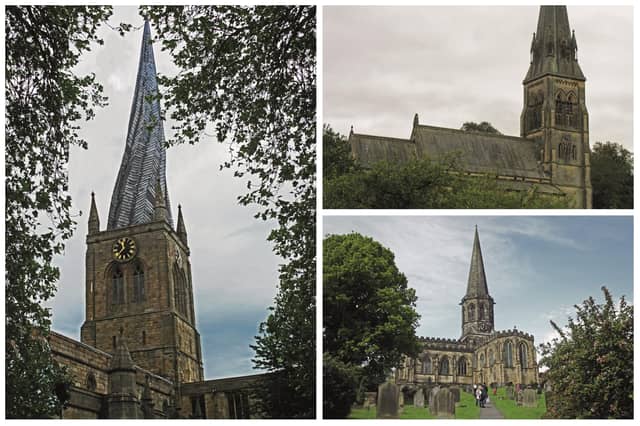

David Paul explores the history and architecture of the buildings, the tombs that are contained within their walls and the customs surrounding these centuries-old community meeting places.
His extensive research for the book ‘Churches of Derbyshire’ discovered a plethora of ancient and historically significant places of worship including St Mary and All Saints Parish Church in Chesterfield and All Saints Parish Church in Bakewell.
While it’s common knowledge that Chesterfield’s famed Crooked Spire church had its interior fittings destroyed by a serious blaze in 1961, it may come as a surprise that it wasn’t the first time that the church had caught alight. In 1861 a bolt of lightning started a fire in a beam next to the wooden roof of the chancel which was discovered by the sexton on his nightly round.
Over at Pentrich, a 500-year-old font went missing from St Matthew’s Church in the 19th century and was found in the cellar of a former churchwarden where it had been used to salt beef!
Traditions down the years have including placing a rope across the door of St Peter’s Church in Hope on a wedding day just before the newly-weds were about to leave the service. A payment in the form of a toll would be demanded of the happy couple.
And at St Michael’s Church in Hathersage, a Maiden’s Garland – a symbol of virginity and innocence – would be displayed at the funeral of an unmarried woman or girl in a tradition which extended into the early 19th century.
The Black Death sparked many health-related superstitions in Crich such as if anyone let blood in the left arm on April 11, he would not lose his eyesight for that year and if he let blood on April 3 he would be spared headaches for the remainder of the year.
David’s book even contains a ghost story involving the Rev William Blurton, vicar of Kirk Hallam from 1891 to 1911. The vicar was travelling home in his pony and trap from an evening engagement when he saw ‘a headless’ lady pass by.
‘Churches of Derbyshire’ will be on sale from August 15, 2022 and available from Amberley Publishing, priced £15.99. Go to www.amberley-books.com
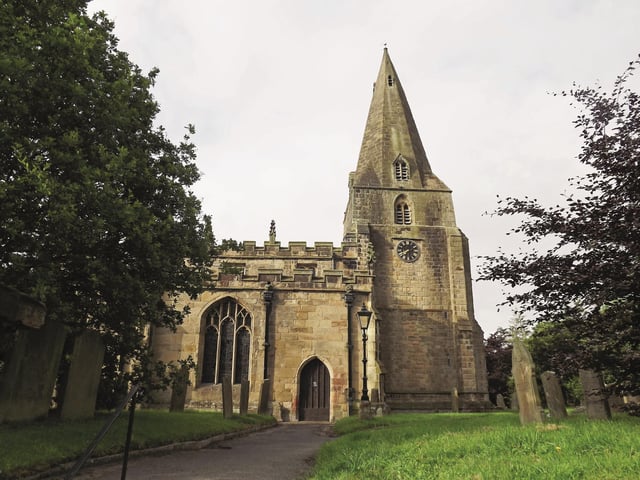
5. St Peter's Church, Hope
When parishes were first recognised, Hope was one of the largest in England. The current church is thought to occupy the same site as a Saxon place of worship. St Peter's Church contains a rare painted hymn board with a painting of David on the back, dating from 1806. Two of the projecting gargoyles outside the church serve as rain spouts. A lucrative trade in body snatching was rife in the 18th and 19th centuries, a practice which allegedly linked Hope with Manchester and one of the Entries of Burial reads: "Body removed same night." Photo: David Paul
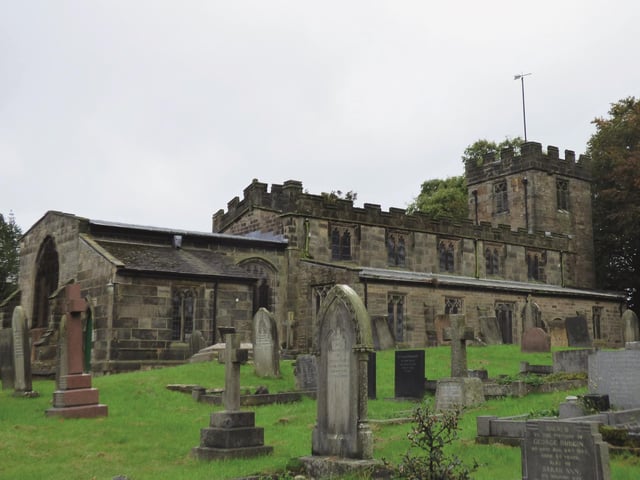
6. St Matthew's Church, Pentrich
In the late 19th century the vicar Rev William Jellicorse Ledward painted a fresco depicting the calling of Matthew by Jesus on the wall of this Norman period church. A scratch dial, commonly known as a Mass Clock, on the outside of the south chancel was used to inform parishioners when the next swervice was due to begin. Photo: David Paul
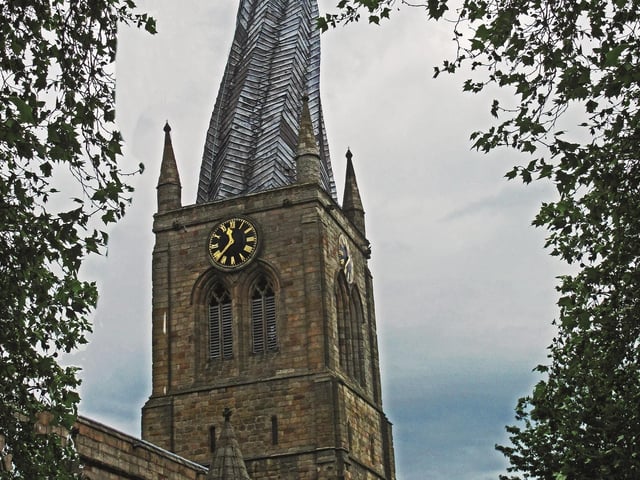
7. St Mary and All Saints Church, Chesterfield
Records indicate that there has been a church in Chesterfield since the seventh century. Derbyshire's largest church features Early English architecture with elements of Decorated Gothic and Perpendicular Gothic; its oldest pillars are located on the east side. The alabaster tombs of the Foljambes are housed in an early chapel. One of the church's 11 bells was used when Chesterfield housed Napoleonic Army and Navy officers on parole and was rung when it was time for them to return to the confines of the town. David Paul's book goes into extensive detail on how the Crooked Spire became twisted. Photo: David Paul
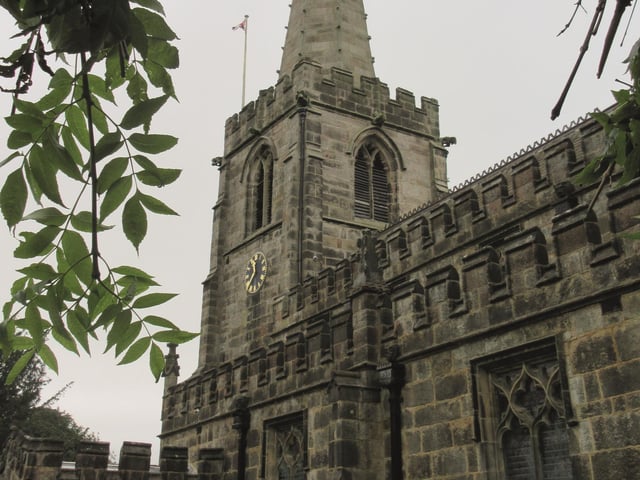
8. St Michael and All Angels, Hathersage
The present church building is said to date from 1381 and houses the brasses of the Eyre family which are permanently displayed on several tombs. They include Robert Eyre, who fought in the Battle of Agincourt, his wife Joan and their 14 children; Ralph Eyre of Offerton Hall and his wife Elizabeth and Sir Arthur Eyre of Padley and his first wife Margaret. The church is famed for being the reputed burial ground of Robin Hood's right-hand man Little John. Photo: David Paul